What is an explorer?
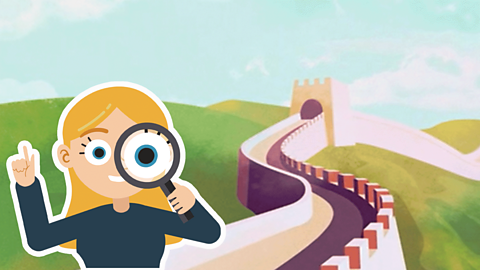
An explorer is someone who travels to new places.
In the past, explorers went to places they hadn't seen before to learn about the people, animals and plants that lived there.
Sometimes they wanted to be the first person to visit these places, and they explored to find out new things or take on a big challenge.
They often shared what they discovered so others could learn too.
History
By the 19th and 20th centuries, countries became very proud of exploring.
They wanted to be the first country to discover new places and plant their national flag there.
Have a look at this information and fun activities to learn about some famous explorers.
Famous explorers
There have been many important explorers through history.
Amelia Earhart
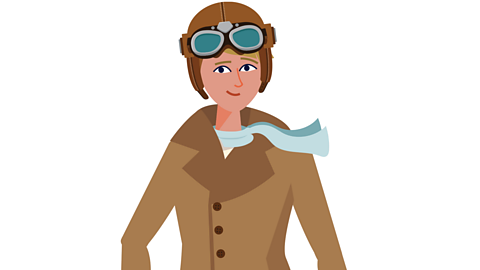
Amelia Earhart was an American pilot.
In 1932, she was the first woman to fly solo across the Atlantic Ocean.
She flew all the way from Canada to Northern Ireland in her red aeroplane.
Play the Exciting Explorers game and learn more about Amelia Earhart
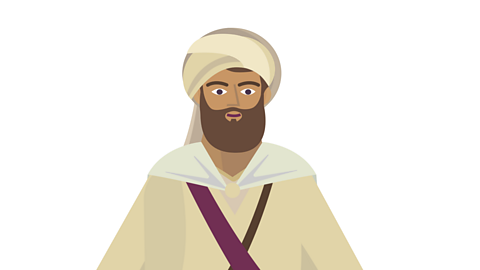
Ibn Battuta
Ibn Battuta began exploring in 1325.
His first journey was to Mecca for his Hajj (pilgrimage).
He travelled to many countries, travelling for around 30 years in total!
He wrote all about his journeys in a book, known as 'The Rihla'.
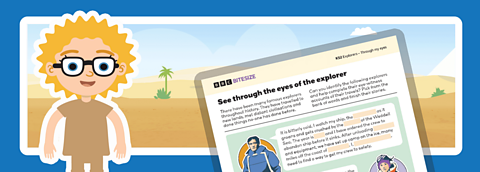
Activity - Explorers match up
Put your skills to the test and have a go at this fun activity sheet.
Match each explorer to their picture, the transport they used and the place they visited.
Discover more on KS1 History
You can learn about more important explorers here.
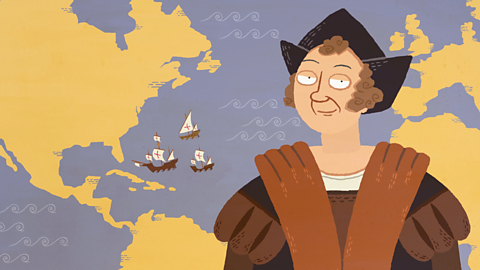
Christopher Columbus. revision-guide
KS1 History
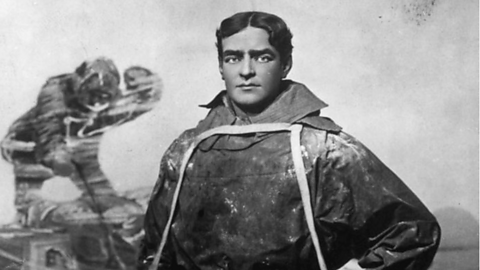
Ernest Shackleton. revision-guide
KS1 History
Neil Armstrong. revision-guide
KS1 History
Geography

Explorers need to know how to get from one place to another.
They can use some special tools to help them to navigate their journey.
Here are some fun activities, videos and more information to learn more.
How do explorers find their way around?
Explorers can use a compass and a map to help them on their travels.
Have a look at this slideshow to learn more about these tools.
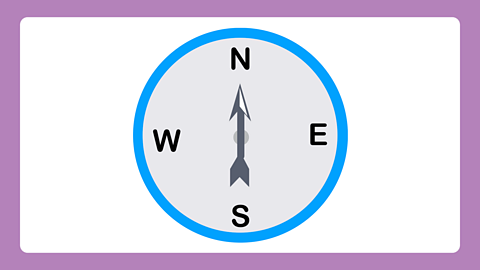
Image caption, Compass
A compass shows explorers which direction they are travelling in. It tells us which way is North (N), East (E), South (S) or West (W).
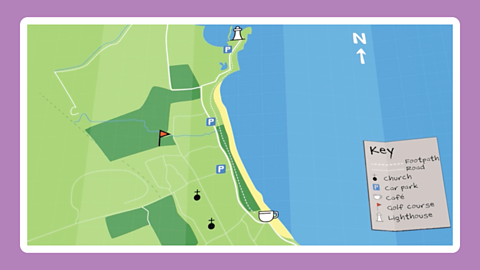
1 of 2
Watch: How to read a map
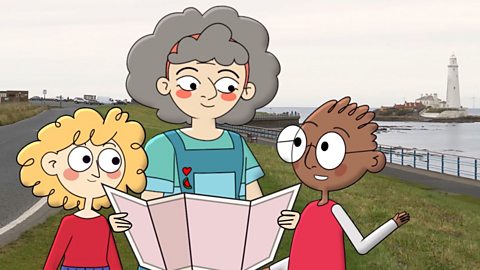
Join Granny as she teaches Ben and Amber how to follow a map in this video.
Ben: Thanks for taking us out for a walk, Granny! It’s great to be by the seaside again!
Granny: I've drawn us a map, specially for this walk.
Amber: Can I have a look?
Granny: I love drawing maps! Can you see what it shows?
Ben: Yeah! It's like a drawing of where we are. I can see that the green bit is land, the blue bit is the sea and that yellow bit in the middle must be the beach! But what do these little pictures mean?
Granny: They are called symbols. They show clearly the places you might like to visit.
Amber: But why don’t you just use words?
Granny: If we used words, the map would look quite messy. Maps use symbols, because they don't take up as much space as words and are easier to follow! So instead of writing the word 'café', I've drawn a teacup symbol!
Amber: I get it. But what do the rest of the symbols mean?
Granny: Do you see that there is a little box in the bottom right corner of the map.
Amber: Yes!
Granny: That's called the key. It tells us what all of the symbols mean. Can you see what they mean?
Amber: That circle with a cross on the top… is a church!
Granny: Well done!
Ben: That letter ‘P’… is for car park!
Granny: Spot on!
Amber: And that’s the lighthouse, and that’s theroad!
Ben: But how can we use the map to find our way?
Granny: Well, you've already found the lighthouse.
Ben: Yes.
Granny: And we're in the car park to the south west of it.
Ben: So we must be here!
Granny: We're going to follow this path that goes between the sandy beach and the golf course. Can you see it?
Ben: There it is and if we follow it, we should get to the café!
Granny: Let’s go!
Ben: We must be going in the right direction because the beach is to the east and this golf course, is to the west!
Amber: And look! There’s the café!
Granny: Great, let’s keep going!
Ben: We made it!
Granny: Well done! I think we deserve a treat, don’t you?
Ben and Amber: Yay!
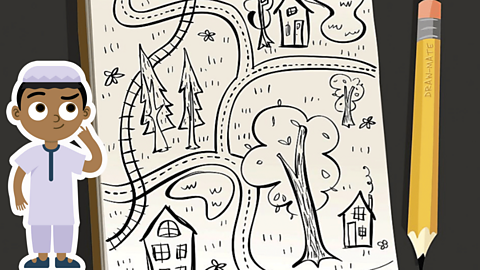
Activity - Make your own map
Make your own map of a place for your explorer to travel to. It can be a real place or a made up place.
What items will you draw on the map?
What will your explorer be looking for?
You could include things like a park, a house, or a mountain.
Discover more on KS1 Geography
Take a look at these articles to learn more about how to use a map and compass and other geography skills.
What are maps? revision-guide
KS1 Geography
Exploring the continents. revision-guide
KS1 Geography
Explore the UK. revision-guide
KS1 Geography
Music
When explorers go to new places, they experience lots of different things.
They might see, taste, or hear things they’ve never come across before.
Take a look at the information and activities below to learn more.
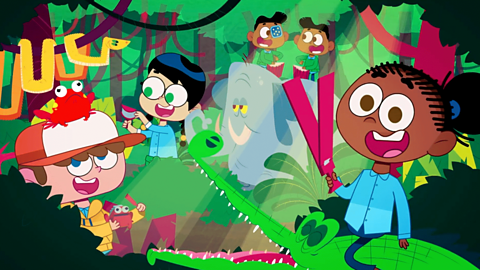
What is a soundscape?
Explorers will hear lots of different sounds on their travels, such as the trickle of water in a river, or the busy cars and people in a new city.
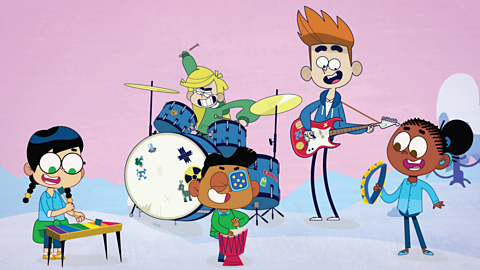
We can use musical instruments to make lots of different noises and put them together to make the sounds of the place.
This is called a soundscape.
The sounds might be made to match the sounds in real life, or to give the feeling of the place.
Activity - Create an explorer soundscape
Things to think about before you create your own soundscape:
What type of place could an explorer go to?
What might that place sound like?
How would that make the explorer feel?
You can use the sounds on the BBC Sound Effects library to create your soundscape.
When you have finished, why not ask a friend or an adult to guess the place you have created?
Discover more on KS1 Music
You learn much more about music by clicking the links below.
How to create music. revision-guide
KS1 Music
Quiz - Explorers
Where next?
Play BBC Bitesize educational games! game
Fun, interactive games for children aged 4-11, with maths, English, science, history and many more subjects.