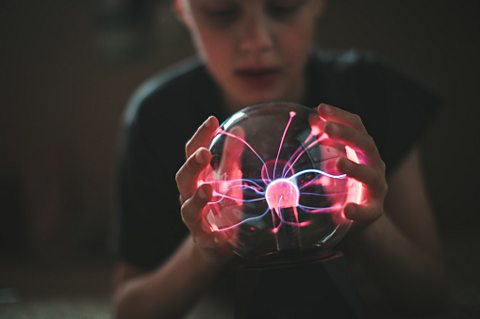
As a compulsory subject, Science is one of the ten most popular topics to be taken at GCSE and it can lead to a range of exciting careers.
However, there's been a decline in the percentage of younger students aspiring to learn Biology, Chemistry and Physics beyond GCSE. And according to the Royal Society and EngineeringUK, only two in five young people in years 7–13 think that an understanding of science is important to their lives.
As a parent, you may have your own good or bad memories of science lessons at school, or you may not feel equipped to promote science as a good career option. Thankfully, BBC Bitesize has lots of great resources bringing science and revision to life - here are some examples that you can share with them.
1. Exam-style quizzes
Trying a quiz is a good way to figure out how much you, or your child, knows - or has yet to learn!
With a score and feedback given, quizzes are a great way to see progress and prepare for exams.
For example, check out these Chemistry questions from past papers or the quick fire Biology quiz below!
2. Video explainers
Videos that are engaging can encourage children to learn - providing an understanding of scientific concepts in a clear, visual way. Videos can promote independent learning at home, which can support a child's experience in the classroom.
BBC Bitesize has recently introduced a number of new videos to its GCSE Science articles that cover Biology, Chemistry and Physics.
These videos include topics that students cover in class and would find helpful to their studies, with practical and relevant experiments such as Investigating the effectiveness of insulating materials,How to make copper sulfate* crystals and How do antiseptics affect the growth of bacteria?
*Exam boards may use sulfate or sulphate as spellings.
How do antiseptics affect the growth of bacteria?
How to make copper sulfate crystals
3. Video playlists
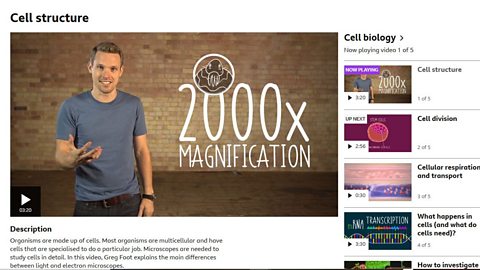
And what if one video isn't enough? Don't fear - we have collected lots of our videos as playlists.
Bitesize playlists are a great way to see collections of Science videos on a particular theme.
Once in a playlist, you can skip to the next video or they will automatically play to you in a themed order.
You’ll find the playlists under the subjects on the BBC Bitesize GCSE pages including the Bitesize Combined Science pages for each exam board.
4. Interactive activities
Interactivity can help your child to learn by visualising and modelling scientific concepts.
For example for this activity, click on the labels on the right to see the various stages of the mitosis process.
Find out more about mitosis with this interactive and explanation.
5. Podcasts
Did you know BBC Bitesize has a range of podcasts within its Biology, Chemistry,Physics, and Combined Science pages?
The podcasts are hosted on BBC Bitesize and BBC Sounds
They offer a new way for students to revise science, presented by experts in their field.
For example, in this episode, James Stewart and Ellie Hurer explore the changes of energy stores when energy is transferred.
Listen to this podcast on energy stores and systems.
JAMES: Hello and welcome to the BBC Bitesize Physics podcast.
ELLIE: The series designed to help you tackle your GCSE in Physics and combined science.
JAMES: I'm James Stewart, I'm a climate science expert and TV presenter.
ELLIE: And I'm Ellie Hurer, a bioscience PhD researcher.
JAMES: And in this podcast, we're going to be your physics guides. Yes, we are. From forces to electricity, energy to gravity, we are going to explore some of the most important facts you need to know to revise for your exams.
ELLIE: And if you want to really get into it, be sure to grab a pen and paper so you can make notes and try out equations throughout the episode.
JAMES: This is episode one of our eight-part series all about energy, and today we'll be talking about energy stores and systems.
ELLIE: So let's begin.
JAMES: Energy is converted in a variety of ways, but the three most common ways are through heating, work done by forces, and work done when a current flows.
ELLIE: There is one key fact that you definitely need to know about energy.
Energy can't be created or destroyed. It can only be transferred usefully, stored, or dissipated.
JAMES: Dissipated means it's wasted, usually by being lost to the surroundings. So let's explore what that actually means when it comes to how we interact with energy on a daily basis.
ELLIE: So let's say you want to make a cup of tea. You go to the tap to fill the kettle up with water, plug the kettle into the wall, then switch it on until the water begins to boil.
JAMES: How is energy being transferred as you boil that kettle? What effect does the heating have here?
ELLIE: Well, the kettle is powered by electric energy, and that store of electrical energy is transferred into the thermal energy store in the water that's in the kettle.
JAMES: Any other energy transfers happening in there?
ELLIE: Well, it's not just the water in the kettle that's getting hotter. The kettle releases steam and thermal energy that heats up the surrounding area.
JAMES: But because you didn't turn on the kettle for the purpose of heating up the room, that energy is dissipated, it means it's wasted.
ELLIE: Yep, correct. When we describe the way that energy is converted, we sometimes describe the objects that are part of this process as a system. And different systems store and transfer energy differently.
JAMES: Energy is also transferred through work done. We cover work done in much more detail in our Bitesize Physics ‘forces’ series, so be sure to go back and check that one out. But for a quick definition, work done is when a force causes an object to move through a distance, when a force transfers energy from one store to another. So let's look at an example of how work done by forces changes the energy in a system.
Imagine you're at the park and decide to go and sit down on the swings. What a nice day. You push yourself up and down until you're having fun on the swings. But as you are, you're causing an energy transfer.
ELLIE: When you push, you transfer energy from the chemical energy store in your leg muscles to the kinetic store in the swing.
JAMES: Yes, and when you're up really high in the air, that kinetic energy becomes part of the gravitational potential energy store in the swing. Before being transferred back into the kinetic energy store as you come back down again.
ELLIE: So let's talk about one final energy transfer. And for this one, we're heading to the seaside.
JAMES: Ellie, imagine you're on a boat.
ELLIE: Just a boat?
JAMES: Fine, a yacht. A super yacht. Whatever you want.
ELLIE: That's better.
JAMES: Alright, imagine you're on a full blown, glamorous, mega yacht with ten bedrooms on board, swimming pool, private chef, and what about a DJ playing along with your favourite songs? Sound better?
ELLIE: Sounds like my dream.
JAMES: Good.
ELLIE: Right, we're going to give you examples and get you to answer what energy transfer you think is going on. So grab your pen and paper.
JAMES: Okay, so if the motor that drives that yacht is powered by diesel, what energy transfer is going on? I'll give you a few seconds to think about it.
ELLIE: If the motor that drives the yacht is powered by diesel, the yacht transfers energy from the chemical energy store of the fuel into the kinetic energy store of the boat as it gains speed and travels.
JAMES: But are there other energy transfers happening in there as well?
ELLIE: Yeah, some energy would also be transferred into thermal energy, heat, which is wasted energy in this case.
JAMES: Okay, let's recap the three facts we covered today. Number one, energy can't be created or destroyed. It can only be transferred usefully, converted or dissipated.
Number two, a system is an object or group of objects and there are changes in the way energy is stored when a system changes.
And thirdly, energy is converted in a variety of ways. But the three most common ways are through heating, work done by forces, and work done when a current flows.
ELLIE: Thank you so much for listening to Bitesize Physics.
If you found this helpful, go back and listen again and make some notes so you can come back to them when you revise.
JAMES: Yeah, super helpful. In the next episode of Bitesize Physics, we are going to be talking all about kinetic energy and gravitational potential energy.
ELLIE: Until next time…
BOTH: Bye!
As you can see from these examples, BBC Bitesize is here to make science easier to understand so that preparation and revision for Biology, Chemistry, Physics and Combined Science GCSEs is less difficult.
Head over to see these Five tips to help smash your GCSE Science revision, to help put that spark back into your child's revision and hopefully ignite a passion in science that will last a lifetime.

More from BBC Bitesize Parenting…
Bitesize Parenting
Fun activities, real-life stories, wellbeing support and loads of helpful advice - we're here for you and your child.

Stumped by your kid’s homework? What to do when you haven’t a clue
Based on advice from an educational psychologist - LV General has ways to help you get your head around your child's complex homework.
How to stay positive about maths when teaching your kids
Advice for parents from the National Numeracy charity

Should I help my child with their homework?
Real parents around the UK share their thoughts on homework. Is it better online? How much is enough? And how can parents help?

Jobs of the future: What will our children be doing in 2040?
Many jobs our children will be doing may not even exist yet - so what does a futurologist think may be some careers of the future?
How to support your teen as they decide on their future career
Career coach Mark Anderson has advice for parents of teens who are choosing their options at GCSE or are nearing the world of work.