Introduction
Our planet is heating up. This is known as global warming, a gradual increase in the Earth's temperature. Carbon dioxide is one of the gases which contributes to this process.
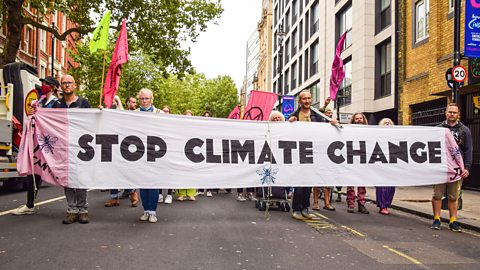
It is known as a greenhouse gas, this means that it traps heat in the Earth’s atmosphere. As these greenhouses gasses build up they form an invisible ‘blanket’ that traps heat from the sun. This is causing temperatures to rise here on Earth and is making our weather more unpredictable and extreme. This process is called climate change.
Melting ice caps
The Earth’s A large thick sheet of ice that covers a big area of land. are melting. The ice caps are thick sheets of ice and snow that cover large areas of land. This includes large parts of the Arctic and the Antarctic.
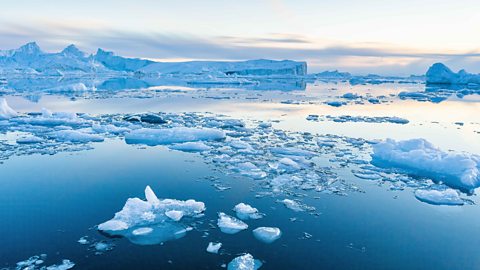
This melting ice turns into water and that means more water in the sea. All over the world this additional water is causing sea levels to rise.
Watch this Newsround film to find out more about why sea levels are rising.
What this means
These rising water levels mean that all over the world coastal areas could end up flooded, or even underwater. Communities are working hard to build Systems put in place to reduce or prevent damage from flood water. and are even moving their homes further away from the coast.
Wales
Sea levels are also rising in Wales. If climate change continues, by the year 2100 it is predicted that water levels could rise by nearly two metres. This will impact many coastal areas.
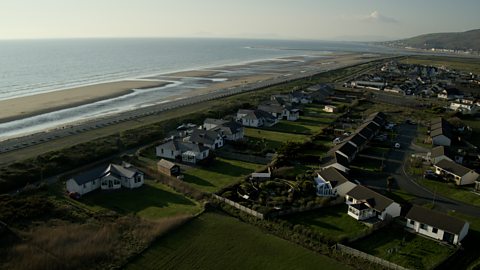
A coastal village called Fairbourne, in mid Wales, is likely to be the first place in Wales to be seriously impacted by climate change. The village was built a long time ago on very low marshland which is right on the seashore.
A sea wall has been built to protect the village from rising sea levels. In the future, as sea levels continue to rise, the local council is worried that it will become too expensive to make sure the wall is doing its job of defending the village. This means the village could be To close down and not exist anymore. and people may have to move from their homes and live further away from the sea.
Video: The impact of climate change on Fairbourne in mid Wales
Take a closer look at the difficulties facing the people of Fairbourne in mid Wales.
NARRATOR
Did you know that climate change is causing our planet to heat up?
As we burn fossil fuels — things like wood and coal — we release carbon dioxide and other greenhouse gases into the atmosphere.
These gases then trap heat from the sun, causing warming.
Because of rising temperatures, the Earth's ice caps are melting very fast.
And all this melting ice means that sea levels are rising around the world.
This is Swansea's famous Mumbles Pier.
It stands high above the water level.
Right now, it may seem that the threat of rising sea levels is a long way off.
But it's not.
If the climate continues to warm at the same rate as it is now, some scientists think that water levels may rise by nearly two metres across the UK by the end of the century.
And if that happens, this pier will be underwater every high tide.
This will be the same for many coastal areas around the country.
A village in north Wales, called Fairbourne, is set to be the first place to disappear because of climate change — the first in Britain.
Angela Thomas has lived here since 2013 in a house facing the sea wall.
"It's very easy to see why people are attracted to this place.
I mean, what could be more beautiful?
We have the Cardigan Bay behind us.
If you look further afield you can see Cadair Idris, we have the mountains, we have the estuary."
Fairbourne is a village that has around 450 houses.
It was built on low level marshland in the 19th century — a type of wetland.
A sea wall is what's protecting the village from rising sea levels, but it's very expensive to keep this wall in good condition.
It is very hard to imagine, on a day like today, that the sea could rise so dramatically in years to come, that Fairbourne will have to be decommissioned.
What Angela means by decommissioned is that the Government won't spend any more money on the sea defences, which, at the moment, protect Fairbourne from the ocean.
Angela can already see that things are changing around her: "The climate has changed. We can see it every day ourselves by different species turning up in the sea, the birds starting to want to build nests before time…spring flowers coming up before they should do."
With warmer temperatures, we're set to see wilder storms, even in the summer, as well as rising sea levels.
Angela and the people of Fairbourne are extremely worried about climate change.
Lots of people in coastal areas and islands across the world feel this way too.
So, how much more will sea levels rise?
Nobody knows for sure.
Should we be worried?
Most scientists say we should be worried — especially seeing as eight of the world's ten largest cities are near the coast.
So what can we do to save Fairbourne and other coastal areas at risk?
The main thing is to cut down the amount of carbon dioxide we release into the atmosphere.
This is what we call our carbon footprint.
There are lots of ways we can do this:
- Recycling more
- Using the car less
- Switching lights off when they are not needed
We can all make a difference — every one of us.
Global
All over the world communities are having to adapt and change their way of life because of rising sea levels. In Fiji, an island in the Pacific Ocean, many villages have already been abandoned, or left, buildings have been destroyed and farmland has been lost to the waves.
What can we do?
We can all help to reduce our carbon footprint. This means releasing less carbon dioxide into the environment.
How can we do this?
- Recycle more
- Use the car less
- Switch lights off when they are not needed

- Spread the word – we can all help
Quiz: How will climate change impact the seaside?

Where next?
What predators are in the Celtic Sea?
Learn about the different species of wildlife in the deep oceans around Wales.
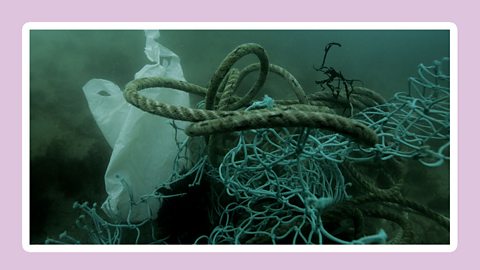
What happens when plastics get into the ocean?
Find out what impact plastic waste has on wildlife in the sea.
KS2 Sustainability
A collection of lessons for pupils aged 7 to 11
More on Climate
Find out more by working through a topic