Key points about describing your house and home

Use Used to describe nouns and must agree with the nouns they are describing. to describe your home and your bedroom.
A word such as at, for, with, into or from which is usually followed by a noun or pronoun. Prepositions are used to show where something is in place or time. of place, such as 'next to', 'behind' and 'opposite' explain where rooms and objects are in your house
Vocabulary - Rooms in a house
Have a look at the illustration for useful nouns for talking about different rooms:
Press or tap on Show more to hear the pronunciation of the vocabulary illustrated.
Useful nouns for rooms of the house include:
| Spanish | English |
|---|---|
| Check your connection, refresh the page and try again. | bathroom |
| Check your connection, refresh the page and try again. | kitchen |
| Check your connection, refresh the page and try again. | dining room |
| Check your connection, refresh the page and try again. | living room |
| Check your connection, refresh the page and try again. | basement |
| Check your connection, refresh the page and try again. | stairs |
| Check your connection, refresh the page and try again. | parent's bedroom |
| Check your connection, refresh the page and try again. | brother's bedroom |
| Check your connection, refresh the page and try again. | bedroom |
Other useful nouns include:
| Spanish | English |
|---|---|
| Check your connection, refresh the page and try again. | space, room |
| Check your connection, refresh the page and try again. | study, studio |
| Check your connection, refresh the page and try again. | garden |
| Check your connection, refresh the page and try again. | office |
| Check your connection, refresh the page and try again. | apartment, floor (of building) |
| Check your connection, refresh the page and try again. | floor, plant |
| Check your connection, refresh the page and try again. | house |
| Check your connection, refresh the page and try again. | building |
Vocabulary - Home problems
Useful vocabulary for talking about potential problems include:
| Spanish | English |
|---|---|
| Check your connection, refresh the page and try again. | problems |
| Check your connection, refresh the page and try again. | lack, shortage, mistake |
| Check your connection, refresh the page and try again. | harm, damage |
| Check your connection, refresh the page and try again. | smell |
| Check your connection, refresh the page and try again. | noise |
Grammar - Adjectives
Used to describe nouns and must agree with the nouns they are describing. normally go after the noun in Spanish and agree in Nouns in Spanish are classified into two groups: masculine or feminine. Each noun therefore has a gender. (masculine or feminine) and number (Refers to only one object or person. or More than one of an item.) with the nouns they describe.
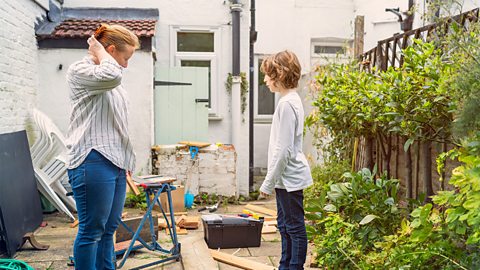
For example:
el jardín bonito - the beautiful garden
la casa moderna - the modern house
Agreement of adjectives
It is important to know the gender of nouns in Spanish as adjectives have to agree with (or match) the noun they describe.
For example:
un edificio feo – an ugly building
una habitación limpia - a clean bedroom/room
The endings in the adjectives feo and limpia have changed to match the gender of the nouns before them.
Now look at the number of each noun and how the adjective has changed in these phrases:
los edificios feos – the ugly buildings
las habitaciones limpas – the clean rooms
Feos is masculine and plural to agree with los edificios and limpias is feminine and plural to agree with las habitaciones.
Some adjectives, which do not end in o or a do not change according to gender, but s or es is added at the end if they are plural.
For example:
mi casa ideal – my ideal house
mis casas ideales – my ideal houses
el piso enorme – the enormous apartment
los pisos enormes – the enormous apartments
Adjectives – Mini quiz
Translate the following phrases into Spanish.
The beautiful building.
El edificio bonito.
The noun el edificio is masculine singular and so the adjective, bonito, does not change its ending.
Adjectives normally come after the noun in Spanish, so bonito comes after edificio.
The ugly kitchen.
La cocina fea.
The noun la casa is feminine singular and so the adjective, fea, changes its ending to a.
Adjectives normally come after the noun in Spanish, so fea comes after cocina.
The ancient houses.
Las casas antiguas.
The noun las casas is feminine plural and so the adjective, antiguas, does change its ending to as.
Adjectives normally come after the noun in Spanish, so antiguas comes after casas.
The enormous plant.
La planta enorme.
The noun planta is singular and the adjective, enorme, end in e. It therefore does not change its ending according to its gender, only if it is plural.
Adjectives normally come after the noun in Spanish, so enorme comes after plant.
Find out more about using adjectives in Spanish in the Adjectives in Spanish guide.
Reading practice
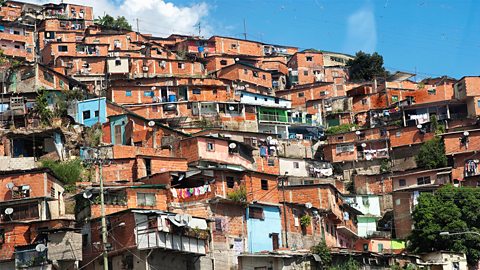
Read about what life and housing is like for the inhabitants of Caracas and answer the questions below in English.
La vida en Venezuela es a menudo muy dura porque la mayoría de la gente no puede permitirse los recursos necesarios como la comida y la medicina. En la capital, Caracas, mucha gente vive en favelas, donde las condiciones son muy difíciles. Algunas familias comparten una sola habitación, donde cocinan, duermen y descansan.
Pero hay organizaciones que luchan para mejorar las condiciones de vida de los Venezolanos.
*favela = informal settlements
- What are the majority of people doing?
The majority of people are living in poverty.
- What is often lacking?
Basic goods like food and medicine.
- What are the living conditions like for some families in favelas?
Some families share one room, where they cook, sleep and relax.
- What are some organisations doing?
Some organisations are fighting to improve the living conditions for people living in the favelas.
Click or tap on Show more to see a translation of the text.
Translation:
Life in Venezuela is often very hard because the majority of people live in poverty and can’t afford basic goods like food and medicine. In the capital, Caracas, many people live in informal settlements, where conditions are very difficult. Some families shar a single room, where they cook, sleep and rest.
However, there are organisations that fight to improve the living conditions of Venezuelans.
Vocabulary - Furniture and other items in a house
Useful vocabulary to describe furniture and other household items include:
| Spanish | English | Spanish | English |
|---|---|---|---|
| Check your connection, refresh the page and try again. | table | Check your connection, refresh the page and try again. | clock, watch |
| Check your connection, refresh the page and try again. | (interior) wall | Check your connection, refresh the page and try again. | fire |
| Check your connection, refresh the page and try again. | bed | Check your connection, refresh the page and try again. | window |
| Check your connection, refresh the page and try again. | door | Check your connection, refresh the page and try again. | light |
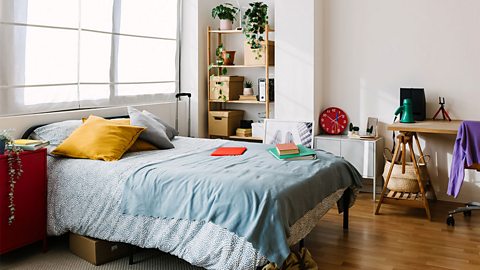
For example:
En mi dormitorio hay una cama, una mesa y una luz. – In my bedroom there is a bed, a table and a light.
Hay un reloj cerca de la ventana. – There is a clock next to the window.
Useful vocabulary to describe materials that furniture and household items can be made from includes:
| Spanish | English |
|---|---|
| la madera, de madera | wood, made of wood |
| el papel, de papel | paper, made of paper |
| el plástico, de plástico | plastic, made of plastic |
For example:
Mi mesa es de madera. – My table is made of wood.
Reciclo el vidrio y el papel en casa. – I recycle glass and paper at home.
Useful adjectives to describe houses and where you live include:
| Spanish | English | Spanish | English |
|---|---|---|---|
| antiguo/a | old | limpio/a | clean |
| bonito/a | pretty | moderno/a | modern |
| ruidoso/a | noisy | feo | ugly |
| seguro/a | safe, secure | frío/a | cold |
| hermoso/a | beautiful | sucio/a | dirty |
| histórico/a | historic | tranquilo/a | calm, tranquil, relaxed |
| ideal | ideal | vacío/a | empty, vacant |
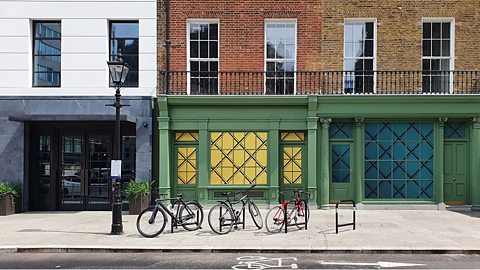
For example:
Cerca de mi casa las calles son limpias y tranquilas. – Near my house the streets are clean and quiet.
Vivo en una casa bonita, que está situada en las afueras de la ciudad. – I live in a pretty house which is situated in the outskirts of the town.
All Foundation Tier vocabulary listed in this guide can be found on the vocabulary sheet below.
Grammar - How to use prepositions of place in Spanish
Prepositions are words used to link nouns, pronouns, or phrases to other words within a sentence. They act to connect the people, objects, time and locations of a sentence.
Prepositions are usually short words, and they are normally placed directly in front of nouns.
Common prepositions of place in Spanish include:
| Spanish | English | Spanish | English |
|---|---|---|---|
| a | at/to | en | on |
| al lado de | next to | sobre | upon |
| detrás de | behind | encima de | above/ on top of |
| delante de | in front of | enfrente de | opposite |
| entre | between | dentro de | inside |
| bajo/debajo de | below/under | al fondo de | at the back of |
For example:
En el salón la tele está enfrente de la puerta. – In the living room the TV is opposite the door.
En mi dormitorio la cama está al lado de la ventana. - In my bedroom the bed is next to the window.
How to say 'on' or 'on top of' in Spanish
Use sobre or en to mean ‘on top of’. When you mean ‘on’ but not ‘on top of’ use en.
For example:
Está sobre la mesa - it’s on (top of) the table
lo vi en la tele (I saw it on the TV)
Prepositions with 'de' followed by a masculine noun
Several prepositions are followed by de and then the definite article (el/la/los/las) and the noun.
However if the preposition followed by de is then followed by a masculine singular noun, de + el contract to become del:
The preposition 'a' followed by a masculine noun
The preposition of time and place a, also contracts when followed by a masculine singular noun to become al:
Prepositions of place - Mini quiz
Complete the following sentences.
La cama está __________ la ventana.
The bed is opposite the window.
La cama está enfrente de la ventana.
Enfrente de = opposite
La cocina está _______ dormitorio.
The kitchen is below the bedroom.
La cocina está debajo del dormitorio or La cocina está debajo del dormitorio.
Debajo de and bajo de both mean below.
Dormitorio, bedroom, is masculine so de and el must be contracted to form del.
El jardín está ________ casa.
The garden is behind the house.
El jardín está detrás de la casa.
Detrás de = behind.
La cocina está _______ casa.
The kitchen is at the back of the house.
La cocina está al fondo de la casa.
Al fondo de = at the back of.
Find out more about using prepositions of place in the Prepositions of place and time in Spanish guide.
Listening practice
Click or tap on Start to listen to Pilar and Malek describing where they live.
Decide which three statements are true for each person.
Vocabulary sheet
Click or tap on the image below for a list of useful vocabulary to use when talking about house and home.

Higher Tier - Vocabulary - House and home
Useful vocabulary for talking about your house and home includes:
| Spanish | English |
|---|---|
| Check your connection, refresh the page and try again. | home |
| Check your connection, refresh the page and try again. | ground, floor |
| Check your connection, refresh the page and try again. | state |
| Check your connection, refresh the page and try again. | smoke, fumes |
| Check your connection, refresh the page and try again. | road/building works |
| Check your connection, refresh the page and try again. | heating |
| Check your connection, refresh the page and try again. | key |
| Check your connection, refresh the page and try again. / Check your connection, refresh the page and try again. | stone, rock, made of stone |
| Check your connection, refresh the page and try again. / Check your connection, refresh the page and try again. | glass, made of glass |
| Check your connection, refresh the page and try again. | enormous, vast |
| Check your connection, refresh the page and try again. / Check your connection, refresh the page and try again. | situated, located |
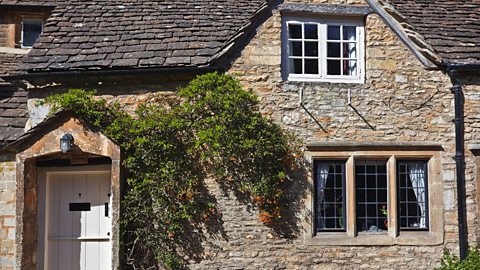
For example:
La calefacción no funciona muy bien en mi casa. – The heating doesn’t work very well in my house.
En el centro de la ciudad hay edificios enormes y feos. – In the centre of the town there are enormous ugly buildings.
Mi casa es de piedra. – My house is made of stone.
Vivo en una casa bonita, que está situada en las afueras de la ciudad. – I live in a pretty house which is situated in the outskirts of the town.
All Higher Tier vocabulary listed in this guide can be found on the vocabulary sheet below.
Higher Tier - Vocabulary sheet
Click or tap on the image below for a list of useful Higher Tier vocabulary to use when talking about house and home.
Now you have revised the important vocabulary and key grammar points for talking about your house and home, why not have a look at the Describing holiday activities in Spanish guide?
Careers advice and tips from BBC Bitesize
Future careers, further studies and the world of work - we're here to help with advice from experts and from young people who've found their path.

More on The environment and where people live
Find out more by working through a topic
- count2 of 4

- count3 of 4