BBC Content
"It’s challenged each team and helped to transform the range of expert voices on air."

It’s been remarkable to see such change in just a year, with the proportion of female contributors appearing in our programmes radically increasing thanks to this brilliant initiative.
It’s challenged each team and helped to transform the range of expert voices and opinions on air. Crucially, audiences tell us they've noticed a difference and it's increased their enjoyment too. Telling stories for all audiences and reflecting the world we live in has improved the quality of our programmes by bringing fresh and engaging contributors.
It’s already driving real change across many of our programmes; more than 30 teams across the Content division are now taking part and, of those who were able to file for the 50:50 Challenge in March, 49% reached 50% female representation. In light of how COVID-19 has changed the look and feel of our programming it is reassuring to see these results.
"In Content, we want to go further and faster and are committed to reaching 50:50 balance across all our genres."
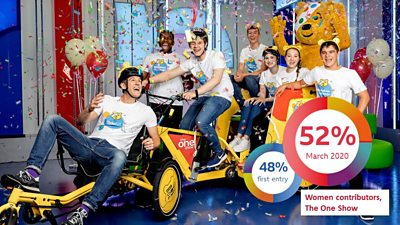
I’ve been impressed by what BBC One’s flagship brands The One Show and Countryfile have achieved. They are two of our biggest success stories and are fully engaged and committed to the project, consistently striving for balance.
One of the main challenges is to keep up the momentum, particularly in programmes which are traditionally skewed towards male contributors. The 50:50 Project has proved that it takes time to make change; finding and uncovering new female voices and talent can be time-consuming.
In Content, we want to go further and faster and are committed to reaching 50:50 balance across all our genres. It's great to see Drama and Comedy come on board; both have seen good progress in recent years and this will take it up a level to deliver lasting change.
For series and scripted productions, the challenge will be for 50:50 to become a part of every stage of the process; from scripting and story boarding right the way through to post-production.
If a programme is off air for most of the year, or has a much longer production process than a daily live show, 50:50 can easily become an afterthought - and by the time the figures are in, it’s too late to improve on them.
"Better representation is something the whole media industry needs to address, so it’s important to work with other broadcasters."
So, our teams across Content need to ensure equality and balance is at the heart of everything we do to really make it work. It’s the most challenging area, since it needs to be in the minds of writers from the outset and assessed throughout production to have an impact.
We’re working on ways of applying 50:50 to scripted productions across the industry and looking at how it can be used earlier in the process so it can effect change. Better representation is something the whole media industry needs to address, so it’s important to work with other broadcasters and I’ve been really pleased with their response so far.
News & Current Affairs
"The pressures of covering COVID-19 need not mean we compromise on representation."

It's a source of great pride to me that the 50:50 Project began in the BBC newsroom. I’ve watched with interest and admiration as our journalists have shaped 50:50's monitoring to fit into how they work and to focus it on improving their journalism.
There can be no doubt that by broadening our sourcing, diversifying our contributors and further sensitising us to women’s representation, it has made us a better news operation.
There are lessons too for all of us in the determination I’ve seen. Month by month, BBC News teams have worked to overcome challenges and this report contains many inspiring examples of what can be achieved when we embrace change.
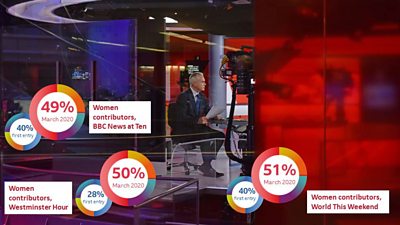
The World at One, PM, Newsnight, the News at Ten and the News at Six have all shown that the pressures of covering COVID-19 need not mean we compromise on representation. Indeed, there has never been more women featuring in their journalism.
The BBC News's digital teams now monitor everything from the people we quote and picture to social media posts and videos. The difference is there every time you look at the BBC News app or the BBC News website.
"This year's 50:50 data shows that these teams are creating journalism of a diversity that perhaps once felt out of range."
Our TV networks, BBC World News and BBC News Channel, have demonstrated this can be done across huge complex production patterns.
In our General News Service (GNS), we see evidence that this can began become ‘business as usual’. It’s reached 50% women contributors every month for a year.
And BBC Languages have exhilaratingly introduced 50:50 into 39 BBC services across 35 countries. From Singapore, Seoul and Delhi to Kabul, Kiev and Moscow, to Nairobi, Lagos and Cairo, teams have committed to showing us all of their countries and communities.
This year's 50:50 data shows that these teams are creating journalism of a diversity that perhaps once felt out of range. Not any more.
Everyone one of us who works for BBC News does so because we believe in the public value of reporting our world as comprehensively and fairly as we can. 50:50 takes us closer to that goal.
Bargain Hunt
"The antique world is pretty diverse, and we know that it is our responsibility to reflect this."

Bargain Hunt is a pretty big production. We broadcast a 45-minute programme at lunchtime every weekday, two of which are new episodes.
The show has a basic format – a red team and a blue team each buy three items at an antiques fair and sell them at auction in a bid to make a profit. Each episode can feature a vast number of contributors. These include contestants, the presenter, two antiques experts, stallholders, vox pops, further contributors in VTs, the auctioneer… the list goes on!
Due to the large number of contributors appearing on screen, fair representation is key. The antique world is pretty diverse, and we know that it is our responsibility to reflect this.
So, when we heard about the 50:50 Project, we were keen to get involved. We started the project in September 2019 by simply recording the on-screen gender ratio in each programme. As time has gone on, the project has expanded into all areas of production and we now take a more pro-active approach across the board, from the casting process to the subjects and speakers featured in our short films.
Quite simply, we are more mindful of who and what we broadcast. Can this story be told from a woman’s perspective? Have we fairly represented female talent on screen? Where can we improve? These are just some of the questions we now ask in the initial stages of production. The 50:50 Project has allowed us to benchmark where we are, reassess how we do things and make improvements.
Our data on gender was pretty eye-opening! Our contestant base plays a big part in our 50:50 stats. Before we started monitoring we thought this area was bringing our ratio down. We were wrong. It turns out that we have cast a considerably greater number of women contestants over the last six series. This trend has remained strong throughout the pandemic and we have further increased our number of women contestants since starting 50:50.
Our current presenting team has a 50:50 gender split. However, we struggle a little more with female antique experts and auctioneers. Since starting the 50:50 Project, we identified that this was an area we needed to improve. We have recruited an additional woman expert and have a few more potential prospects in mind for when the COVID-19 landscape settles.
There has been a big drive to source more female speakers for insert films (our short VTs about interesting antiques, collectibles and social history), which has resulted in content that we may have missed if we weren’t actively seeking female leads. Recent inserts have ranged from Victorian female explorers to the origins of Japanese Kimonos. Some really interesting finds!
As we continue to implement changes we are determined to hit that coveted 50:50 ratio. We’re now also working to monitor and improve our representation of BAME and disabled contributors and we’re looking forward to lots more positive collaboration in future.
World Service Asia
"Workflows changed, with editorial meetings starting earlier in the day so that teams could think about how to include more women’s voices."

It’s been almost two years since World Service Asia joined The 50:50 Project. From India to Vietnam, Myanmar to Nepal, sixteen language services across Southeast Asia accepted the challenge of looking to better represent women online and on air. And it’s been quite a journey.
In the beginning, some were skeptical and tough questions were asked: is it important, is it feasible, is it enough? The project went ahead nevertheless.
At first it was simply a daily exercise of checking the numbers of women in pictures and online quotes, and being interviewed on air. Slowly it evolved to something much more meaningful.
Workflows changed, with editorial meetings starting earlier in the day so that teams could think about how to include more women’s voices.
"I can speak on behalf of our teams when I say that we are as committed now as we were two years ago."
A regional weekly meeting was established to share successful stories, best practices and to interrogate data collectively. Contributor lists were reviewed to include a bank of women experts.
And so the numbers started to move. There was the Nepali service which, in one month, jumped from 22% to 44% women. Then the Korean service reached more than 80% women, followed by the conversation, “slow down guys, it’s about balance not world domination!”
The work paid off, and in the BBC’s first 50:50 Project Report last year, the Asia region finished with a surprising result: almost all of its services ended up with 50:50 balance across its sets of data.
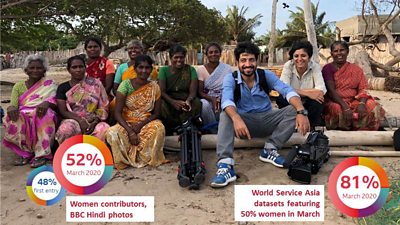
However, once we crossed the finish line some of the numbers started to go down and it looked like we had gone back to our old ways.
There was a quite a bit of disappointment and frustration, followed by collective soul-searching on whether we had treated the project as a one-off, with April 2019 as an unconscious end date.
That is when the “Consistency Challenge” came - a pan-BBC understanding and acceptance that 50:50 wasn’t, and maybe won’t ever be, a finished piece of work.
As Head of the Asia Region, I can speak on behalf of our teams when I say that we are as committed now as we were two years ago.
We’re still reviewing our output every day, we’re still discussing why things went right or wrong, or whether that female contributor was good or not.
We continue to look for balance, but a great result has already been achieved: a change in the mind set of most of our staff and a significant change in the way we do journalism.
Radio 5 Live
"Achieving greater diversity really just means talking to more people"

I was once asked in a job interview, "How would you increase the number of women on the show?" It felt like a trick question, surely the answer wasn't as simple as, "Speak to more women," so I rambled on, talking myself into a dead end. I didn't get the job.
I often think about that question because my gut response was the right one. Achieving greater diversity really just means talking to more people, setting a higher bar and sticking to it. Although, recent experience has taught me about another important factor - a diverse production team.
In June a few of us from 5 Live's Wake up to Money team in Salford started a new advice podcast called Your Work Your Money. The idea was to help people with questions around work in the new COVID-19 landscape - the confusion, or perceived injustice, around furlough, support grants, bounceback loans and sick pay, as well as a growing number of people struggling with redundancy and a very challenging jobs market.
Wake Up to Money has been involved in the BBC’s 50:50 The Equality Project for well over a year and, we’re proud to say, has achieved the target of 50% women contributors (or close to it) nearly every month. We’ve also been involved in the new 50:50 ethnicity and disability pilots to increase the representation of ethnic minority contributors in our programme, and this informed our approach with the launch of Your Work, Your Money.
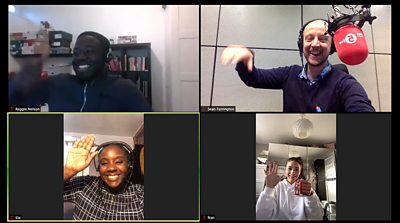
Our bar for contributors is diverse and young (under 35), and the aim is to let their concerns shape each episode, rather than decide beforehand which topics we should cover.
But where do you find guests for a new podcast with a ground-up approach?
We've been helped by 5 Live texters and the UGC (user generated content) team, but the real revelation has been Instagram and our own presenters' followers. Jonny McGuigan has helped us tap into BBC News' Insta account, a powerful tool with millions of followers. We posed occasional questions and received hundreds of replies, mainly from young people keen to articulate their financial hardship and gloomy prospects.
"50:50 has shown that aiming for more diversity in our content means we’re not only finding new voices, but engaging more audiences."
And then there's the team involved in the podcast. It's led by Wake up to Money's Sean Farrington with three other co-presenters who take turns with each episode: Reggie Nelson is an investment analyst at Legal & General Investment Management who's also a big advocate for social mobility, mentoring and workplace equality; former Apprentice candidate Fran Bishop now runs a children's clothing retailer called The Pud Store; and Kia Commodore is the host of the Pennies to Pounds personal finance podcast.
Fran, Reggie and Kia regularly ask their followers for questions. They're all in their 20s, and Reggie and Kia are black. They’ve allowed us to reach out to a new audience.
We've now done 16 episodes featuring 50 people, either as live guests or recorded clips. Of those, 60% have been women and 38% were from Black, Asian or minority ethnic backgrounds. This has given the show a completely different sound and allowed us to provide a platform for young people from lots of different backgrounds.
We’re working in this way now because, as 50:50 has shown, aiming for more diversity in our content means we’re not only finding new voices, but engaging more audiences.
So if I was back in that interview I would say, speak to more people, but I'd also stress the importance setting a high bar, sticking to it, and working with a diverse team.
Coronavirus: Your Stories
"Getting to 50:50 is no longer an option or a 'nice to have' - it’s become an essential part of our broadcast DNA."

You may have seen our programme on BBC World News, the News Channel, or popping up on iPlayer. “Coronavirus: Your Stories” is just what the title says, in depth personal interviews with guests around the world about what the pandemic means to them - their health, families, jobs, fears, hopes. We’ve even dedicated a programme to lockdown romance.
From the first recordings in May, producer Eliza Craston and I were determined to reach voices and faces that weren’t being heard and seen on news bulletins, or at least not getting space to really describe their experience. We wanted to hear at length from people who are underrepresented in our content. We wanted to reflect all ages. We wanted the programme to feel naturally diverse. And we had a head start in trying to book a broad range of participants, because we’re both long term enthusiasts for the 50:50 challenge to ensure that at least half of on-air contributors are women.
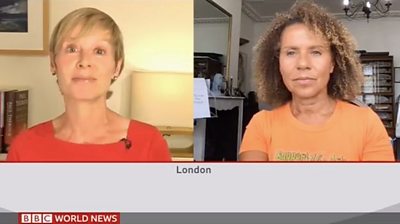
Over our season of eighteen programmes, we booked 53 guests from 25 different countries between May and October. Our 50:50 total came to 58% women, and 45% of contributors were from an ethnic minority background. The sheer range of stories we heard was fascinating and humbling. Neha, a midwife in rural Pakistan, asked how you can socially distance while delivering babies. Jo in Utah talked about her volunteer work sourcing thousands of masks for the Navajo Nation, for families lacking even basic resources in the heart of the world’s richest nation. ChiChi, leader of the UK’s extraordinary “Chineke!” orchestra, described how her young BAME musicians faced a double blow - losing their live music livelihoods and facing the renewed tensions around racial injustice.
We did also get to air quite a number of voices that usually go unheard. Teenager Gloria in Pennsylvania had been putting in thirty hours a week as a supermarket cashier, on top of her high school studies, because she said others at home couldn’t work during the pandemic. And Hannah, a 19-year-old marine engineer from Germany, spoke to us from the ship where lockdown had extended her stint at sea to eight months - mentioning, almost in passing, that she was the only woman on board.
Across most of the World newsroom, I’d say that getting to 50:50 is no longer an option, or a “nice to have” - it’s become an essential part of our broadcast DNA. It’s a culture change that helped Eliza and I make this “pandemic” programme live up to its title more fully. We really were able to tell more of “Your Stories”.
OJ Borg, Radio 2
"Different programmes and teams will use 50:50 in different ways to achieve the common goal of increasing the representation of women."
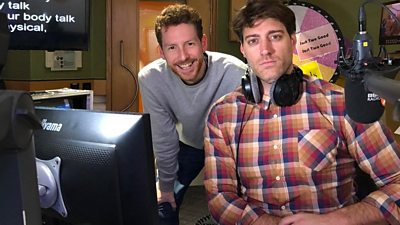

The OJ Borg show is on Radio 2 Monday to Friday from midnight, and produced by Salford-based independent production company Audio Always. We've been involved with the 50:50 Project since May 2019, and are very proud to have hit our target every single month (14 months and counting at the time of writing!)
The 50:50 Project is very important to us because Radio 2 has a specific target of increasing female listeners, in particular 35-44 year olds. With 50:50, we can monitor how many women contributors we have, and plot who we've got coming up. We monitor how many callers we have on-air, whether they're contributing to our nightly topics on the show, or taking part in our listener-led quiz Midnight Mastermind. We also monitor contributors for Pause For Thought, which is produced by fellow indie TBI Media.
"We want our show to be for everyone."
Different programmes and teams within the BBC will use 50:50 in different ways to achieve the common goal of increasing the representation of women on-air. Being an indie is no different to in-house when it comes to 50:50. We're still judged in the same ways, and have found the support from the central 50:50 team to be really useful and helpful.
We want our show to be for everyone. There's so much industry going on whilst most of us sleep and, of those working, it certainly appears to me that the majority of those jobs tend to be done by men. Lots of them are truckers, although not all of them are men - shout out to The Mother Truckers, a female-only trucking community who we've featured on the show!
It would be quite easy for us to fill our show with the voices of more men than women. Not only would that be very lazy on our part, but it wouldn't be fair to the audience. We firmly believe it's harder to feel part of something if you can't see or hear people like yourself taking part, which is why we actively seek out women contributors.
We absolutely feel that 50:50 helps us make a better radio show, to be enjoyed by all, and that can only be a good thing.
BBC Radio Norfolk
"It's crucial in local radio to make sure the community is able to hear themselves, to underline that they are a part of the station and the content."

BBC Voices is the outreach department at Radio Norfolk, where I work alongside senior journalist, Gary Standley, journalism coordinator, Amy Nomvula and presenter, Kitty Perrin. We currently produce five daily talk-based shows, creating 20 hours of content a week that reflects what's happening in our county.
Our team is always keen to make sure the voices we hear from are diverse, starting conversations that open our listeners up to the myriad of people living in Norfolk. When Covid-19 lockdown hit, it was the local people that we had come to know through our outreach work that we contacted first.
Newsbeat
"Being part of the project has helped us find new contributors – experts and members of the public – who we may not have come across."

Newsbeat has always prided itself on giving its audience of 16-29 year-olds a voice, providing an outlet to the most diverse listeners the BBC has in terms of race, class and abilities.
When we joined the 50:50 Project our initial data showed we were in a fairly good place at 42% women. 50:50 has allowed us to fine tune this and consciously drive towards making sure gender is part of our diversity. Now we are consistently hitting that 50:50 sweet spot or thereabouts.
Being part of the project has helped us find new contributors – experts and members of the public – who we may not have come across had we not been actively looking for more women.
It has also made us examine our mix of on-air reporters more closely on a daily basis.
We know equality is extremely important to our young audience and anything that helps us serve them better is to be embraced.
Social News
"Now we’re not afraid to question whether we’re featuring enough strong female voices."

The Social News team help promote the best of BBC News’ journalism across Twitter, Instagram, Facebook and Reddit, to more than 130 million followers around the world.
We also commission specialist treatments across BBC News to help our content reach even wider audiences on social. We’ve found a huge opportunity here to really embrace the 50:50 tracking and ethos in every aspect of our commissioning process.
We monitor specific strands on our platforms, analysing how we select the voices we feature and how we could better reflect our audience.
We’ve successfully reached a gender balance of at least 50% female contributors, from Instagram Stories to our Cut Through the Noise Facebook programme. We’ve consistently ensured gender balance is at the heart of our storytelling.
"Don’t be afraid to challenge your colleagues and contributors about gender balance."
I can categorically say that doing 50:50 has never meant the best voice didn’t make it into our coverage. We have always hunted for the best voices, whether they’re experts or audience questions. And now we’re not afraid to question whether we’re featuring enough strong female voices in that content.
The UK General Election and the US Impeachment stories were really significant for both our UK and International audiences, bringing millions to bbc.co.uk and bbc.com - so where better to showcase the best voices and champion 50:50? They gave us a great opportunity, during such a busy news period, to really put our commissioning process to the test.
In December 2019, 59% of the voices we featured were female, while 41% were male. Success!
Don’t be afraid to challenge your colleagues and contributors about gender balance. Ask the question: 'are we reflecting the audience we are aiming at?' or 'do we think we have a balance of voices here?' This shouldn’t be a taboo subject.
BBC Sport
"Signing up to 50:50 signals how serious we are about it and BBC Sport is proud to be joining the project."
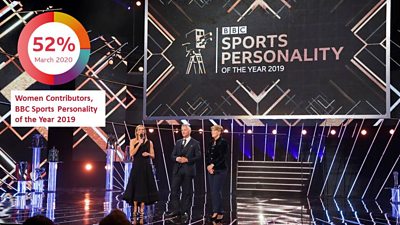

BBC Sport launched a campaign in 2019 called #ChangetheGame. We wanted to change the perception of women’s sport as well as showcase sportswomen across BBC outlets.
We chose the summer of 2019 as we had the rights to show the Fifa Women’s World Cup, Netball World Cup, World Athletics and World Gymnastics. The campaign had a huge impact with more than 45 million people consuming women’s sport content across BBC platforms.
However, if we wanted to show our commitment to women’s sport then we also needed to have a look at ourselves and the gender balance of our content-makers be it presenters, reporters and voice over artists.
Signing up to 50:50 signals how serious we are about it and BBC Sport is proud to be joining the project.
There are thousands of hours of BBC Sport output each year and we have started to monitor certain programmes and sporting events across television and radio including Wimbledon, our athletics and rugby league coverage and Ski Sunday.
"There are quick wins but this is also a chance to identify areas where we need to improve."
BBC Sport Personality of the Year was one of the first programmes we had a look at. Executive editor Carl Doran was fully on board with the ideals of the 50:50 project and I’m pleased to report the 2019 programme recorded 52% female contributors in its first year!
For other programmes such as the Six Nations, Football Focus and 5 Live Sport we know change is happening but it will take more time to achieve equality of representation. By committing to the project we are questioning the balance of our programmes more in an effort to reflect our audience better.
There are quick wins but this is also a chance to identify areas where we need to improve and look at ways of developing female contributors so that the representation can be increased.
BBC Sport is embracing the need for change and I’m excited to see how our programming will be transformed.
Central News Service
"The CNS team is a small one, but everyone got on board and we felt like the trail blazers for the initiative in England."

The Central News Service provides national and international news to the BBC England Local Radio network and quite often beyond, delivering a mix of live guests and audio.
It's an efficient way of giving Local Radio access to the very best people, and so it was a no-brainer that I thought we should join the 50:50 project in 2018.
The CNS team is a small one, but everyone got on board and we felt like the trail blazers for the initiative in England. The 50:50 Project quickly became part of our daily guest booking conversations, and has really helped us consider how we tell stories.
BBC News Channel
"I’ve been consistently amazed at how my colleagues at every level have embraced the thinking behind the 50:50 Project."

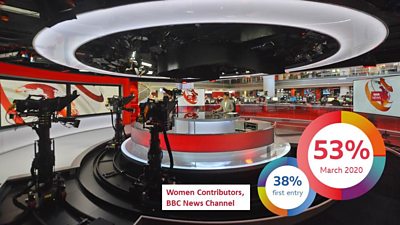
The BBC News Channel is one of the most complex datasets in the whole of the organisation to manage, with 26 different strands to count and report on each month. We knew at the outset that if we were to succeed in the 50:50 Challenge, the whole team would need to pitch in.
I’ve been consistently amazed at how my colleagues at every level have embraced the thinking behind the 50:50 Project, and gone out of their way to find great new female contributors. In challenge month, the whole team went above and beyond to deliver our best ever results.
Before March began, Lara and Nina from the 50:50 Project helped us hold team meetings explaining the challenge. We also asked people to step up to become team champions, so we would have someone to remind people of the challenge in every shift.
I’m hugely grateful to my colleagues who threw everything they had into booking fantastic female guests, and also ensured they shared details of these contributors with others in the team and the wider 50:50 project.
We had great support from our managers too, who were willing to free me up to deal with any back-counting that needed doing so that we didn’t fall behind with our monitoring.
"I can’t wait to build on this and see what we can achieve in the future."
The unfolding coronavirus crisis did throw a spanner in the works, as it meant that midway through the month we had to rethink the way we were counting and introduce new datasets to reflect the changes made to our programme schedule.
The 50:50 team helped us through this, sharing a great database of potential contacts for the story so we had a fantastic pool of female experts to help us with our guest bookings.
At the end of the month, we delivered an overall result of 47% men to 53% women – the best we’ve ever managed. I can’t wait to build on this and see what we can achieve in the future.
BBC Music Introducing
"It's a big opportunity for us to show what's possible."

BBC Introducing was one of the first music radio networks to join the 50:50 Project and put a focus on increasing women's representation, back in 2018. It has really helped to remind us of the importance of representation in everything that we do.
This year, BBC Music Introducing Live - the event for aspiring artists and anyone looking to get into the music industry - is taking place virtually, and we felt it was more important than ever to ensure that the line-up is representative.
We're really lucky to have 36 local radio shows in every region and nation of the UK that are the eyes and ears of the music scene in their area. This gives us an advantage in finding amazing talent. There are so many amazing women within the creative industry, it made booking a balanced line-up for BBC Music Introducing Live easy!
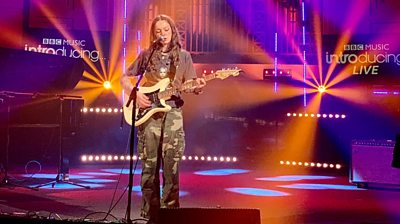
"We regularly spotlight women artists’ success stories in different areas. 50:50 is always at the forefront of our thinking"
We have hundreds of musicians and industry experts lined up for 36 half-hour masterclasses on important topics for young creatives, alongside five headline panels covering subjects such as ‘Owning Your Heritage’, ‘Building Your Brand’, ‘LGBTQ+ Community’, ‘Keeping venues Alive’ and ‘Women In Music’.
Moses Boyd, Ray BLK, Tom Misch, Lianne La Havas, HAIM, Joy Crookes & Annie Mac are just some of the names that we’re featuring across the week.
Having such a huge network of radio shows across the country also means that some of our local programme teams still face some challenges reaching the 50% women target - in the more rural areas, there’s often an imbalance of more male than female new artists uploading their music.
These things take time to change, and we are using 50:50 to encourage more emerging female talent to upload. We often speak to female-run organisations or focus groups who can suggest contributors and artists, and regularly spotlight women artists’ success stories in different areas. 50:50 is always at the forefront of our thinking.
The national profile of the Introducing Live event is a big opportunity for us to show what’s possible. We are slowly but surely making change - persistence is key!
If any event or radio show at a national level wasn’t booked fairly in 2020, I would ask why?
"We continue to find new ways to diversify the bands and artists we feature."

I noticed some years ago, before joining the 50:50 Project, that there was a real discrepancy between the number of male musicians and female musicians uploading music to my show. It was stark, of an order of about 80:20.
Data from the BBC Music Introducing Uploader showed that while the cities in our patch were much more equitable, there was a real issue in some of the towns. Mansfield was a case in point. Though a large town, there was not a single upload from a female artist or band with a female singer.
"Last year, two thirds of our live sessions were with female performers."
We set up an annual gig in Mansfield. In the first year, we had to invite female singers from neighbouring areas as we could find no local ones at all! In the audience were female singers from the town who’d never really performed in public before. This became an annual event and, happily, we were able to put true Mansfield female singers on the stage by the second year, and more with every passing year. In 2016, songstress Georgie from Mansfield played the BBC Introducing stage at Glastonbury.
We’ve repeated this model in other towns and, like other Introducing shows across the UK, have officially been a part of the 50:50 Project since August 2018. We continue to find new ways to diversify the bands and artists we feature. For example, every week we produce a “six pack” graphic of artists who made a real impact on the previous week’s show as well as ‘audiograms’ from artists talking about their music - all this content is balanced to feature 50% women. And last year, two thirds of our live sessions were with female performers which were filmed and widely shared.
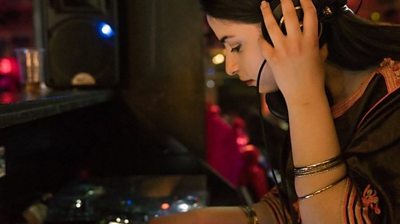
"50:50 is such a necessary incentive. We've witnessed incredible women talent on our show from producers to multi-instrumentalists, across music genres and ages"

It’s been eye-opening to be part of the 50:50 Project. Since logging the gender balance of the show we’ve noticed how male-dominated the BBC Music Introducing Uploader (how new artists send us their tracks) continues to be.
We’ve been working on ways to encourage more music uploads from women. I believe by playing more women on the show, we’ve had more female fronted uploads. The show’s production team are all involved; our team assistant Sara has been incredibly supportive in discovering female-led content and says ‘50:50 is such a necessary incentive. We've witnessed incredible women talent on our show from producers to multi-instrumentalists, across music genres and ages and it's important to give all artistry a platform, as diversity is a driving force for change.’
"We always aim for 50:50 and even if we don’t reach it, we are mindful to include as many women as possible in our output."
We’ve kept a particular eye out for female-headlined gigs locally that we can shout out and play a track from the artist. Whenever we interview contributors, either in the studio or at events, we all encourage people to spread the word about the Uploader and especially the necessity for uploads from female-identifying acts.
We always aim for 50:50 and even if we don’t reach it, we are mindful to include as many women as possible in our output. In the planning for the show we discuss how to feature both women and men. At the end of every month we look through the data as a team to see how we can improve for the next month.
Partner stories
Find out how our partners are diversifying voices globally
Our partners
Discover more about our 50:50 Global Partner Network
Previous Reports
The latest challenge results are out showing that data can effect change
How it works
50:50's three core principles explained and how we tailor them


