|
 |
 | | | | | | |||||||||||||||||||||||||||||||||||||||||||||||||||||||||||||||||||||||||||||||||||||||||||||||||||||||||||||
| | | You are in: UK: Wales | |||||||||||||||||||||||||||||||||||||||||||||||||||||||||||||||||||||||||||||||||||||||||||||||||||||||||||||||
|
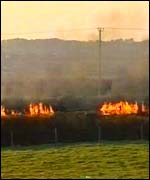
| | Thursday, 23 January, 2003, 15:40 GMT Animal movement relaxation welcomed  The foot-and-mouth crisis blighted hundreds of farms Farmers in Wales have welcomed the relaxation of red tape rules on livestock movements which have hampered livelihoods following the foot-and-mouth crisis. The UK Government has announced that it is cutting the 20-day movement rule of sheep and cattle to a six-day rule from 4 March for six months.
Announcing the changes on Thursday, Farming Minister Lord Whitty has warned there would be no overall relaxation of biosecurity and he urged farmers in Wales and England to comply with the new shorter control period. NFU Cymru President Peredur Hughes was among the first to give the moves a positive welcome, saying the decision removed a "major obstacle" for farmers in Wales. A senior figure from the British Veterinary Association, though, said the preferred scientific option would have been a higher level of control, possibly 10-14 days. Professor Karl Linklater, a past president of the BVA, told BBC News Online said the incubation period for foot-and-mouth could take as much as 13-14 days to be detected.
"Six days is not fullproof by any means," said Prof Linklater. "From a professional point of view, we have argued more towards the 20-day end of the spectrum than six. "You also have to consider what would be practical. There are rumours, although we have no grounds of proof, that a lot of farmers were ignoring the 20-day rule. "I suspect with the six-day rule there will be more requirement for biosecurity and less exemptions."
Defra - the government's food, environment and rural affairs department - has built in measures to revert back to 20 days if a renewed threat of foot-and-mouth emerges. The department commissioned risk assessments following the results of the Lessons Learned and Royal Society inquiries and a review of the new rules will take place again in May. Prof Linklater added he was in favour of a strategy of low, medium, and high risk gradings to act as an "early warning system". 'Good news for farmers' More than 300,000 animals were slaughtered in Wales during the disease outbreak . Hundreds of farms were dragged into the crisis, as cases spread across north, mid and south Wales, crippling farming and tourism. NFU Cymru president Peredur Hughes said farmers were desperate now to see their livelihoods improve. "This is good news for our livestock farmers who have found the 20-day movement restriction not only a major obstacle in the battle to re-build our livestock industry, but quite frankly almost unworkable. "We have been in intense dialogue with the National Assembly and Defra to produce a workable movement regime for the industry. "And I hope that this package is the start of a new way of working between government and farmers - one that produces results without the need to resort to regulation based on the lowest common denominator." Some farmers have been granted exemptions to the 20-day rule, creating confusion in the industry. Farmers and auctioneers want all the controls scrapped, believing the risk period of foot-and-mouth has long since passed. The last detected case in Wales was more than 16 months ago. Liberal Democrat AM for Montgomeryshire Mick Bates welcomed the new rules. "I appreciate Mike German's efforts as rural development minister in pressing farmers' views about the 20-day rule. Farmers have suffered enough and I am glad to see the back of the rule. "I understand the need to protect farms against this disease, but the control of illegal imports is much more important than a standstill. "The industry needs to see that illegal imports are being detected, and farmers do not need to be over-regulated." | |
See also:  17 Oct 02 | Wales 15 Jan 02 | Wales 19 Oct 01 | Wales 14 Nov 01 | Wales 31 May 01 | Wales 15 Jan 02 | UK Internet links: The BBC is not responsible for the content of external internet sites Top Wales stories now: Links to more Wales stories are at the foot of the page. | |||||||||||||||||||||||||||||||||||||||||||||||||||||||||||||||||||||||||||||||||||||||||||||||||||||||||||||
 | |
|  E-mail this story to a friend E-mail this story to a friend |
| |
| Links to more Wales stories |
| | | ||
 | ||||
 | | Back to top
| ||
| ---------------------------------------------------------------------------------- To BBC Sport>> | To BBC Weather>> | To BBC World Service>> ---------------------------------------------------------------------------------- © MMIII | News Sources | Privacy |




 I suspect with the six-day rule there will be more requirement for biosecurity and less exemptions