|
 |
 | | | | | | ||||||||||||||||||||||||||||||||||||||||||||||||||||||||||||||||||||||||||||||||||||||||||||||||
| | | You are in: UK: Wales | ||||||||||||||||||||||||||||||||||||||||||||||||||||||||||||||||||||||||||||||||||||||||||||||||||
|
| | Saturday, 18 January, 2003, 14:51 GMT Winds keep historic slate in harbour 
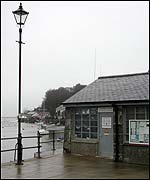
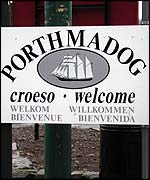
An inscribed slate block is in transit from its quarry of origin in Bethesda, Gwynedd, to its future home. "Every man thinks meanly of himself for not having been a soldier, or not having been to sea." That was Dr Johnson's view, and I can't deny he certainly put his finger on something crucial in the male psyche. He didn't say anything about gravity trains, though. I wonder if you can think less meanly of yourself after riding one of them as I did yesterday on the journey down from the quarry district of Blaenau Ffestiniog to the port of Porthmadog? I hope so. It looks as if I will have to live with my feelings of inadequacy for a while yet. The Vilma is spending its second night in Porthmadog, unable to put to sea because of 70 mile-an-hour onshore winds.
In its heyday as a shipbuilding centre, its boatyards specialised in creating vessels capable of putting to sea in the face of regular opposition from the elements. Known as "Western Ocean Yachts", these vessels with their finely-tapered bows were able to make their way against headwinds which kept more bluff-bowed ships confined to port. They helped carry the product of the Gwynedd slate quarries to roof tens of thousands of buildings around the world. Transport It is worth remembering the crucial role the seaways around the Welsh coast have played in our history. In the Age of the Saints, the sea was actually a major medium for the transmission of cultural influences around western Britain. Traffic across country inland was difficult and arduous, so a sea passage was often the transport method of choice.
Their CVs would often include their formative years at Llantwit Major's famous monastic school - a kind of Saints' Academy on the south Wales coast. Then there might be a transfer to a big league parish, and after various wanderings and hopefully some international-class miracles, the saints would then often move into management and pass on their wisdom to the new trainees. The sea has given Wales some potent legends too. There's Madog, the 12th Century Welsh prince who made a major lifestyle choice and headed off into the Atlantic with a small fleet of followers - and found America. They went native and blended in, living in the same style as the Indians. They did, however, so the legend goes, retain their language. Later, many Welsh speakers in the New World professed to have encountered a tribe of "Indians" with whom they could converse in Welsh. Legend The legend inspired several later expeditions to try to track the "Welsh Indians" down, most notably by John Evans, who mapped out 2,000 previously uncharted miles of the Missouri during his searches. The safe harbour of Porthmadog seems unlikely to produce such legends for us today. However, I got talking to Andy Williams, a friend of Scott Metcalfe, the owner of the Vilma.
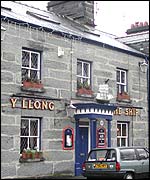
In 1965, when he was 16, Andy Williams and his brother were sailing in a dinghy off Hilbre Island between the coast of Wales and the Wirral. A gale blew up, their centre board jammed, making it dangerous to manoeuvre, and they were in danger of being swamped, but they managed to hail the passing prawn fishing boat, the Cachalot. It took them in tow and brought them to shore. More than 30 years later, Andy Williams came across a boat moored in a small channel on the Dee Estuary. It was the Cachalot. He made inquiries and found out that its previous owner, the younger brother of the man who had pulled him to shore, had died three weeks earlier. Andy spoke to his widow who was willing to sell - but she said she had another buyer who had already offered a high price. Dream Some time later, he passed the spot again. The boat was still there, unsold. He decided to try again. This time, she said she would accept a considerably lower price. He offered a slightly lower one still, and the answer he got was, to say the least, dismissive. "It can stay there until it rots - like my husband," she said. Next morning, Andy's phone rang. It was the widow. "I saw my husband last night in a dream. And that doesn't happen to me. He was standing on board his boat and smiling. I think he wants you to have it." He's saved the boat which saved him, and he did so after its dead owner appeared to his sharp-tongued widow in a dream. In the 21st Century it's good to know that you can still pick up a story like that in the harbours of Wales. And you can read more of Grahame Davies's journey with the slate block destined for the Wales Millennium Centre on Sunday. | | See also:  15 Jan 03 | Wales 23 Jan 02 | Wales 22 Jan 02 | Wales 22 Jan 02 | Talking Point Internet links: The BBC is not responsible for the content of external internet sites Top Wales stories now: Links to more Wales stories are at the foot of the page. | ||||||||||||||||||||||||||||||||||||||||||||||||||||||||||||||||||||||||||||||||||||||||||||||||
 | |
|  E-mail this story to a friend E-mail this story to a friend |
| |
| Links to more Wales stories |
| | | ||
 | ||||
 | | Back to top
| ||
| ---------------------------------------------------------------------------------- To BBC Sport>> | To BBC Weather>> | To BBC World Service>> ---------------------------------------------------------------------------------- © MMIII | News Sources | Privacy |