
|
 |
 | | | | | | ||||||||||||||||||||||||||||||||||||||||||||||||||||||||||||||||||||||||||||||||||||||
| | | You are in: UK: Wales | ||||||||||||||||||||||||||||||||||||||||||||||||||||||||||||||||||||||||||||||||||||||||
|
| | Tuesday, 10 December, 2002, 12:38 GMT Increase assembly's power, says peer 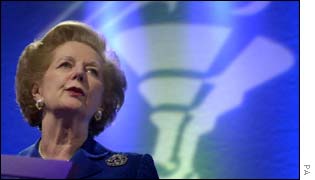 Lord Griffiths was special adviser to Margaret Thatcher Conservatives in Wales should embrace the Welsh language and distance themselves from the UK party, according to a senior Welsh Tory. Lord Brian Griffiths of Fforestfach, a former special adviser to Margaret Thatcher, also called for the Welsh Assembly to have full law-making powers. Giving the Institute of Welsh Politics' fourth annual lecture at Aberystwyth, Lord Griffiths called for a more autonomous Welsh Conservative party, with its own constitution, manifesto and power over selections.
He said the Tories - who currently have nine members in the Welsh Assembly - should strengthen the role of the Welsh language and of Welsh life, and should make devolution work more effectively. Lord Griffiths said if the party accepted a notion of Welshness, the structure of the Conservative party with Wales as a "region" was "simply not acceptable". He called for the party to build on its track record on the Welsh language. He pointed to the creation of Welsh television channel S4C, making Welsh compulsory by the 1988 Education Act and the 1993 Welsh Language Act - all of which happened under a Conservative government. Migration He said "It would be disastrous [if the party were] seen as being identified as a foreign party and alien to the real interests of Wales." The problem of migration in Wales needed to be addressed, according to Lord Griffiths. "Market forces left to themselves will continue on current trends, and will seriously damage the Welsh language," he claimed.
However, imposing restrictive policies on housing and planning could create a strong backlash against the language. He warned against making non-Welsh speakers feel like second-class citizens, but suggested people moving to predominantly Welsh-speaking areas should be encouraged to learn the language. Primary powers On the subject of devolution, he said the Assembly could not deliver enough change in its present model. Lord Griffiths called for primary law-making powers and for a formal separation of powers between the executive (the assembly government) and the legislature (the assembly). He rejected another referendum on constitutional change, saying it was "ill-advised", and added: "Primary powers can be introduced by the back door." A thriving business sector was necessary to create wealth, said Lord Griffiths, adding there was too much dependency on employment in the public sector in Wales. And he pointed to Wales' universities as the locomotive to drive economic growth, but said they were massively under funded. He has backed an American model of funding, including the slow introduction of top-up fees. Lord Griffiths, who was born in Swansea, is a former professor of banking and international finance, and was a director of the Bank of England from 1983 to 1985. He was head of then-Prime Minister Margaret Thatcher's Policy Unit between 1985 and 1990, and was one of the chief architects of the Conservative's privatisation and deregulation programme. | | See also:  07 Oct 02 | Wales 19 Sep 02 | Wales 18 Dec 02 | Wales 01 Mar 02 | Wales Top Wales stories now: Links to more Wales stories are at the foot of the page. | ||||||||||||||||||||||||||||||||||||||||||||||||||||||||||||||||||||||||||||||||||||||
| |
|  E-mail this story to a friend E-mail this story to a friend |
| |
| Links to more Wales stories |
| | | ||
 | ||||
 | | Back to top
| ||
| ---------------------------------------------------------------------------------- To BBC Sport>> | To BBC Weather>> | To BBC World Service>> ---------------------------------------------------------------------------------- © MMIII | News Sources | Privacy |




 It would be disastrous [if the party were] seen as being identified as a foreign party and alien to the real interests of Wales