|
 |
 | | | | | | |||||||||||||||||||||||||||||||||||||||||||||||||||||||||||||||||||||||||||||||||||||||||
| | | You are in: UK: Wales | |||||||||||||||||||||||||||||||||||||||||||||||||||||||||||||||||||||||||||||||||||||||||||
|
| | Sunday, 20 October, 2002, 11:23 GMT 12:23 UK Anger over rail strikes 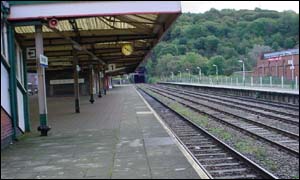 A deserted platform at Bangor rail station on Saturday Rail travellers in north Wales and the north west of England faced a second day of disruption on Sunday as the train drivers' union, Aslef, staged the fourth in a series of 48-hour weekend strikes. The industrial action was part of a schedule of planned stoppages which will bring all First North Western services to a standstill every weekend until 24 November.
First North Western has introduced an amended timetable to allow customers to plan their journeys with certainty while buses have been laid on to replace the train service. The company normally runs around 1,500 services per day on its network, which spreads from Cumbria to the Midlands and along the north Wales coast. But on Sunday, there were just 30 rail services and a limited number of replacement bus services. Passengers at Bangor rail station expressed anger at the ongoing disruption.
University student Nick Hulbert said he could see why the strikes were taking place, but felt that a more measured approach would be a better alternative. "If the strikes took place every other weekend then I feel the public might be a bit more sympathetic," he said. "For the service to be disrupted every weekend is frankly ludicrous." Richard East, who is also studying at Bangor, said he was glad that there was a bus service but that it was difficult to get information about it. "We were told yesterday that there wouldn't be any buses only to find out late last night that there was a full service," he remarked. No sympathy The series of strikes has also had a knock on effect on other businesses with taxi companies and cafe owners across north Wales being adversely affected. Taxi driver John Keeley, of Tryfan cabs in Bangor, said business was at its lowest for 20 years. "I work primarily out of the station and I can't ever remember trade being this bad," he said. "I've no sympathy at all with the train drivers. They get enough money. They should try and live on what I'm earning."
Ruth Farrar, who runs the cafe at the station, said if the strikes continued she felt the business would close. "This is our own business and we depend entirely on rail passengers," she said. "Those travelling on the buses don't come onto the platform so as a result they don't come to the cafe. "If the industrial action escalates then it will just flatten our business," she said. The dispute revolves around the improved offer which gives drivers a 19% pay rise, phased over three years, for a 35 hour, 4-day working week. Arbitration This means that the basic salary for a driver in January 2004 would be �28,000. First North Western's managing director, Vernon Barker, has urged Aslef to consider the effect their actions is having on the public. "Again, I am calling for the offer to be put to arbitration or a ballot of union members," he said. "The drivers have yet to be given a chance to vote on our pay offer, and it is only fair that they are consulted in this matter." | |   See also: 19 Oct 02 | England 16 Oct 02 | England 12 Oct 02 | Wales 12 Oct 02 | England 06 Oct 02 | England 24 Aug 02 | England 21 Aug 02 | England Internet links: The BBC is not responsible for the content of external internet sites Top Wales stories now: Links to more Wales stories are at the foot of the page. | |||||||||||||||||||||||||||||||||||||||||||||||||||||||||||||||||||||||||||||||||||||||||
| |
|  E-mail this story to a friend E-mail this story to a friend |
| |
| Links to more Wales stories |
| | | ||
 | ||||
 | | Back to top
| ||
| ---------------------------------------------------------------------------------- To BBC Sport>> | To BBC Weather>> | To BBC World Service>> ---------------------------------------------------------------------------------- © MMIII | News Sources | Privacy |