|
 |
 | | | | | | |||||||||||||||||||||||||||||||||||||||||||||||||||||||||||||||||||||||||||||||||||||||||||||||||||
| | | You are in: UK: Wales | |||||||||||||||||||||||||||||||||||||||||||||||||||||||||||||||||||||||||||||||||||||||||||||||||||||
|
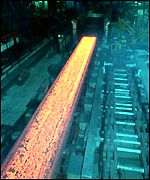
| | Tuesday, 9 July, 2002, 16:13 GMT 17:13 UK Hannan's Call to Order BBC Wales political commentator Patrick Hannan pays tribute to Ebbw Vale for holding out so long against the decay of the valley's industries which helped characterise Wales. The closure last week of the surviving remnant of the steel industry in Ebbw Vale was one of those comparatively small events that suddenly confronts us with the dramatic changes that have taken place in a once-familiar landscape. Of course the event wasn't small for the town itself. The loss of 800 jobs could never be a minor matter, but its scale is less significant than its symbolism in the context of the drastic closure programmes that have swept over Wales in less than a generation. What has happened at Ebbw Vale is particularly striking, though, because its industries (coal as well as steel, of course) remain an important component in the way in which the outside world sees Wales and, to some extent, the way in which Wales sees itself.
Much of the traditional character of industrial Wales was formed by the fact that it was composed of a series of communities based on a single industry - coal, steel and slate in particular. It meant that people's lives were defined by one activity in particular. Many of the problems they now face arise from the fact that that shared experience has now largely disappeared. This has been vividly illustrated at Ebbw Vale over the years by the determination with which its people have somehow kept the steel industry alive. We have to remember that the process of decay didn't start suddenly in 1979. The iron and steel industry at the heads of the valleys has been in decline for well over a century.
As production headed for the coast, Ebbw Vale went on as an extraordinary and isolated survivor. In fact it might well have been all over long ago. It was closed down in 1929 and that might have been the end of the matter, as it was in so many other towns and villages along the heads of the valleys. But, despite everything, a new works was opened on the site just before the war. It was done against all the economic wisdom of the day and by the time the British Steel Corporation was created in 1967 Ebbw Vales in many ways symbolised the problems the newly nationalised industry was facing. Global plan The future had to lie in a small number of large works built on the coast. Small, inland plants like Ebbw Vale were finished. But if that was what the experts thought as they drew up their global plan, the people who worked in Ebbw Vale weren't having any of it. The plan to end steelmaking there (although other forms of production were to continue) was first leaked in 1968. It was officially announced in 1969. It was announced all over again, with different figures for job losses, in 1972. In 1974 the new Labour government decided the case should be examined all over again. The following year, on a bitter afternoon in February, Michael Foot, the town's MP and now Employment Secretary, announced that steelmaking would have to end. A big crowd of steelworkers howled him down. What was remarkable then was the tenacity with which the people of Ebbw Vale fought to keep the works going. And that was because it was at the core of their lives rather than simply somewhere they went to work. I went to the plant many times in that period and everyone I met there urged on me the merits of the works and the need for it to survive. Their record in production and industrial relations was impeccable, surely they and their community deserved better, they said over and over again. It was difficult not to feel they had a point but they were never going to win, however long they managed to delay the inevitable. What is remarkable that it's only now - 212 years after he first ironworks was established in the town, that the final chapter has been written and we have been vividly reminded of how much the world has shifted under our feet. For example: when I first went to the Ebbw Vale steelworks, more than 30 years ago, it employed 9,000 people, more than the entire steel industry does in Wales today. At that time too there were 50,000 miners in Wales. Now there are more television producers than miners. That's something even broadcasters don't find reassuring. Patrick Hannan's weekly political programme, Called to Order, is live on Radio Wales, 93-104FM, 882 and 657AM, and DSat channel 867. You can also listen to BBC Radio Wales live online at http://www.bbc.co.uk/wales/live/rwv5.ram. e-mail: [email protected] | |
See also:  06 Jul 02 | Wales 05 Jul 02 | Wales 14 Mar 01 | Wales Internet links: The BBC is not responsible for the content of external internet sites Top Wales stories now: Links to more Wales stories are at the foot of the page. | |||||||||||||||||||||||||||||||||||||||||||||||||||||||||||||||||||||||||||||||||||||||||||||||||||
| |
|  E-mail this story to a friend E-mail this story to a friend |
| |
| Links to more Wales stories |
| | | ||
 | ||||
 | | Back to top
| ||
| ---------------------------------------------------------------------------------- To BBC Sport>> | To BBC Weather>> | To BBC World Service>> ---------------------------------------------------------------------------------- © MMIII | News Sources | Privacy |