
|
 |
 | | | | | | |||||||||||||||||||||||||||||||||||||||||||||||||||||||||||||||||||||||||||||||||||||||||||||||||||||||||||||||||||||||||||||||||||||||||||||||||||||||||||||
| | | You are in: UK: Politics | |||||||||||||||||||||||||||||||||||||||||||||||||||||||||||||||||||||||||||||||||||||||||||||||||||||||||||||||||||||||||||||||||||||||||||||||||||||||||||||||
|
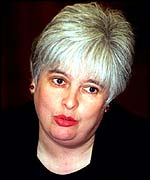
| | Friday, 6 December, 2002, 16:21 GMT Gay couples 'to get equal rights' 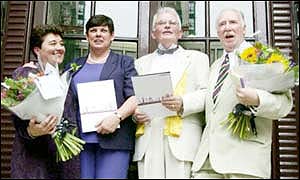 Gay couples have long called for legal recognition Gay men, lesbians and bisexuals would be granted many of the same rights as married couples under UK Government plans for legally-recognised civil partnerships. Barbara Roche, the Minister for Social Exclusion and Equalities, says there is a strong case for allowing same-sex couples to register their relationships.
Co-habiting couples do not receive the same tax breaks or entitlements that married couples enjoy, including access to a partner's pension. Civil partnerships could give homosexual couples property and inheritance rights for the first time. Under the plans, those who register their partnership will also receive next-of-kin status, without which partners cannot be consulted about hospital treatment. The government is set to unveil detailed proposals for change next summer and consult on the issue before bringing in legislation. Any bill would be likely to run into opposition in the House of Lords. There is already a register for gay couples in London - but it does not confer legal rights. Mrs Roche says the idea is not about being politically correct but about recognising how society has changed. She told BBC Radio 4's Today programme: "There are a number of people in gay relationships, in lesbian relationships, who are in loving relationships but their partnerships have no recognition in law.
Earlier, she told the Independent newspaper the change would also send a powerful message that homophobia was unacceptable and still far too widespread. Mrs Roche said that many gay people had been refused hospital visits or excluded from funerals, while others had had to sell their homes to pay inheritance tax. Eight European Union countries, Canada and several American states already gave legal status to civil partnerships, said Mrs Roche. A new survey of British social attitudes this week suggested a "dramatic" shift in the way the public view homosexuality.
In 1985, 70% of people thought homosexuality was "always" or "mostly" wrong. Now that view is shared by under half (47%) of people, while a third of people says it is "not wrong at all", suggested the National Centre for Social Research survey. Some religious groups, however, are set to oppose moves to put gay relationships on a firmer footing. Colin Hart, director of the Christian Institute, told Today he was sad about the plans "because marriage is supported by the state because it is a relationship for the bringing up of children". "It is a natural thing, based on biology not any ideology," said Mr Hart. "This seems to be equating some relationships, namely gay relationships, with marriage and I think that is very wrong." Mr Hart said the move would also exclude the 3.4m who lived together without being couples but whose lives were entwined - such as two sisters in the same home. Welcome move In contrast, the plans were welcomed by Sacha Deshmukh of gay rights group Stonewall. Mr Deshmukh told BBC Radio 4's Today programme: "We are very pleased with these proposals that look like they are going to be coming forward next summer."
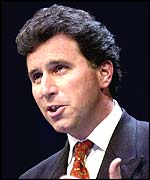
He said marriage had "huge cultural and religious connotations" and was a different area. "What we are talking about here is civil partnership registration - the ability to have financial rights, legal rights which give you protection as a couple," he added. David Allison, spokesman for gay rights campaigners OutRage!, welcomed the proposal. "We certainly welcome it and would hope that the government will go on and recognise these relationships in full." Gareth Crossman, from civil rights group Liberty, also described that plan as "a welcome move". "A civil register for same-sex relationships would allow equal access to the economic and property rights that are available to heterosexual couples," he said. 'Serious practical grievances' Those sentiments were backed by Conservative shadow home secretary Oliver Letwin. Mr Letwin told Today: "Whilst we attach a huge importance to the institution of marriage and want to keep that as it is, we do recognise that gay couples suffer from some serious practical grievances." That stance might not, however, find favour with some of Mr Letwin's fellow Tories. The move was welcomed as well by Liberal Democrat health spokesman Evan Harris. But he urged ministers to ensure unmarried heterosexual couples too were equal before the law. | |
 Equality debate Equality debateShould same-sex couples have the same rights? 
 See also: 22 Apr 02 | UK 15 Feb 02 | UK 07 Aug 01 | UK 06 Dec 02 | Politics 05 Sep 02 | UK 06 Dec 02 | UK 06 Dec 02 | UK Internet links: The BBC is not responsible for the content of external internet sites | |||||||||||||||||||||||||||||||||||||||||||||||||||||||||||||||||||||||||||||||||||||||||||||||||||||||||||||||||||||||||||||||||||||||||||||||||||||||||||||
| |
|  E-mail this story to a friend E-mail this story to a friend |
| |
|
| | | ||
 | ||||
 | | Back to top
| ||
| ---------------------------------------------------------------------------------- To BBC Sport>> | To BBC Weather>> | To BBC World Service>> ---------------------------------------------------------------------------------- © MMIII | News Sources | Privacy |








 TALKING POINT
 85.67%
  14.33%