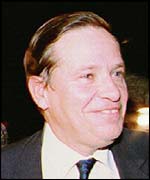
|
 |
 | | | | | | |||||||||||||||||||||||||||||||||||||||||||||||||||||||||||||||||||||||||||||||||||||||||||||||||||||||
| | | You are in: UK: Politics | |||||||||||||||||||||||||||||||||||||||||||||||||||||||||||||||||||||||||||||||||||||||||||||||||||||||||
|
| | Thursday, 21 November, 2002, 16:34 GMT MPs told to set an example 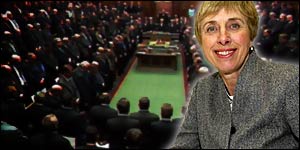 Elizabeth Filkin complained of bullying tactics
Sir Nigel Wicks was speaking as his Committee on Standards in Public Life said imposing fines on misbehaving MPs was one way of alleviating people's fears about sleaze.
Amid fears over the independence of the current system, his committee says no political party should have an overall majority on the body that judges whether MPs have broken their code of conduct. The inquiry began after Parliament's former standards watchdog, Elizabeth Filkin, complained she had been victim of "bullying tactics". Financial penalties Ms Filkin had also expected to be reappointed automatically and did not reapply for the post when she was not. To boost the watchdog's independence, Sir Nigel's committee wants the watchdog to be appointed for a single fixed term of between five and seven years. And the commissioner would be able to summon witnesses and see documents. At present any offending MP faces three forms of censure - they can be forced to apologise, be suspended from the Commons, or in extreme cases, be permanently expelled.
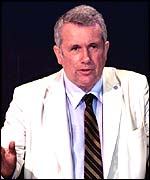
The recommendations will disappoint those who want an end to self-regulation, such as ex-independent MP Martin Bell. The committee says fundamental change may be needed in future. Sir Nigel rejects the suggestion the committee held back from pushing for MPs to lose the right to regulate themselves because Parliament would not accept it. "That is certainly not the case," he said. "We did look at the statutory option and we certainly don't rule it out for the future." Sir Nigel said the proposals could achieve the twin objectives of boosting public confidence and carrying the confidence of MPs. Last chance saloon? Change could happen in a matter of months if MPs agree to the plans, he says, whereas changing the law would take "some time". Some commentators have suggested the changes could represent a "last chance" saloon for self-regulation. Those are not words echoed by former civil servant Sir Nigel, who insists Thursday's report is the "right for the time".
But the committee does say the current system "has fallen short of delivering confidence in certain respects". Public perception of misconduct has not helped voter turnout, he suggests. He says public confidence in individual MPs, irrespective of party, is "quite high". "But it is the House as a whole where there is less esteem and our objective is to try to increase public confidence in the House of Commons as a whole." That is "absolutely vital" because the Commons is "at the heart of our democracy". Sir Nigel argues the overwhelming majority of MPs want high standards but "one or two bad apples can tarnish the whole process". Setting an example He acknowledges that efforts to prevent an accounting scandal like Enron increase the responsibility on MPs to set a good example. The Commons lays down the requirements for standards in local councils, the private sector and financial institutions, he says. "And if it's doing that it needs to show leadership and so on in the way it regulates standards itself." Perhaps the most radical recommendation is for the investigatory panel, which will also include two senior MPs. Sir Nigel stresses the panel can help, not undermine, the work of the standards commissioner Philip Mawer, Ms Filkin's successor. Public fact finding The commissioner can ask the panel to intervene where he is having problems "getting to the bottom" of a claim or if an MP disputes evidence. MPs facing allegations will also be able to call and cross-examine witnesses before the panel, which will meet in public. That removes worries that the current system does not include all the principles of "natural justice", said Sir Nigel. MPs on the Commons standards and privileges committee will still decide whether the rules have been broken. But Sir Nigel insists the proposed changes would make the decision making process "much more transparent". "If the commissioner's report is disagreed to by the committee, then it must fully explain whey it disagreed and make that public." Meanwhile, Martin Bell, former member of the Commons standards committee, said the way Ms Filkin had been treated had been "disgraceful" in Parliament. He welcomed some of the proposals but added: "We should end self-regulation. MPs just don't seem to be able to do it for themselves." | |
See also:  11 Jun 02 | Politics 13 Feb 02 | Politics 20 May 02 | Politics 07 Dec 01 | Politics 05 Dec 01 | Politics 25 Oct 01 | Politics 28 Jun 01 | Politics Internet links: The BBC is not responsible for the content of external internet sites | |||||||||||||||||||||||||||||||||||||||||||||||||||||||||||||||||||||||||||||||||||||||||||||||||||||||
| |
|  E-mail this story to a friend E-mail this story to a friend |
| |
|
| | | ||
 | ||||
 | | Back to top
| ||
| ---------------------------------------------------------------------------------- To BBC Sport>> | To BBC Weather>> | To BBC World Service>> ---------------------------------------------------------------------------------- © MMIII | News Sources | Privacy |