|
 |
 | | | | | | |||||||||||||||||||||||||||||||||||||||||||||||||||||||||||||||||||||||||||||||||||||||||||||||||||||||||||||||||||
| | | You are in: UK: Politics | |||||||||||||||||||||||||||||||||||||||||||||||||||||||||||||||||||||||||||||||||||||||||||||||||||||||||||||||||||||
|
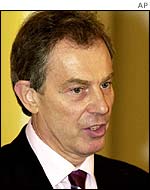
| | Tuesday, 19 November, 2002, 17:38 GMT Blair faces Commons Iraq test 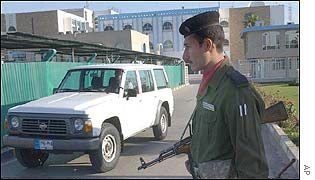 UN weapons inspectors begin arriving in Baghdad
The House of Commons is to debate the UN Security Council resolution on Iraq next Monday, with the precise wording of the motion to be unveiled on Wednesday. Labour MPs have already been issued with a three-line whip - a party's strongest exertion of parliamentary discipline - for when they vote on the motion. But a rebellion by anti-war Labour backbenchers still looks set to take place, however the motion is framed. Discussions with Blair offered Government business managers are nervous about the possible scale of the revolt, with some backbenchers being offered private meetings with Mr Blair and Foreign Secretary Jack Straw to discuss their concerns ahead of Monday's debate.
Some MPs fear the US will use the UN resolution to justify military action against Saddam Hussein or an invasion of Iraq without recourse to any further international sanction explicitly backing the use of force. Their concerns have been fanned by the alleged US "smear campaign" against Hans Blix, head of the UN weapons inspection team in Iraq. When Mr Straw set out the government's position on Iraq to backbenchers at a meeting of the Parliamentary Labour Party on Wednesday, he restated his view that it was not necessary for a second resolution to be brought before the UN. Move to marginalise rebels Government sources confirm that they hope to marginalise anti-war MPs by focusing Monday's debate on support for the UN resolution, rather than approval of British involvement in any possible military action. Ministers hope this move will confine demonstrations of dissent to hardened anti-war rebels. More than 50 MPs used a technical motion in September to register their opposition to Mr Blair's Iraq policy. A number of likely rebel MPs told BBC News Online that for Monday's Commons debate, they hope to force an amendment requiring the issue to go back to the UN Security Council before any attack on Iraq. Just last week International Development Secretary Clare Short signalled continuing cabinet tensions on the subject when she warned that the UN Security Council alone should decide whether to take military action against Iraq. But Mr Blair and US President George W Bush have repeatedly insisted they cannot rule out the possibility of taking unilateral action. Meanwhile, Iraq has promised to meet the 8 December deadline for declaring whether it still holds any weapons of mass destruction. Mohamed El Baradei, head of the International Atomic Energy Agency, said Iraqi officials made the commitment during talks on Monday night with the UN inspection team. Meeting the deadline is one of the key conditions laid down in the UN resolution. | |
See also:  25 Sep 02 | Politics 19 Nov 02 | Politics 19 Nov 02 | Middle East Internet links: The BBC is not responsible for the content of external internet sites | |||||||||||||||||||||||||||||||||||||||||||||||||||||||||||||||||||||||||||||||||||||||||||||||||||||||||||||||||||
| |
|  E-mail this story to a friend E-mail this story to a friend |
| |
|
| | | ||
 | ||||
 | | Back to top
| ||
| ---------------------------------------------------------------------------------- To BBC Sport>> | To BBC Weather>> | To BBC World Service>> ---------------------------------------------------------------------------------- © MMIII | News Sources | Privacy |