|
 |
 | | | | | | |||||||||||||||||||||||||||||||||||||||||||||||||||||||||||||||||||||||||||||||||||||||||||||||||||||||||||
| | | You are in: UK: Politics | |||||||||||||||||||||||||||||||||||||||||||||||||||||||||||||||||||||||||||||||||||||||||||||||||||||||||||||
|
| | Monday, 5 August, 2002, 07:43 GMT 08:43 UK Asylum seekers make their case
The stories include a dramatic escape from custody, a vengeful father-in-law, a mysterious illness.
In an otherwise empty waiting area, a little girl is fast asleep on a row of seats. Her brother sits quietly on his hands next to her. Their asylum-seeking father is in a clammy courtroom a few yards away explaining why he thinks he should be allowed to stay in the UK with his family. Torture And if only half of what he says happened to him in his homeland is true, then the little girl outside has cause to relish every future day she shares with him. They are at Taylor House, one of a number of centres around the country where asylum seeker appeals are heard. The man, who is Iranian, sits tall and proud as he relates a story of torture, bribery and fear. He was arrested and tortured after a dispute with a mullah, he says. He only escaped after his family bribed prison officers to set him free in Tehran, he claims. Nervous Going home, says the man's solicitor, would put his life in danger.
The man is appealing before an independent adjudicator from the Immigration Appellate Authority (IAA) against the Home Office's decision to refuse him asylum in the UK. Dozens of similar cases are being heard in more than 20 courtrooms on the second floor of the red-brick building. Notices outside each room list the day's hearings, with interpreters required in, among others, Farsi, Turkish, Punjabi, Tamil and Kiswahili. Soundbites In the waiting areas dotted around the maze of corridors, the appellants sit around the pot plants discussing their cases with their solicitors. These are the people whose lives provide lurid headlines, hundreds of soundbites and hour upon hour of debate. IAA hearings over asylum and immigration decisions made by the Home Office are held throughout the UK. Appeals are made before an independent adjudicator, with subsequent appeals heard by a tribunal consisting of a legally-qualified chairman and two lay people. At that stage, an asylum seeker whose appeal is turned down can apply to the tribunal for leave to appeal to the Court of Appeal on a point of law. Increase They are also able to apply to the High Court for leave to move for a judicial review over their case.
Applications have steadily increased in subsequent years, though the provisional figure for 2001 of more than 71,000 is actually down on the previous year. In 1993, IAA adjudicators heard 2,440 cases - last year they considered 43,415 appeals. Most are rejected: last year for instance, 8,155 - or 19% - were allowed. The Home Office says the increase in the number of cases heard - it rose from 19,000 in 2000 to more than 43,000 in 2001 - is evidence of improvements in the system. Plausible It also reflects the increase in the number of asylum seekers arriving in the UK, many from the Balkans during the conflicts of the 1990s, with a recent increase in the number of Afghans, Zimbabweans and Somalians making applications to stay in Britain.
The afternoon session in one court begins with the case of a young Albanian man. He says he fears that because he is a Muslim, he will be tracked down and attacked by the disapproving family of his Christian girlfriend if he is returned home. Polite The room is small, the public seating empty. There is the hum of traffic from the busy roads outside and the whispers of the interpreter as she repeats everything said back to him. A few rooms down the corridor, a woman who came to the UK from Ghana says she would not feel safe returning because her husband was involved in an attempted coup. In another, a young Home Office representative politely tells an appellant that she doesn't believe a word of his tale of persecution and threats. Meanwhile, the Iranian man a few rooms down is told that, like all appellants, he will not be told the verdict on his case immediately. That will arrive, in writing, in a few weeks time. 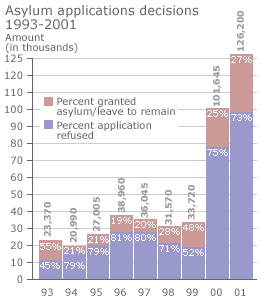 | |
See also:  25 Jul 02 | Politics 28 Jul 02 | UK 28 Jul 02 | UK 12 Jul 02 | England 11 Jul 02 | UK 09 Jul 02 | Politics 17 Jun 02 | UK 02 Jun 02 | Politics 07 Jun 02 | In Depth Internet links: The BBC is not responsible for the content of external internet sites | |||||||||||||||||||||||||||||||||||||||||||||||||||||||||||||||||||||||||||||||||||||||||||||||||||||||||||
| |
|  E-mail this story to a friend E-mail this story to a friend |
| |
|
| | | ||
 | ||||
 | | Back to top
| ||
| ---------------------------------------------------------------------------------- To BBC Sport>> | To BBC Weather>> | To BBC World Service>> ---------------------------------------------------------------------------------- © MMIII | News Sources | Privacy |