|
 |
 | | | | | | |||||||||||||||||||||||||||||||||||||||||||||||||||||||||||||||||||||||||||||||||||||||||||||||||
| | | You are in: UK: Politics | |||||||||||||||||||||||||||||||||||||||||||||||||||||||||||||||||||||||||||||||||||||||||||||||||||
|
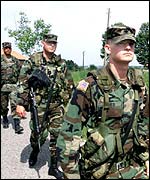
| | Wednesday, 31 July, 2002, 17:10 GMT 18:10 UK Nato 'must bridge gaps' among members  American advances in technology could threaten Nato
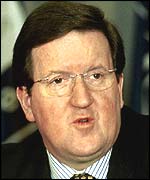
"If this gap is not addressed, we will face a political, conceptual and military divergence, which will make the transatlantic Alliance ever harder to sustain, on the battlefield and in the conference chamber." Speaking in London last week, Nato's Secretary General, Lord Robertson, returned to a theme he has been anxious to emphasise at every available opportunity since taking office in 1999.
American technological advances, and huge recent increases in Washington's defence budget, threaten to undermine Nato's very raison d'�tre. In the wake of September 11th, Nato made much of its ability to send Airborne Warning and Control Systems (AWACS) to patrol the skies over North America, and warships to monitor the eastern Mediterranean, but in reality, Nato's role in the war on terrorism has been limited. Gaps in capability Washington preferred a "coalition of the willing" which, while including plenty of alliance members, was never seen as a Nato operation. But not for the first time, the American military in Afghanistan found itself doing things the Europeans could not hope to replicate. The gaps in capability, already apparent during the 1999 Kosovo operation, were, Lord Robertson said, "brought home even more forcefully". These include a host of key areas, including the suppression of enemy air defences, all-weather precision bombing, communications systems and so-called "strategic lift" - the ability to move large amounts of heavy equipment quickly over long distances.
Britain has gone further than most of the European alliance members towards addressing such shortcomings, but improvements are slow. The European strategic airlift project, the Airbus A400M aircraft, will not be available much before the end of the decade. Rapid response In the meantime, the only European capability in this critical area is provided by four American C-17s leased by the UK. If the Nato allies find it hard to fight together, the argument goes, then what is the point of a military alliance? At a time when the Europeans are already worried about Washington's increasingly unilateralist tendencies, it all amounts to a worrying time for Nato loyalists. But efforts are being made to address the problem. Nato is already engaged in a "bottom-up" review of its command structure.
The end result may be a more streamlined organisation, with fewer regional commands and a greater emphasis on rapid response to global threats, such as terrorism. US officials are thought to favour the creation of a new US-based command with responsibility for modernising the alliance and addressing the problem of capabilities. This could be part of a formal plan for restructuring which may be ready for adoption at the Prague summit later this year. In the meantime, not everyone agrees that Europe is as weak as it seems to think it is. Arguing that the United States needs Nato more than Europe does, Paris-based analyst William Pfaff, last week pointed out that "Nato provides the indispensable material and strategic infrastructure for American military and strategic deployments throughout Europe, Eurasia, the Middle East and Africa." If European members refused to allow the United States to use their Nato assets for an attack on Iraq, he argued in the International Herald Tribune, it would demonstrate their own authority and, possibly, save Nato by restoring some political balance. A radical solution and almost certainly not what Lord Robertson has in mind when he tries to think of ways to breathe life into this 50-year-old alliance. | | See also:  31 Jul 02 | Politics 18 Jun 02 | Europe 06 Jun 02 | Politics 23 May 02 | Europe 22 May 02 | Europe 14 May 02 | In Depth Internet links: The BBC is not responsible for the content of external internet sites | |||||||||||||||||||||||||||||||||||||||||||||||||||||||||||||||||||||||||||||||||||||||||||||||||
| |
|  E-mail this story to a friend E-mail this story to a friend |
| |
|
| | | ||
 | ||||
 | | Back to top
| ||
| ---------------------------------------------------------------------------------- To BBC Sport>> | To BBC Weather>> | To BBC World Service>> ---------------------------------------------------------------------------------- © MMIII | News Sources | Privacy |