|
 |
 | | | | | | |||||||||||||||||||||||||||||||||||||||||||||||||||||||||||||||||||||||||||||||||||||
| | | You are in: UK: Politics | |||||||||||||||||||||||||||||||||||||||||||||||||||||||||||||||||||||||||||||||||||||||
|
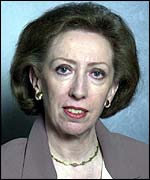
| | Friday, 26 July, 2002, 15:20 GMT 16:20 UK 'Open debate' called on GM crops 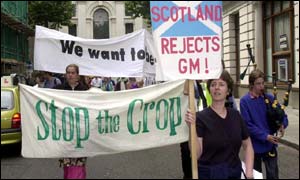 Many people are strongly against GM crops A public debate on the issues surrounding genetically modified crops has been announced by the government. Environment Secretary Margaret Beckett said she wanted a "genuinely open and balanced discussion" to help people make their minds up on the issue. The launch of the debate follows an attack on the motives of GM crop protesters by Prime Minister Tony Blair, who said unjustified protests could stifle scientific progress. But on Friday the chief scientific adviser for the Department for the Environment, Food and Rural Affairs, told the BBC there must be more research before GM crops are widely available. Field trials Mrs Beckett said the debate would begin in the autumn and would aim to create dialogue between all points of view on GM crops. She said: "There is clearly a wide range of views on this issue and we want to ensure all voices are heard." The debate will be steered by Agriculture and Environment Biotechnology Commission (AEBC) chairman Professor Malcolm Grant, along with representatives from non-governmental organisations, the biotechnology industry, health professions, consumer organisations and individuals involved in the scientific and economic research. The report on the debate is expected in June 2003. The government appears to have followed the advice of the AEBC, which said that the public debate will help the public understand the issues involved. It said the results of field trials alone could not justify commercial planting of GM crops. It warned MPs they must take an "arms length" approach, as their views on the issue were not trusted. 'Culture of unreason' Announcing the debate Mrs Beckett said: "If there are gaps and uncertainties in knowledge these need to be ascertained, acknowledged and addressed.
On Friday Defra's chief scientific adviser Professor Howard Dalton called for greater caution, even if it meant delaying the widespread use of GM crops. He said that not enough is known about the impact that genetically modified crops may have if they cross-breed with natural varieties. He said: "My concern is that we are moving specific genes, often just one at a time, as opposed to the many thousands you do with normal plant breeding. "What we don't know are the implications of what that one foreign gene might have on other proteins in the recipient plant material." 'Implications' Defra was liaising with the Food Standards Agency to see what these problems might be, Mr Dalton said. "They are looking at many of these modified plants to see if they are toxic or dangerous... we don't know what the implications might be because it's not a normal thing to happen. "I want to make sure that as a result, there are no problems," he said. | | See also:  26 Jul 02 | Science/Nature 18 Jun 02 | Politics 23 May 02 | Politics 15 Mar 02 | UK 31 Jan 02 | UK 30 Jan 02 | Politics Internet links: The BBC is not responsible for the content of external internet sites | |||||||||||||||||||||||||||||||||||||||||||||||||||||||||||||||||||||||||||||||||||||
| |
|  E-mail this story to a friend E-mail this story to a friend |
| |
|
| | | ||
 | ||||
 | | Back to top
| ||
| ---------------------------------------------------------------------------------- To BBC Sport>> | To BBC Weather>> | To BBC World Service>> ---------------------------------------------------------------------------------- © MMIII | News Sources | Privacy |