|
 |
 | | | | | | |||||||||||||||||||||||||||||||||||||||||||||||||||||||||||||||||||||||||||||||||||||||||||||||||||||||||||||
| | | You are in: UK: Politics | |||||||||||||||||||||||||||||||||||||||||||||||||||||||||||||||||||||||||||||||||||||||||||||||||||||||||||||||
|
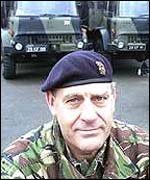
| | Monday, 22 July, 2002, 15:43 GMT 16:43 UK 'It was a hell of a mess' About 100,000 carcasses were waiting for the army An official inquiry into the UK's handling of foot-and-mouth says ministers should have called in the army sooner. BBC News Online speaks to Brigadier Alex Birtwistle, who led the army's handling of last year's outbreak. The commander of the 42 (North West) Brigade, who served in Northern Ireland during his 34-year career, postponed his retirement to fight the disease. He finally left the army in April 2001. Brigadier Birtwistle has agreed with an official report that the government was too slow to react to the crisis. He told BBC News Online there had been a "startling" level of incompetence on the part of the authorities in the initial stages of the crisis. "It's not so much that we were brought in late, but that it wasn't necessary for us to be brought in at all - it should have been a simple main task."
"There was a startling level of incompetence at every level," he said. Brigadier Birtwistle estimated that about 100,000 carcasses had been waiting for disposal by the time he was called in, almost a month after the disease was first spotted. "It was a hell of a mess by the time we were brought in. "There were rotting heaps of carcasses which had been outside people's houses for about three weeks." He said cows had not been sorted out into those over five years old, which needed to be burned, and those under five years old, which needed to be buried. Bio-security "Their ears were so rotten their ear tags had fallen out so we couldn't identify which was which," he said. "We're one of the 10 richest nations, we're a legitimate nuclear power and we can't get a few trucks into Cumbria." The official inquiry into the crisis said ministers had failed to prepare properly for an outbreak on such a scale. Brigadier Birtwistle said: "There was no contingency planning at all."
Brigadier Birtwistle said there was a clear need for a strong link between local officials and ministers - a role he fulfilled during the operation. He said there was also a clear need for more liaison and communication at ministerial level, with much more co-operation between the agriculture, tourism and European ministers. "There must be a centralised management structure at a national and local level," he said. "People must take responsibility." He denied that farmers had encouraged the disease to rage out of control by breaking environmental rules. "The great majority of farmers behaved terribly well," he said. "A few people did carry out inadequate bio-security - but not necessarily farmers." | |
See also:  22 Jul 02 | UK Politics | |||||||||||||||||||||||||||||||||||||||||||||||||||||||||||||||||||||||||||||||||||||||||||||||||||||||||||||
| |
|  E-mail this story to a friend E-mail this story to a friend |
| |
|
| | | ||
 | ||||
 | | Back to top
| ||
| ---------------------------------------------------------------------------------- To BBC Sport>> | To BBC Weather>> | To BBC World Service>> ---------------------------------------------------------------------------------- © MMIII | News Sources | Privacy |