
|
 |
 | | | | | | |||||||||||||||||||||||||||||||||||||||||||||||||||||||||||||||||||||||||||||||||||||||
| | | You are in: UK: Politics | |||||||||||||||||||||||||||||||||||||||||||||||||||||||||||||||||||||||||||||||||||||||||
|
| | Wednesday, 17 July, 2002, 09:17 GMT 10:17 UK E-vote election 'by 2006' 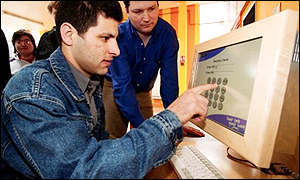 Technology may help boost voter participation E-voting could replace the traditional ballot box by 2006, a UK Government report has suggested. Online polling, accompanied by postal votes and voting by telephone, would replace ballot papers and ballot boxes under the plan.
Cash was made available in Chancellor Gordon Brown's spending review to develop e-voting with a series of pilot projects over the next three years. The report says: "A programme to achieve successful implementation of e-voting is under way to ensure that robust systems can be in place for an e-enabled general election after 2006." Pilot projects over the next two years could involve voting via digital TV, telephones and text messaging. The report says action needs to be taken to encourage more people to vote amid fears about political apathy. 'Invigorate' In last May's local elections, turnouts increased in areas where voters were given the chance to vote by post, at the weekend and electronically. Mr Cook said he hoped the proposals would "invigorate debate" on using technology to aid the democratic process. He said the Green Paper would set out the government's aim of using new technologies to "promote, strengthen and enhance our democratic structures". "Information and Communication Technologies (ICT) provide a means to increase public participation, and we hope that with an active government policy the potential benefits can be maximised," he said. A spokesman for the Work Foundation's iSociety project welcomed the news. 'Sickly politics' "This paper is an important step forward, and puts Britain in pole position to capitalise on opportunities to use new technology to improve the workings of democracy. "However, the government now needs to think even bigger. "eDemocracy needs to be more than an elastoplast for a sickly politics." Technology alone could not reignite interest - there was a need for "genuine new thinking and changing the way that politics is run" the spokesman added. "Basically, if people don't want to vote, and aren't interested in participating, the fact that they could do it online will make no difference at all." | |
See also:  11 Jul 02 | Politics 08 Apr 02 | Science/Nature 07 May 02 | Politics Internet links: The BBC is not responsible for the content of external internet sites | |||||||||||||||||||||||||||||||||||||||||||||||||||||||||||||||||||||||||||||||||||||||
| |
|  E-mail this story to a friend E-mail this story to a friend |
| |
|
| | | ||
 | ||||
 | | Back to top
| ||
| ---------------------------------------------------------------------------------- To BBC Sport>> | To BBC Weather>> | To BBC World Service>> ---------------------------------------------------------------------------------- © MMIII | News Sources | Privacy |






 TALKING POINT
 E-voting