|
 |
 | | | | | | ||||||||||||||||||||||||||||||||||||||||||||||||||||||||||||||||||||||||||||||||||||||||||||||||||||||||||||||||||||||||||||||||||||||||||||||
| | | You are in: UK: Politics | ||||||||||||||||||||||||||||||||||||||||||||||||||||||||||||||||||||||||||||||||||||||||||||||||||||||||||||||||||||||||||||||||||||||||||||||||
|
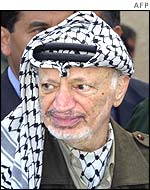
| | Wednesday, 26 June, 2002, 18:53 GMT 19:53 UK Blair shows Arafat frustration The issue could be the first rift since 11 September UK Prime Minister Tony Blair and US President George Bush have tried to present a united front on the Middle East, despite apparent differences in their approach to Palestinian leader Yasser Arafat. The two men held a joint news conference in Canada following private talks on the issue, ahead of the G8 summit. Mr Bush restated his call for Palestinians to reject Mr Arafat as the price for a future Palestinian state. He sought to increase pressure on the Palestinians by threatening to withold US aid. Blair 'tried hard' Mr Blair also made clear his frustration with Mr Arafat but said the UK and US were not trying to tell Palestinians who should run their government. The two countries were simply making it clear there were "certain preconditions" for peace - one of which was the election of a leader who can be trusted.
"I've had 13 different meetings with Chairman Arafat over the past few years. "But ... you've got a situation where we have not been able to make progress, and there has been an attitude toward terrorism that is inconsistent with the notion of Israel's security." 'Free world' Mr Bush said the "free world" would use aid as a leverage to force change in the Palestinian authority. He said the US would not be putting money into a society that was not "transparent". "And I suspect other countries won't either," he added. The US does not provide any direct assistance to the Palestinian Authority, but channels aid through the United Nations and non-governmental organizations. 'No real difference' Although he has refused to call directly for the removal of Mr Arafat, Mr Blair has insisted there is no "real difference" in the UK and the US's policy towards the Palestinian leader. "We all want someone we can deal with on the Palestinian side," Mr Blair told the BBC. Earlier, Mr Blair's official spokesman said that because the two governments were not using "precisely the same language", it did not mean that Britain did not broadly welcome Mr Bush's initiative. But he acknowledged the issue could "overshadow" the G8 meeting. 'War on terrror' Mr Blair was hoping to make progress at the G8 summit on the so-called Marshall Plan for Africa. This would massively increase aid to the poorest African countries in exchange for a commitment to rooting out corruption and improving governance. On the eve of the summit, Mr Blair pledged to increase the UK's foreign aid budget to �1bn a year by 2006. The budget was �632m this year. Speaking earlier in the Commons, Labour's Robin Cook said the G8 leaders should remember the need to tackle poverty as part of the global war on terrorism. "It is world poverty that provides the breeding ground for terrorism and also the recruiting ground for the fundamentalists," Mr Cook told MPs. The fight against drugs is also on the G8 agenda, with Mr Blair expected to reveal the percentage of this year's opium crop that has been destroyed in Afghanistan. | |
See also:  25 Jun 02 | UK Politics 25 Jun 02 | UK Politics 25 Jun 02 | Business 20 Jun 02 | Business 26 Jun 02 | Middle East Internet links: The BBC is not responsible for the content of external internet sites | ||||||||||||||||||||||||||||||||||||||||||||||||||||||||||||||||||||||||||||||||||||||||||||||||||||||||||||||||||||||||||||||||||||||||||||||
| |
|  E-mail this story to a friend E-mail this story to a friend |
| |
|
| | | ||
 | ||||
 | | Back to top
| ||
| ---------------------------------------------------------------------------------- To BBC Sport>> | To BBC Weather>> | To BBC World Service>> ---------------------------------------------------------------------------------- © MMIII | News Sources | Privacy |