|
 |
 | | | | | | |||||||||||||||||||||||||||||||||||||||||||||||||||||||||||||||||||||||||||||||||||||||||||||||||||||||||||||||||||||||||||
| | | You are in: UK: Politics | |||||||||||||||||||||||||||||||||||||||||||||||||||||||||||||||||||||||||||||||||||||||||||||||||||||||||||||||||||||||||||||
|
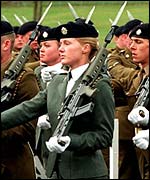
| | Wednesday, 22 May, 2002, 16:44 GMT 17:44 UK Combat ban for women stays Women can join combat in countries including Germany The ban on women soldiers fighting in frontline combat roles is to remain, Defence Secretary Geoff Hoon has said. Mr Hoon said he was not prepared to "risk" the combat effectiveness of the army by introducing women into all-male combat-fighting units. His decision, given in a Commons written answer, followed a two-year review of the Army's bar on women in the infantry and tank crews.
"Under the conditions of a high intensity, close-quarter battle, group cohesion becomes of much greater significance to team performance and, in such an environment, failure can have far-reaching and grave consequences. "To admit women therefore, would involve a risk without any offsetting gains in terms of combat effectiveness." 'Probably right' The decision was welcomed by the Chief of Defence Staff, Admiral Sir Michael Boyce, who said that allowing women into frontline combat roles would have been an "irresponsible experiment". Admiral Boyce said: "The roles that we are talking about are those where our personnel would be deployed in face-to-face combat with the enemy, and this is not something that can be trialled. "I and my fellow chiefs of staff have therefore concluded that it would be irresponsible to experiment by placing women in those roles."
"The Army works on close team work. If there's a problem with that team, then it's not going to work. It's a very male environment... "I think women are psychologically different and the two would not work effectively." Commander Cate Pope, of the Royal Navy, said: "It's different in the Navy because you have a much bigger team and you are not eyeball-to-eyeball with the enemy. "But it's a completely different situation if you are in a four-man team in a trench involved in hand-to-hand fighting." As part of the review, field exercises were conducted with about 50 men and women soldiers. Although mixed teams performed no differently from single-sex teams, officials said the tests did not adequately replicate the stress of actual combat. Legal warning The Equal Opportunities Commission said the decision must not mean the end of work to widen opportunities for women in the armed forces. Deputy chairwoman Jenny Watson said: "The EOC still believes that automatically excluding women from armed combat posts is not the right approach and that mixed units would not have a negative impact on operational effectiveness. "Each individual should be judged on the basis of their ability to carry out the job, using relevant tests.
Liberal Democrat defence spokesman Paul Keetch warned the ruling could be open to legal challenge in terms of equality of opportunity. "We should not compromise on the rigorous standards required for frontline roles... but no post should be closed to male or female personnel provided they can meet the physical and mental requirements of the task." | |
See also:  22 Feb 01 | UK Politics 26 Mar 01 | UK 13 Feb 01 | UK 28 May 00 | UK 28 May 00 | UK 27 Oct 99 | UK Internet links: The BBC is not responsible for the content of external internet sites | |||||||||||||||||||||||||||||||||||||||||||||||||||||||||||||||||||||||||||||||||||||||||||||||||||||||||||||||||||||||||||
| |
|  E-mail this story to a friend E-mail this story to a friend |
| |
|
| | | ||
 | ||||
 | | Back to top
| ||
| ---------------------------------------------------------------------------------- To BBC Sport>> | To BBC Weather>> | To BBC World Service>> ---------------------------------------------------------------------------------- © MMIII | News Sources | Privacy |