|
 |
 | | | | | | ||||||||||||||||||||||||||||||||||||||||||||||||||||||||||||||||||||||||||||||||||||||||||||||||||||||||||||||||||||||
| | | You are in: UK: N Ireland | ||||||||||||||||||||||||||||||||||||||||||||||||||||||||||||||||||||||||||||||||||||||||||||||||||||||||||||||||||||||||
|
| | Tuesday, 24 September, 2002, 14:15 GMT 15:15 UK Budget increase in health spending 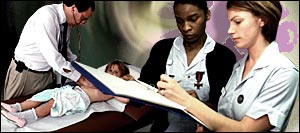 Health will get the biggest slice of this year's budget for Northern Ireland's power-sharing executive with spending to rise by more than 13%. Finance Minister Sean Farren announced how �7bn would be divided up between the ministerial departments at Tuesday's sitting of the assembly at Stormont. Mr Farren described the draft budget as "radical and reforming". The Department of Health will get more than �3bn, outlining the executive's priority to improvements to the health service.
The plans earmark resources to tackle the serious problem of waiting lists for hospital treatment. But the minister told the assembly that most of the rise in health spending would be swallowed up by existing cost pressures. The Department of Health described the announcement as "welcome but disappointing". Education increase Health minister Bairbre de Brun said the increase would have little impact on improving services. "This will allow for some modest developments in services but falls far short of what is needed to address unmet need, meet increasing demands and provide the level and quality of service everyone demands," she said. New school buildings and improvements to the existing infrastructure were also set out as key priorities. The proposed allocation for education will see spending for the department rise to �1.5bn for next year.
The Department of Employment and Learning will get an increase of 6.2%, some of which will be targeted towards student support. This will include a �5,000 increase in the threshold of the earnings of parents before they have to pay university fees to �25,000. However, no extra cash is being made available for university research - a decision that will not be well received in the province's two universities. Sports strategy Agriculture and Rural Development gets one of the largest percentage increases, with a rise of 13% to help implement its Vision Strategy for the future of farming. Culture, Arts and Leisure also does well with an extra 9.9%, to implement its sports strategy, including safer sports grounds. The Department of Environment has a proposed allocation of �127m - a rise of 10% for dealing with EU directives on waste management improvements. Regional development gets almost �600m while social development gets slightly less, with an allocation of �569m. The Office of First and Deputy First Minister will receive �38.6m in 2003/4, an increase of 14.5% to fund the Review of Public Administration and establish the post of Children's Commissioner. For the first time, the budget is set across a three-year planning process, with smaller increases for the second and third years. The overall spending represents an increase of more than 3% above the rate of inflation. But the finance minister will looking for cost-cutting across all departments and agencies, and civil servants should still find plenty of tough choices ahead. | |
See also:  24 Sep 02 | N Ireland 25 Jun 02 | N Ireland 11 Jan 00 | N Ireland 28 Sep 00 | N Ireland 12 Sep 00 | N Ireland Internet links: The BBC is not responsible for the content of external internet sites Top N Ireland stories now: Links to more N Ireland stories are at the foot of the page. | ||||||||||||||||||||||||||||||||||||||||||||||||||||||||||||||||||||||||||||||||||||||||||||||||||||||||||||||||||||||
| |
|  E-mail this story to a friend E-mail this story to a friend |
| |
| Links to more N Ireland stories |
| | | ||
 | ||||
 | | Back to top
| ||
| ---------------------------------------------------------------------------------- To BBC Sport>> | To BBC Weather>> | To BBC World Service>> ---------------------------------------------------------------------------------- © MMIII | News Sources | Privacy |