|
 |
 | | | | | | |||||||||||||||||||||||||||||||||||||||||||||||||||||||||||||||||||||||||||||||||||||||||||||||||
| | | You are in: UK: N Ireland | |||||||||||||||||||||||||||||||||||||||||||||||||||||||||||||||||||||||||||||||||||||||||||||||||||
|
| | Monday, 8 July, 2002, 10:20 GMT 11:20 UK Ireland 'needs dolphin census' The Shannon dolphins appear to be thriving
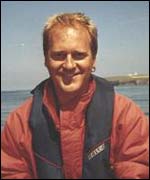
"The dolphins have always been here," said Geoff Magee, owner of one of two commercial dolphin watching operations on the Shannon estuary. "The farmers dismissed them as seapigs or porpoises. It's only now people are starting to be proud of them." The boat trip operators, scientists and Irish Government are all now taking an interest in the dolphins living off Ireland's coast. But the government - put under pressure by European Union Habitats Directive to designate special areas of conservation (SACs) - has increasingly realised that very little is known about how many dolphins are resident and what their needs are.
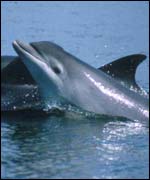
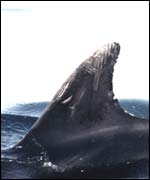
After scientists proved the Shannon estuary had a population of about 100 individuals - one of the biggest in Europe - Duchas, the Irish department of heritage, nominated it as the country's first SAC for bottlenose dolphins in August 1999. The estuary's rich stocks of salmon, mackerel, herring and sprats make it perfect dolphin fishing territory and mothers with calves are often spotted. Anecdotally, the dolphins have co-existed happily with local fishermen for hundreds of years. But while Geoff Magee said they could avoid entanglement in the nets of small, slow-moving trawlers, unknown numbers could be dying as the result of big business boats pair-trawling the mouth of the estuary for herring. "But unless you have letters against your name no state agency will listen to you," he said. 'Pollution threat' Dr Simon Ingram, from the University College Cork zoology department, earned the letters after his name while studying the Shannon dolphins.
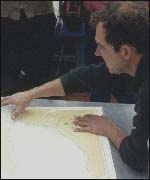
He said they faced a complex range of potential hazards, but further studies were needed. "By-catches by fishermen and possible disturbance by boats are problems which are relatively easy to get a handle on and therefore mitigate. "It is much harder to protect against subtle changes in their environment and to measure how they are affected by acoustic disturbances, reduced fish stocks, pollution and changes in sea temperature." 'Test case' Dr Simon Berrow carried out the first dolphin 'census' in the estuary in 1993 and later helped to establish the Shannon Dolphin and Whale Foundation, bringing together representatives from the local community, councils, business and state agencies as stakeholders in the dolphins' future. He also sees the need for further research and has been commissioned by Duchas to draw up a conservation plan for the estuary.
"The Shannon SAC is a test case for all marine sites in Ireland and could be a model of conservation for other countries. If you can treasure the dolphins, it will be good for seabirds, fish, and for people," he said. But while the focus is on protecting the dolphins in the Shannon, research carried out last summer by Simon Ingram outside the estuary confirmed his suspicion that the population was very fluid. During surveys of other bays where dolphins had regularly been spotted off Counties Kerry, Galway and Donegal, he not only found individuals he recognised from the Shannon, but significant numbers of unknown groups. Both Dr Ingram and Dr Berrow believe hundreds of dolphins are resident along the west coast. 'More research needed' Alan Craig, director of the Duchas National Parks and Wildlife Division, said the government viewed the dolphins and porpoises living off Ireland as extremely important and was keen to set up further SACs.
Simon Ingram agreed: "Conservation measures are only as good as the information they are based on. There is no use designating SACs until we know what their importance is to the dolphins." The best way the government can help to protect resident dolphins is to identify and establish a chain of carefully managed SACs, he said. But even these measures would be limited. "When they leave the SAC the dolphins are not protected and we have very little idea where they go. They may even visit other dolphin populations off Wales, the Outer Hebrides, Cornwall and the Moray Firth in Scotland. "Overall, we need to start considering the bigger picture of how we treat the sea." | | See also:  02 Feb 02 | N Ireland 09 Jun 98 | UK 09 Apr 00 | Scotland 24 Feb 00 | Scotland Internet links: The BBC is not responsible for the content of external internet sites Top N Ireland stories now: Links to more N Ireland stories are at the foot of the page. | |||||||||||||||||||||||||||||||||||||||||||||||||||||||||||||||||||||||||||||||||||||||||||||||||
| |
|  E-mail this story to a friend E-mail this story to a friend |
| |
| Links to more N Ireland stories |
| | | ||
 | ||||
 | | Back to top
| ||
| ---------------------------------------------------------------------------------- To BBC Sport>> | To BBC Weather>> | To BBC World Service>> ---------------------------------------------------------------------------------- © MMIII | News Sources | Privacy |