
|
 |
 | | | | | | ||||||||||||||||||||||||||||||||||||||||||||||||||||||||||||||||||||||||||||||||||||||
| | | You are in: UK: England | ||||||||||||||||||||||||||||||||||||||||||||||||||||||||||||||||||||||||||||||||||||||||
|
| | Monday, 25 November, 2002, 08:15 GMT Skills shortage 'threatens' heritage sites 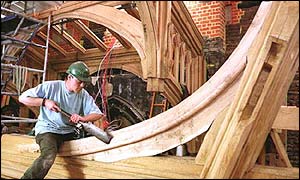 Landmarks will be lost without skilled repairs A shortage of skilled workers is threatening the upkeep of many of the UK's historic buildings, say conservationists. English Heritage says that coupled with a lack of cash and political will, the skills shortage means England's historic buildings and landscapes are being "penalised and wrecked". The warning follows the publication of The State of the Historic Environment Report (SHER), the first national survey into the state of the nation's famous landmarks. There were almost 60 million visitors to heritage sites last year, suggesting it is a popular part of the tourist industry. But the survey has shown there is a shortage of bricklayers, stone masons and scaffolders to look after the buildings. Outdated laws English Heritage says the owners of traditional buildings have difficulty finding skilled workers to carry out even the most basic repairs. The chief executive of English Heritage, Dr Simon Thurley, said buildings were a "fundamental part of everything we do and it shows without any argument that economically, it is vitally important to us".
"We have outdated legislation - an inappropriate tax regime which penalises old buildings. "We have inadequate resources in local authorities; intensive arable farming which is destroying wonderful Roman villas and monuments and insensitive regulations are wrecking our streets through horrible traffic schemes." The Mori audit, on behalf of English Heritage, covered all aspects of the heritage - listed buildings, education, conservation, ancient monuments, parks and gardens, rural landscapes, archaeology and tourism. Tax relief The aim of the document is to measure indicators of change and establish a core set of data which will be used to inform policy and decision making by the government, local authorities, funding bodies and organisations in the sector. English Heritage believes owners of historic buildings need help to maximise the resources available for maintenance and improvements. Privately owned historic property, although it contributes greatly to the economy, does not enjoy the same tax status as charities, or the government funding that supports English Heritage. Private owners are not eligible for Lottery or European grants for building repairs or maintenance. Britain is the only major European country that does not allow some form of relief against tax for the maintenance of historic properties open to the public. | | See also:  10 Jul 02 | UK 27 Jun 02 | England 23 Jul 01 | Wales 12 Feb 02 | England 19 Mar 02 | England Internet links: The BBC is not responsible for the content of external internet sites Top England stories now: Links to more England stories are at the foot of the page. | ||||||||||||||||||||||||||||||||||||||||||||||||||||||||||||||||||||||||||||||||||||||
| |
|  E-mail this story to a friend E-mail this story to a friend |
| |
| Links to more England stories |
| | | ||
 | ||||
 | | Back to top
| ||
| ---------------------------------------------------------------------------------- To BBC Sport>> | To BBC Weather>> | To BBC World Service>> ---------------------------------------------------------------------------------- © MMIII | News Sources | Privacy |





