
|
 |
 | | | | | | ||||||||||||||||||||||||||||||||||||||||||||||||||||||||||||||||||||||||||||||||||||||
| | | You are in: UK: England | ||||||||||||||||||||||||||||||||||||||||||||||||||||||||||||||||||||||||||||||||||||||||
|
| | Tuesday, 19 November, 2002, 22:03 GMT Poison risk in outdoor chickens 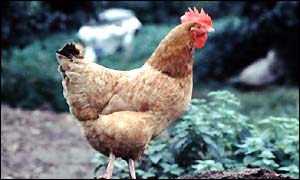 Critics say the research is incomplete Chickens that roam outdoors are more likely to carry food poisoning bacteria than those reared indoors, according to research from the University of Bristol. Free-range and organic flocks are twice as likely to carry the bacteria than conventional flocks, the study found. The research was carried out for the Food Standards Agency (FSA), which said environmental contamination could be responsible for the findings. But the organic campaign group, the Soil Association dismissed the research as incomplete. Contamination factors The study tested organic, free-range and conventional flocks for campylobacter, the most common bacteria to cause food poisoning in the UK. Almost all the birds in the free-range and organic flocks tested positively for campylobacter. By contrast, just over half the chickens tested from flocks reared in barns had the bacteria in their intestines after slaughter. Dr Viv Allen, a research fellow at the University of Bristol, said environmental contamination such as puddles on the floor or wild animals could be responsible.
"The percentage may also be higher in organic birds because they are kept longer. "So it could merely be that they have more chance to become infected," she added. The findings are part of a wider study sponsored by the FSA to combat campylobacter. But the research was dismissed by Soil Association's policy advisor, Richard Young. He said it was far from complete and had not been written-up, peer reviewed or published. "If there is an issue here it is whether chickens should be kept indoors or outdoors and not about whether they are organic or conventional." The FSA advises consumers to cook poultry thoroughly, keep raw meat apart and wash hands after handling to reduce the chance of contamination. | |   See also: 08 Jul 02 | Scotland 16 Aug 01 | Health 14 Nov 02 | Health 31 Oct 02 | Health Internet links: The BBC is not responsible for the content of external internet sites Top England stories now: Links to more England stories are at the foot of the page. | ||||||||||||||||||||||||||||||||||||||||||||||||||||||||||||||||||||||||||||||||||||||
| |
|  E-mail this story to a friend E-mail this story to a friend |
| |
| Links to more England stories |
| | | ||
 | ||||
 | | Back to top
| ||
| ---------------------------------------------------------------------------------- To BBC Sport>> | To BBC Weather>> | To BBC World Service>> ---------------------------------------------------------------------------------- © MMIII | News Sources | Privacy |





