|
 |
 | | | | | | ||||||||||||||||||||||||||||||||||||||||||||||||||||||||||||||||||||||||||||||||||||||
| | | You are in: UK: England | ||||||||||||||||||||||||||||||||||||||||||||||||||||||||||||||||||||||||||||||||||||||||
|
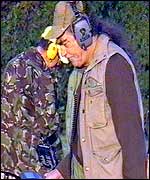
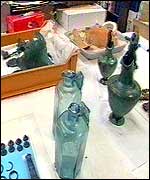
| | Sunday, 3 November, 2002, 10:48 GMT Detector man finds buried treasure 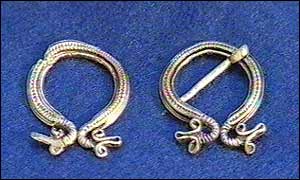 The silver Roman brooches are treasure trove London's Inside Out team meets an amateur archaeologist who may have hit the jackpot by using his metal detector in a field just outside London. For David Phillips, it began as just another trip to a field outside London with his trusty metal detector. But, after stumbling on a huge signal from under the rich earth, he began digging and found a haul of pottery, bronze, glass vases and bottles in what is now believed to be a Roman grave. Museum experts reckoned the objects dated from about 140AD and would have belonged to someone who was very wealthy. Two silver brooches found in the grave are being examined by experts from the British Museum, who say they are very unusual for the period.
"The heart was pounding," said Mr Phillips, who was with a friend when he made the discovery. "We both looked at each other in astonishment. We'd been detecting together for about 10 years - we'd found some fabulous stuff but this was outstanding." The find is so important it is going to museums, but Mr Phillips' wife Carole says this is unusual because normally he never gets rid of anything. Expert valuation "We have boxes of the stuff all over the place - lumps of unidentified lead through to quite nice coins." Mr Phillips' find could make him a rich man. Any ancient find containing silver or gold is classed as treasure trove. Museums have the right to buy the items based on a valuation by independent experts. The finder keeps the cash.
"I'd like to think it would be worth money because we're working people. My friend who found it with me, has three young children. Everybody could do with a few more pennies. "Hopefully - �50,000... �100,000... maybe �200,000, I really don't know." It may have been an amateur who found the Roman grave but the site is now of great interest to archaeologists. The site, whose location is not being revealed to prevent people from swarming to the area, also contains large post holes which may be a late Iron Age hall or a Roman barn. Archaeologists cannot excavate the whole site because it would cost too much, but are hoping to raise the money for a couple of trenches. Inside Out is on BBC One at 1930 GMT on Mondays. | |   See also: 05 Apr 02 | England 28 Mar 02 | Wales 22 Mar 01 | UK 14 Jan 00 | Science/Nature Internet links: The BBC is not responsible for the content of external internet sites Top England stories now: Links to more England stories are at the foot of the page. | ||||||||||||||||||||||||||||||||||||||||||||||||||||||||||||||||||||||||||||||||||||||
| |
|  E-mail this story to a friend E-mail this story to a friend |
| |
| Links to more England stories |
| | | ||
 | ||||
 | | Back to top
| ||
| ---------------------------------------------------------------------------------- To BBC Sport>> | To BBC Weather>> | To BBC World Service>> ---------------------------------------------------------------------------------- © MMIII | News Sources | Privacy |