 |  | | Thursday, 29 August, 2002, 11:13 GMT 12:13 UK Witness payments that prompted action
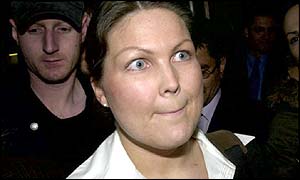 Eight people agreed to sell their story about Gehring
Fears that chequebook journalism could lead to a miscarriage of justice when trial witnesses sell their stories date back many decades. BBC News Online highlights the cases which have prompted the Lord Chancellor's Department to demand tougher self regulation. - February 2002 - teacher Amy Gehring
Shortly after Amy Gehring was acquitted of indecently assaulting under-age pupils at a Surrey school, the Lord Chancellor announced plans to prosecute journalists who paid witnesses. 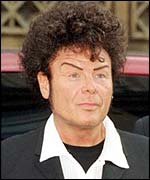 A witness was offered �25,000 if Gadd was convicted
|
Three boys she had been accused of assaulting were offered deals with national newspapers, with figures in the region of �10,000 mentioned. Five children who were called as witnesses were also approached by the media, with three agreeing to re-tell their version of events. The News of the World, Mail on Sunday, Daily Mail, Sunday People and Sunday Mirror were all cleared by the Press Complaints Commission of breaching its code of conduct. None of the witnesses were approached until after they gave evidence, it said. - November 1999 - Gary Glitter
The trial of pop star Gary Glitter - real name Paul Gadd - was cited as one of the cases which "particularly highlight the dangers of payments". 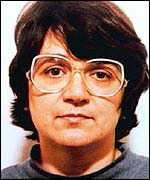 The media signed up 19 witnesses in the West case
|
Hours before Gadd was jailed for downloading child pornography from the internet, he was acquitted of eight counts of sexually assaulting a female fan when she was a child. The News of the World was accused of prejudicing the case by offering a witness extra money if the rock star was convicted. In his closing statement defence lawyer Trevor Burke cast doubt on her evidence, saying: "This is a woman giving a performance for which she will be paid �25,000." Commenting on the deal the trial judge said: "It is not illegal but it is to be greatly deprecated." - 1995 - Rose West
Up to 19 witnesses entered into agreements with the media because of the huge nature of interest in West, who was convicted of murdering 10 young women and girls. The payments ranged from �750 to �30,000, with recipients including members of the West family. Janet Leach, the appropriate adult present when police interviewed Fred West, said in a statement and repeated on oath that she had not received any payments. The Mirror Group alerted the prosecution to the fact that she did have an agreement with them, a fact she later admitted under cross-examination. The Court of Appeal said the payments did not make the convictions unsafe, but the PCC was forced to tighten up its rules. - 1981 - Peter Sutcliffe
Payments were made to a number of witnesses involved in the trial of Sutcliffe, who was jailed for murdering 13 women and trying to kill a further seven. The main concern was that his wife, Sonia, and others connected to Sutcliffe were benefiting financially from his name. - 1966 - Ian Brady and Myra Hindley
The chief prosecution witness admitted he was receiving weekly payments from a newspaper in return for information about the child killers. The Attorney General said there was no evidence his testimony had been affected as a result.
| | See also: Internet links:
The BBC is not responsible for the content of external internet sitesTop England stories now: Links to more England stories are at the foot of the page. |


 E-mail this story to a friend



