|
 |
 | | | | | | ||||||||||||||||||||||||||||||||||||||||||||||||||||||||||||||||||||||||||||||||||||||||||||||||||||||||
| | | You are in: UK: England | ||||||||||||||||||||||||||||||||||||||||||||||||||||||||||||||||||||||||||||||||||||||||||||||||||||||||||
|
| | Monday, 19 August, 2002, 11:48 GMT 12:48 UK Fingertip search for clues 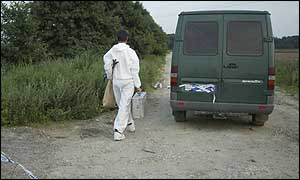 Scenes of crime officers are looking for evidence Even flies and insects found near the bodies of Holly Wells and Jessica Chapman are being checked by forensic experts in the fingertip search for clues in the case. The bodies of the missing 10-year-olds were found on 17 August, near an air base at Mildenhall, Suffolk, not far from their homes in Soham, Cambridgeshire. A diverse team of specialists has been working at the site where the two bodies were found in a copse by a remote track in fen and farmland near RAF Lakenheath airbase in Suffolk. Although their remains have been taken to Addenbrooke's Hospital in Cambridge where further examinations are being carried out, searches for clues at the scene are continuing.
The atmosphere in the copse would be both quiet and efficient, according to Professor Anthony Busuttil, of Edinburgh University's department of pathology. With 33 years experience in this highly specialised area, he knows better than most the difficulties involved in such cases. "It's very hard work, emotionally, physically and mentally draining but someone must do it," he said. Forensic investigations are strictly timetabled and co-ordinated. "There is a lot of activity at the scene, but it's very quiet because everyone needs to concentrate extremely hard." said Professor Busuttil. Wearing goggles, gloves and disposable sterile paper or plastic suits, officers crawl towards the bodies from a radius of several metres.
They pick up everything found with the naked eye while a police photographer and cameraman take pictures and video to help psychologists build a character profile of the killer. An exhibits officer separately collects and places articles in sealed and labelled polythene bags. Once the fingertip search is complete, raised aluminium or wooden platforms are erected to reach the bodies without disturbing the earth beneath. Wind, rain and bad light can stop any examination at the scene and experts are looking for anything dropped or discarded when the bodies were dumped. Layer by layer The operation is continuing at the mortuary where everything is gradually removed layer by layer before a pathologist conducts a post-mortem. At the same time, laboratory-based forensic scientists are looking for fibres, DNA and other clues. Any item, no matter small, could prove crucial in the investigation. | |
  Internet links: The BBC is not responsible for the content of external internet sites Top England stories now: Links to more England stories are at the foot of the page. | ||||||||||||||||||||||||||||||||||||||||||||||||||||||||||||||||||||||||||||||||||||||||||||||||||||||||
| |
|  E-mail this story to a friend E-mail this story to a friend |
| |
| Links to more England stories |
| | | ||
 | ||||
 | | Back to top
| ||
| ---------------------------------------------------------------------------------- To BBC Sport>> | To BBC Weather>> | To BBC World Service>> ---------------------------------------------------------------------------------- © MMIII | News Sources | Privacy |