
|
 |
 | | | | | | ||||||||||||||||||||||||||||||||||||||||||||||||||||||||||||||||||||||||||||||||||||||
| | | You are in: UK: England | ||||||||||||||||||||||||||||||||||||||||||||||||||||||||||||||||||||||||||||||||||||||||
|
| | Tuesday, 30 July, 2002, 20:21 GMT 21:21 UK Bat home saved from demolition 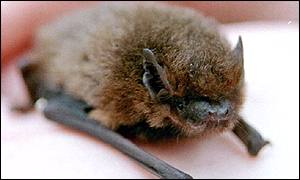 The pipistrelle bat is the smallest in Britain A colony of bats has reshaped an �8m reservoir restoration scheme. Yorkshire Water planned to demolish the former dam-keeper's lodge at Linley Wood Reservoir, in North Yorkshire. However, the proposals were abandoned when the pipistrelle and brown long-eared bats were discovered roosting in the roof. The company now plans to fill in the ground floor of the cottage and keep the bats' base intact above water level.
Engineers working at the reservoir at Otley discovered the bats when work started to raise the dam. A spokesman for Yorkshire Water said: "When the bats were found, we applied for a bat licence to the government, because bats are a protected species. "We are not allowed to disturb the bats more than necessary during the work. The work that we will have to do will be carried out through a small 'window'." All bats in Britain are protected, but the pipistrelle and brown long-eared are not threatened. The pipistrelle is the smallest bat in Britain and can catch up to 300 insects a night. Woodland roost The Bat Conservation Trust has praised Yorkshire Water's efforts to keep the colony's home safe. A spokesman said: "It is great that the bats' interests are being taken into account on the reservoir. "They like to roost near woodland and where there are plenty insects. It is difficult to say how long the bats have been there - or how long they will stay. "Sometimes a colony will keep using the same place to nest." | |   See also: 02 Oct 02 | Science/Nature 01 Jul 02 | England 18 Apr 02 | England 01 Mar 02 | England 06 Aug 01 | Science/Nature 27 Jun 01 | UK Internet links: The BBC is not responsible for the content of external internet sites Top England stories now: Links to more England stories are at the foot of the page. | ||||||||||||||||||||||||||||||||||||||||||||||||||||||||||||||||||||||||||||||||||||||
| |
|  E-mail this story to a friend E-mail this story to a friend |
| |
| Links to more England stories |
| | | ||
 | ||||
 | | Back to top
| ||
| ---------------------------------------------------------------------------------- To BBC Sport>> | To BBC Weather>> | To BBC World Service>> ---------------------------------------------------------------------------------- © MMIII | News Sources | Privacy |



