|
 |
 | | | | | | ||||||||||||||||||||||||||||||||||||||||||||||||||||||||||||||||||||||||||||||||||||||||||||||||||||||||||||||||||
| | | You are in: UK: England | ||||||||||||||||||||||||||||||||||||||||||||||||||||||||||||||||||||||||||||||||||||||||||||||||||||||||||||||||||||
|
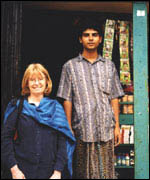
| | Tuesday, 28 May, 2002, 18:45 GMT 19:45 UK Riot-hit town bridges gap Oldham teacher Maureen Haddock visited Bangladesh
Oldham has seen racism on all sides. Cultural ignorance still splits the town's communities. But a new community project should see the next generation grow up able to bridge that gap. My relationship with Oldham started four years ago - in Bangladesh. I shared the unique experience of school head Maureen Haddock and her teachers who had travelled to Sylhet to gain an understanding of the heritage of their Bangladeshi pupils. Their school, then called Eustace Street (now Burnley Brow) was in the middle of one of Oldham's Asian areas.
Muzahid Khan and his friends had family in Sylhet who welcomed us to their villages and homes. In two weeks they changed our lives. I know that sounds dramatic but it is true. Maureen and the teachers told me the story of how the trip had affected them and changed their perceptions about culture and community in a Radio 4 programme called The Ties That Bind. All of our party, which included council and health workers, were determined to use the experience positively. Village clinic Two years ago, I returned to Bangladesh with Muzahid and the group, to explore how their relationships with Bangladesh and Oldham had become firmly entwined. Oldham's regeneration manager Nick Andrews and reception class teacher Sue Smith had learnt to speak Bangla, which they used in their daily work. The group had raised money for a charity school in Sylhet and went there to do some teacher training. Muzahid was making plans to raise cash for a clinic in his home village which had no health facilities. We visited a small country hospital in another district to get information. Community promoters It was as we were bumping down a rutted track, following a health promoter on his scooter, that Muzahid and Steven had an idea that is now working in Oldham. Steven Nesbit, from the then Department of Education and Employment (now the Department for Education and Skills) was with us to see if solutions that worked in Bangladesh could help alleviate social exclusion in the UK. The health project we visited trained village volunteers, called community promoters, to talk to people face to face, and encourage them to use the hospital and health education facilities.
The number of clients at the health project rose, and Steven wondered whether the same approach would work in the UK. The Radio 4 programme Cementing the Ties brought about council discussions in Oldham, debating the value of community promoters. Today, Westwood Promoters is one of six pilot initiatives to help individuals increase community awareness of all sorts of services and opportunities. Recently, I went to Oldham to once more look at ties between the different communities. Schools 'linked' Because of the town's housing patterns, some children go through primary school without ever meeting their peers from another culture. The Independent Review into last year's riots identified this segregation as a matter of deep concern.
The 10 and 11-year-olds were eloquent about what they had learnt. "Our schools have lots in common. We both like Harry Potter, rounders and cricket, " said a girl from a Bangladeshi family. 'Good friends' "We didn't think they would like us because we had a different colour skin, but they're really good," said her friend. "I was surprised they could speak such good English," said a white girl. "We used to leave them out because we didn't know anything about them," said a boy. "But now we're linked we're really good friends." Katherine Rhodes, the link project manager, said: "When they get to 14 or 15 and there's pressure on them to behave in a certain way towards other people, it will be so much harder for them to have a comfortable prejudice. "They have worked with, played with and borrowed a pencil from someone in that group, and actually found they rather liked them." | |  
See also: 07 Mar 02 | Country profiles 18 Apr 02 | UK Politics 19 Mar 02 | England 11 Dec 01 | England 26 Sep 01 | England 11 Sep 01 | UK Internet links: The BBC is not responsible for the content of external internet sites Top England stories now: Links to more England stories are at the foot of the page. | ||||||||||||||||||||||||||||||||||||||||||||||||||||||||||||||||||||||||||||||||||||||||||||||||||||||||||||||||||
| |
|  E-mail this story to a friend E-mail this story to a friend |
| |
| Links to more England stories |
| | | ||
 | ||||
 | | Back to top
| ||
| ---------------------------------------------------------------------------------- To BBC Sport>> | To BBC Weather>> | To BBC World Service>> ---------------------------------------------------------------------------------- © MMIII | News Sources | Privacy |