|
 |
 | | | | | | |||||||||||||||||||||||||||||||||||||||||||||||||||||||||||||||||||||||||||||||||||||||||||||||||||||
| | | You are in: UK: Education | |||||||||||||||||||||||||||||||||||||||||||||||||||||||||||||||||||||||||||||||||||||||||||||||||||||||
|
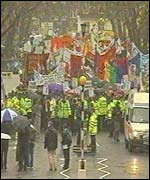
| | Friday, 17 January, 2003, 14:27 GMT Student anger over top-up fees  Fees will now be paid after graduation, it's reported Students and opposition politicians have reacted angrily to reports that the government is set to allow universities to increase their tuition fees, apparently up to �3,000 or �4,000 a year. Mandy Telford, the national president of the NUS said: "Varying fees would increase the inequity between the haves and the have-nots. "Richer students will have the advantage of being able to pick and choose what course they do and where they go, while poorer ones will go where they can afford to."
The NUS welcomed reports that the government was planning on re-introducing maintenance grants for the poorest students though. "This is something we have campaigned for a long time, but the government seems to be giving with one hand and taking away with the other," said Ms Telford. Students are warning they could face debts of up to �25,000 for their university education, including tuition fees and living costs. Charlotte Dawkins, president of the University of London Union, told BBC Breakfast: "In total, what we are looking at is �20,000 to �25,000 of debt, simply to obtain an undergraduate degree. "Clearly, that's an awful lot of money." The issue of how to fund higher education has divided MPs as well as universities.
Barry Sheerman, the Labour chairman of the Commons education select committee, said the plans being reported might satisfy most people. "If they do get grants for poorer students, if they do get no up-front fees, or low up-front fees, if they get pay-back over time, at low interest, they are all going to be things that people want, certainly in the Labour party," he said. But fellow Labour MP Paul Farrelly, is not happy. "How the government reconciles charging different prices for different universities with equality of opportunity and access for people from more modest backgrounds, which are at the top of its agenda, that is something we will be watching very carefully." Questions asked Universities were reluctant to speak out about the government's plans until they are released officially on Wednesday. But the body which represents the chief executives, Universities UK, is questioning how universities would be funded in the short-term, if tuition fees were not paid in advance, as they are now. Roderick Floud, the president of Universities UK, said: "Universities currently receive �350m annually from the up-front tuition fee. "We would look to clarify how the money coming from an increased fee repaid after graduation would be assured as truly additional money for the universities."
Colin Mathieson, of the Coalition of Modern Universities, said: "We're concerned that it could lead to a perception of a two-tier system in that those institutions which are able to charge more could be perceived as better quality." The shadow education secretary, Damian Green, said the burden of graduate debt would be "massively higher than anything we've seen before". "That in itself might deter students from hard working families from applying to out best universities." Phil Willis, the Liberal Democrats' education spokesman, said the package was "a sell-out" for Britain's students and universities. "Students from less well-off backgrounds going to top universities now face �12,000 in fees while presently they pay nothing, plus their maintenance costs of up to �12,000," he said. Sally Hunt, the general secretary of the Association of University Teachers (AUT) said: "If students have to make any payments at all then we would certainly prefer that they are made after graduation. "However, if it's true that the government is going to allow universities to introduce top-up fees we would be deeply disappointed." | |
See also:  16 Jan 03 | Education Internet links: The BBC is not responsible for the content of external internet sites Top Education stories now: Links to more Education stories are at the foot of the page. | |||||||||||||||||||||||||||||||||||||||||||||||||||||||||||||||||||||||||||||||||||||||||||||||||||||
 | |
|  E-mail this story to a friend E-mail this story to a friend |
| |
| Links to more Education stories |
| | | ||
 | ||||
 | | Back to top
| ||
| ---------------------------------------------------------------------------------- To BBC Sport>> | To BBC Weather>> | To BBC World Service>> ---------------------------------------------------------------------------------- © MMIII | News Sources | Privacy |




 I think a great many Labour MPs will be concerned at this