|
 |
 | | | | | | |||||||||||||||||||||||||||||||||||||||||||||||||||||||||||||||||||||||||||||||||||||||
| | | You are in: UK: Education | |||||||||||||||||||||||||||||||||||||||||||||||||||||||||||||||||||||||||||||||||||||||||
|
| | Friday, 22 November, 2002, 12:02 GMT Delay as language learning dwindles 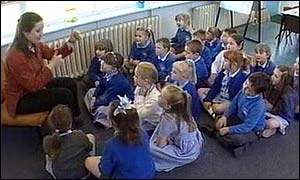 Ministers plan a new focus on primary schools The government has postponed an announcement on its strategy for language learning - as a survey suggests many secondary schools will make languages optional at GCSE level.
Almost three out of 10 comprehensives said they would drop compulsory languages from age 14, in a poll of 393 schools in England. As things stand this would breach the national curriculum - but ministers signalled back in February that they intended to stop requiring youngsters to learn a modern foreign language to GCSE level. The findings, confirming an earlier similar survey, have alarmed the Nuffield Foundation, which produced a highly critical report on the state of language learning in the UK. Its inquiry, headed by Sir Trevor McDonald, said that without an upgrading of language teaching, the country would continue to be stuck with its "deplorable monolinguism". A Department for Education spokesman said on Friday that the government wanted to provide the opportunity for all children to learn a language earlier in life, regardless of their background or social status. "The forthcoming national languages strategy will help do this by ensuring that many more young people become involved and enthusiastic about learning a new language while they are still in primary school." Primary focus Schools do not yet have the power to make foreign languages optional for pupils studying for GCSEs. But the idea was in proposals for overhauling the curriculum for 14 to 19 year olds, published by the government last February. The former education secretary, Estelle Morris, said that instead every primary school pupil should have the chance to learn another language from the age of seven by 2010. Amid scepticism that enough teachers could be found, she suggested postgraduate students might be drafted in. Plans put back The government's detailed national strategy was to have been launched next Tuesday but has been postponed.
No new date has been fixed. Alwena Lamping of the Nuffield Foundation said she hoped the delay was because Mr Clarke had stepped in to beef up the government's plans. "It's becoming so clear that the numbers learning a language after 14 are dropping significantly," she said. "You can't help feeling that it would be socially unacceptable for this government to have language learning limited to an elite." Scale of the problem The new poll on schools' attitudes was carried out by The Times Educational Supplement and the Centre for Information on Language Teaching and Research. It suggests that the proportion of schools planning to make languages optional from 14 rises to 44% among schools where less than half the pupils get five top GCSE grades. Another 25% were considering the possibility - so, in all, more than half the country's secondary schools might drop compulsory GCSE languages. Ms Lamping said the shift to encouraging an enthusiasm for languages among primary school children might work - if it was done properly, with well-trained language assistants, perhaps drawing on the pool of foreign students keen to study in the UK. "Not if they are dumped in a class untrained - and again that depends also on the enthusiasm of the teacher and the head teacher," she said. She also highlighted the danger of a downward spiral: fewer people studying languages after 14 would mean fewer future language teachers. 'Realism' The Department for Education has argued that making foreign languages optional for GCSE students reflects what is happening schools. It says the most common requests to "dis-apply" the curriculum for lower-achieving students related to foreign languages. Ms Lamping accepted this - but said many twenty-somethings realised it was cool to speak another language, and wished they had stuck with it. "After all, how many people would study maths at school if they didn't have to?" | | See also:  22 Aug 02 | Education 18 Nov 02 | England 11 Mar 02 | Education 08 Feb 02 | Education 11 Feb 02 | Education 10 May 00 | Education Internet links: The BBC is not responsible for the content of external internet sites Top Education stories now: Links to more Education stories are at the foot of the page. | |||||||||||||||||||||||||||||||||||||||||||||||||||||||||||||||||||||||||||||||||||||||
| |
|  E-mail this story to a friend E-mail this story to a friend |
| |
| Links to more Education stories |
| | | ||
 | ||||
 | | Back to top
| ||
| ---------------------------------------------------------------------------------- To BBC Sport>> | To BBC Weather>> | To BBC World Service>> ---------------------------------------------------------------------------------- © MMIII | News Sources | Privacy |