|
 |
 | | | | | | ||||||||||||||||||||||||||||||||||||||||||||||||||||||||||||||||||||||||||||||||||||||||||||||||||
| | | You are in: UK: Education | ||||||||||||||||||||||||||||||||||||||||||||||||||||||||||||||||||||||||||||||||||||||||||||||||||||
|
| | Friday, 8 November, 2002, 11:57 GMT Parents oppose student top-up fees 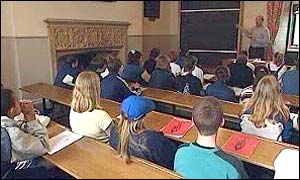 Few liked the present fees-and-loans system Parents seem to have got the message that universities are underfunded - but are divided on where the extra money should come from. In a poll, fewer than one in four parents - 23% - thought the answer should be higher tuition fees. While 77% accepted there was underfunding, a mere 8% backed the status quo of loans and limited fees. Currently fees are capped at �1,100 a year, but there are signs that the government intends to lift the limit when it publishes its higher education strategy document in January. Higher taxes Ministers say universities need more money if they are to compete internationally. Fees in Scotland are paid by the government, with graduates repaying �2,000 into a bursary fund for poorer students. In the YouGov survey of a representative sample of 1,530 parents across Britain, 51% of parents favoured scrapping tuition fees and bringing back maintenance grants. But almost equal numbers would finance this by having a graduate tax or raising income tax generally. Four in ten thought the present fees-and-loans system should be reserved for "better-off families". University heads The survey was commissioned by the Times Educational Supplement. Two thirds of university vice-chancellors canvassed by its sister paper, the Times Higher, were either in favour of higher tuition fees or regarded them as inevitable. Nineteen of the 46 vice-chancellors who responded wanted undergraduate tuition fees to be raised, while 10 were uncommitted but viewed them as inevitable. Higher fees were specifically opposed by 15 vice-chancellors, many of whom head Scottish universities. 'No' campaign The paper said many university heads were waiting to see whether the government would indeed signal higher fees in its strategy document, but most of the 46 said they were preparing for the introduction of higher fees. One of the most vehement in his opposition was Malcolm McVicar, vice-chancellor of the University of Central Lancashire. He called for "new" universities like his - the former polytechnics - to campaign against higher fees. "There is no point in keeping our powder dry. This is it," he said. Universities UK - the body representing the heads of all the UK's universities - this week accepted that better-off students should pay more, and called for safeguards to protect poorer students. | |
See also:  17 Jul 98 | Education Internet links: The BBC is not responsible for the content of external internet sites Top Education stories now: Links to more Education stories are at the foot of the page. | ||||||||||||||||||||||||||||||||||||||||||||||||||||||||||||||||||||||||||||||||||||||||||||||||||
| |
|  E-mail this story to a friend E-mail this story to a friend |
| |
| Links to more Education stories |
| | | ||
 | ||||
 | | Back to top
| ||
| ---------------------------------------------------------------------------------- To BBC Sport>> | To BBC Weather>> | To BBC World Service>> ---------------------------------------------------------------------------------- © MMIII | News Sources | Privacy |