
|
 |
 | | | | | | |||||||||||||||||||||||||||||||||||||||||||||||||||||||||||||||||||||||||||||||||||||||||||||||||||||||
| | | You are in: UK: Education | |||||||||||||||||||||||||||||||||||||||||||||||||||||||||||||||||||||||||||||||||||||||||||||||||||||||||
|
| | Friday, 1 November, 2002, 14:32 GMT Top-up fees split universities 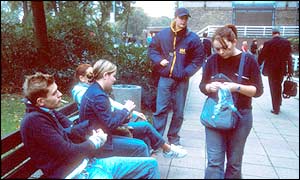 Better-off students may be facing higher fees Universities are deeply divided over the contentious issue of top-up fees, which the government is considering bringing in. Ministers are said to be looking closely at the idea of freeing universities to impose extra fees on students to help pay for an expansion in student numbers. Some universities - like Edinburgh and Glasgow - are opposed to the idea, others - like Imperial College, London - are in favour and are already making plans. Many others remain publicly silent, waiting to see what the government recommends in its review of student funding, now delayed until January.
According to the Times Higher Education Supplement, the universities are Oxford, Cambridge, Imperial College, University College, London, Warwick and Nottingham. At a meeting of the Russell group last week, the six were said to have discussed tactics, but could not agree on fee levels. At least one, Cambridge, has said it is opposed to top-up fees and has no plans to introduce them because of fears of putting off poorer students. But it is understood to have suggested at the meeting that it might consider fees of about �3,000 a year. Tactic Imperial College is making plans to charge students at least �10,500. According to the Times Higher Education Supplement, University College London wants to charge about �7,000 and Warwick - �6,000. The paper suggests Oxford wants to charge between �7,000 - �8,000. Some academics see the current high-profile debate about top-up fees as a tactic being used by universities to get more money from the government.
The union's Tom Wilson said:" It's a debate which is being hi-jacked by a few loud mouths. "The vast majority are strongly opposed to this. There is a bit of game-playing going on because in a month's time the government will announce how much money universities will get for the next three years. "It's a crude and damaging threat. It's attempted blackmail." Free-for-all But that claim is rejected by others, including the union representing lecturers at the older universities, including the Russell Group. Paul Cottrell, the assistant general secretary of the Association of University Teachers (AUT), says the sector is deeply divided. "Some of the vice chancellors are very serious about it (top-up fees) and will push and push until they get it. They insist they will go private if they don't get it. "There are vice-chancellors who are strongly opposed to it and others who might be in favour, but not in favour of a free-for-all. "It's an appalling situation. There is a range of views among institutions, which makes it difficult to present a coherent approach to government." As the government continues its review of student funding, universities are weighing up the possible impact of the introduction of top-up fees. Many, like Cambridge and Sheffield, are worried such a change would deter children from poorer families from applying to university. A spokesman for Sheffield University said:� We have not taken a position on top-up fees. "We are still doing analysis and modelling on the potential effects on our intake profile and on widening participation." Universities are under pressure to accept more students from poorer families. The government aims to get half of all those under 30 into some form of higher education by 2010. Universities argue they need more cash to fund this expansion and say they are slowly going bankrupt because the funding they receive per student does not meet their costs. | |
Internet links:  The BBC is not responsible for the content of external internet sites Top Education stories now: Links to more Education stories are at the foot of the page. | |||||||||||||||||||||||||||||||||||||||||||||||||||||||||||||||||||||||||||||||||||||||||||||||||||||||
| |
|  E-mail this story to a friend E-mail this story to a friend |
| |
| Links to more Education stories |
| | | ||
 | ||||
 | | Back to top
| ||
| ---------------------------------------------------------------------------------- To BBC Sport>> | To BBC Weather>> | To BBC World Service>> ---------------------------------------------------------------------------------- © MMIII | News Sources | Privacy |






 TALKING POINT
 University top-up fees