
|
 |
 | | | | | | ||||||||||||||||||||||||||||||||||||||||||||||||||||||||||||||||||||||||||||||||||||||||||||||||
| | | You are in: UK: Education | ||||||||||||||||||||||||||||||||||||||||||||||||||||||||||||||||||||||||||||||||||||||||||||||||||
|
| | Friday, 18 October, 2002, 14:31 GMT 15:31 UK 'Super' assistants to take classes 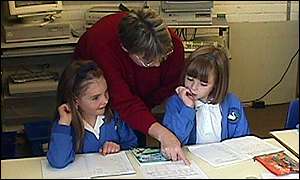 The government wants more support staff in schools At least 50,000 "advanced" classroom assistants could be drafted into schools in England under plans to modernise the teaching profession. An announcement is expected from the Department for Education next Tuesday on ways to address teachers' workload, as part of the government's "something for something" deal to put more money into education. But draft proposals indicate that a new grade of classroom assistant is being considered to give teachers more time to focus on their core job.
The assistants would not have to be educated to degree level - a requirement for teachers - but would receive more training than classroom assistants currently working in school. The plans are part of a radical shake-up of the teaching profession and have provoked accusations from the biggest teaching union, the NUT, that the government is undermining teachers. The Schools Minister, David Miliband, is also expected to announce the scrapping of the controversial clause in teachers' employment conditions which says they must work unlimited hours at the discretion of head teachers. All teachers would be guaranteed half a day each week during term time for lesson preparation and marking - with more for those with management responsibilities. University staff He is also likely to confirm a list of tasks, such as photocopying and stock-taking, which teachers would no longer be expected to carry out. Subjects such as drama, music and sport have been floated as the sorts of areas where advanced assistants could be expected to lead on a routine basis. Draft proposals seen by BBC News also say head teachers and school governors should be innovative with structures and organisation - changing the school day and week, perhaps. There might be greater collaboration between schools and within clusters of schools, including sharing staff. They should also look beyond schools for staff, drawing on teachers from the further and higher education sectors. Radical A spokesperson for the Department for Education said: "We make absolutely no apology for radical reform. Teachers must be free to focus on teaching. "The more trained and effective adults we have helping pupils in classrooms, giving them one-to-one support, the better off those pupils will be." He said this was not about replacing teachers with teaching assistants. "It is about separating out the work on which teachers could be supported, like taking children to assemblies, so teachers can concentrate on teaching". 'Undermining' Head of Education for the National Union of Teachers, John Bangs, said any plans for introducing support for teachers, especially administrative support, were to be welcomed. But Mr Bangs expressed concern that the government was moving away from having highly trained individuals in a teaching role. "We have long called for an all-graduate profession and we are concerned the government is undermining that," he said. "There are strong educational arguments that we need trained teachers to do the job. "We are comfortable with the idea of support for teachers, but it goes too far if we move into a substitute teacher role," he warned. 'Need for career structure' Unison, one of the main unions representing teaching assistants, is "excited" about the greater role they might play - provided they are properly trained and rewarded. Unison national officer for education, Bruni de la Motte, said: "We don't want to see assistants used as cheap substitutes for teachers, because their pay is abysmal . "So an expansion of the role must not mean a continuation of low pay - we want to see these new jobs properly paid and they must not be on temporary contracts as so many teaching assistants are." She said 80% of assistants earned �8,000 and were paid during term times only. Asked to put a figure on the appropriate pay rate, Ms de la Motte said the highest level might be �16,000 - but "open-ended" depending on the career structure and level of responsibility. Newly-qualified teaching graduates start on �17,628 in England and Wales outside London. | |
See also:  16 Apr 02 | Education 01 Apr 02 | Education 17 Nov 01 | Mike Baker Internet links: The BBC is not responsible for the content of external internet sites Top Education stories now: Links to more Education stories are at the foot of the page. | ||||||||||||||||||||||||||||||||||||||||||||||||||||||||||||||||||||||||||||||||||||||||||||||||
| |
|  E-mail this story to a friend E-mail this story to a friend |
| |
| Links to more Education stories |
| | | ||
 | ||||
 | | Back to top
| ||
| ---------------------------------------------------------------------------------- To BBC Sport>> | To BBC Weather>> | To BBC World Service>> ---------------------------------------------------------------------------------- © MMIII | News Sources | Privacy |






