|
 |
 | | | | | | |||||||||||||||||||||||||||||||||||||||||||||||||||||||||||||||||||||||||||||||||||||||||
| | | You are in: UK: Education | |||||||||||||||||||||||||||||||||||||||||||||||||||||||||||||||||||||||||||||||||||||||||||
|
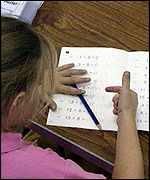
| | Thursday, 4 July, 2002, 14:39 GMT 15:39 UK Tests 'at expense of creativity' Teachers are concentrating on maths and English Creative subjects such as music and art are being squeezed out of the primary school day, as teachers strive to prepare children for national curriculum tests in maths and English, researchers claimed. A study for the National Union of Teachers found English and maths lessons were taking up half the teaching week, leaving an average of less than 60 minutes each for religious education, history and geography.
The research, conducted by Cambridge University, was based on responses from 267 primary school teachers in England. The survey showed almost three out of 10 seven to 11-year-olds were tested once a week in reading and written English while just under four out of 10 faced having to take maths tests with the same regularity. The study found 46% of five to seven year olds were tested once a week in reading, 28% in written English, 21% in spoken English and 27% in maths. The statistics indicated the strain of competing for a good place in the league tables was taking its toll on schools, the NUT said. Longer school day The research said teachers did regard the literacy and numeracy drive as a positive thing, but resented the fact that they had no time for informal chats with individual pupils.
Many schools only allowed half an hour a week for music, while time for science and technology had dropped from 4.7 to 3.03 hours per week since 1998. And some five-year-olds were forced to do two-hour sessions after lunch with no break. The survey found teaching assistants had become a familiar sight in most primary schools - just 10% of teachers now had no paid help in their classes, compared to 43% in the early 1990s. 'Stifling' tests Doug McAvoy, general secretary of the NUT, said: "Primary education is the stage at which children are at their most enthusiastic and open to new ideas." "Yet government pressures are increasing teachers' workload while squeezing creativity out of the classroom," said Mr McAvoy.
"Government tests and targets are stifling rather than encouraging creative studies and self-expression." The Department for Education refuted the criticism, saying the government's primary strategy had delivered the biggest leap in standards in history. "We will not apologise for raising standards and we are not about to change a strategy admired around the world," said a spokesman. "Children cannot learn anything until they get the basics right." | | See also:  28 Jun 02 | UK Education 22 Feb 02 | UK Education 03 Sep 01 | UK Education 30 Aug 01 | UK Education Internet links: The BBC is not responsible for the content of external internet sites Top Education stories now: Links to more Education stories are at the foot of the page. | |||||||||||||||||||||||||||||||||||||||||||||||||||||||||||||||||||||||||||||||||||||||||
| |
|  E-mail this story to a friend E-mail this story to a friend |
| |
| Links to more Education stories |
| | | ||
 | ||||
 | | Back to top
| ||
| ---------------------------------------------------------------------------------- To BBC Sport>> | To BBC Weather>> | To BBC World Service>> ---------------------------------------------------------------------------------- © MMIII | News Sources | Privacy |