|
 |
 | | | | | | ||||||||||||||||||||||||||||||||||||||||||||||||||||||||||||||||||||||||||||||||||||||||||||||||||||||||||||||||||||||||||||||||||||||||||||
| | | You are in: UK | ||||||||||||||||||||||||||||||||||||||||||||||||||||||||||||||||||||||||||||||||||||||||||||||||||||||||||||||||||||||||||||||||||||||||||||||
|
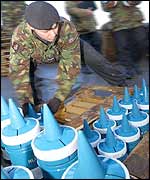
| | Tuesday, 21 January, 2003, 16:24 GMT Organising the UK 'war' effort  Heavy equipment will be moved by sea As the military build-up to a possible war on Iraq continues, BBC News Online's Melissa Jackson looks at the logistics of moving troops and equipment to the Gulf area. It is a highly-organised task, planned and perfected by military experts according to the MoD's requirements. Preparing for a possible war on Iraq is a huge and demanding task, but the mighty wheels have already been set in motion. Thousands of troops will start heading to the Gulf over the coming weeks behind weapons and military equipment which will make the long journey by sea.
Major Charles Heyman, editor of Jane's World Armies said: "Everything is pretty low key at the moment, but it will get busy by the end of the week." Also heading for the Gulf will be medical and support staff ready to play their part in any armed assault. Britain's military commitment to a potential war against Iraq would be on the same scale as the Gulf war 12 years ago, according to the MoD. Col Ivar Hellberg, who commanded the logistics regiment of the royal marines during the Falklands war, said getting troops and equipment out to the Gulf was "quite a challenge". In addition to the Royal Marines and Navy personnel already dispatched to the Gulf, a further 26,000 Army personnel are to be deployed. This will comprise the 1 UK armoured division, with support from the 7th armoured brigade (the Desert Rats) and 102 Logistics Brigade - all based in Germany, and the 16 Air Assault Brigade, from Colchester, Essex. They will have equipment, including 120 Challenger tanks and 150 Warrior armoured personnel carriers, 32 AS self propelled guns and 18 light guns. 'Desertising' the equipment Much of the equipment is already either in transit or being loaded on board ships ready to set sail in the next few days. The loading exercise is continuing 24 hours a day at Marchwood, near Southampton in the UK and at Bremerhaven, near Hamburg in Germany. These centres of activity are both "ports of embarkation" for logistic supplies. Tanks, personnel carriers and weapons are being moved to the two sites by road and rail and loaded onto waiting ships.
Some of the landing ships logistics (LSLs) will have been specially chartered from the commercial fleet and from the merchant navy. LSLs are similar to roll-on, roll-off ferries and are probably destined for Kuwait, along with military personnel, who will fly to the region. Naval vessels - some of which have already set sail for the Gulf - will be accompanied by Royal Fleet Auxiliaries (RFAs) - ships which carry supplies such as fuel and food to keep the naval fleet afloat. Moving equipment by sea is timely, but more cost effective, according to experts. Sea transport benefits Ewen Southby-Tailyour, editor of Jane's Amphibious and Special Forces said: "Sea speeds have not changed much since the Second World War - it's about 15-20 knots. "It could take three weeks to get to the Gulf via the Suez canal. So we are a month away from any attack." He explained that during the Kosovo conflict "only a quarter of front line vehicles and logistics went by air".
"Of note too is that 95% of everything needed for the Gulf War of 1991 went by sea." However, some equipment does not travel well by ship. The Rapier air defence system used in the Falklands was one such item. So some of the more sensitive equipment will have to go by air, which will probably be on board the stalwart Hercules transporter planes, the workhorses of the armed services. Military equipment and tents will have to be in place before the arrival of troops, who will require time to acclimatise to the searing heat. Destination Kuwait? Troops and supplies are expected to head for Kuwait, although Bahrain could be a possible destination. Medical teams will fly to the Gulf, but a lot of their equipment will travel by sea. These moves will be phased in gradually, according to the number of troops in the region, said Major Charles Heyman. He said: "As the size of the force grows, medical support will grow. They will go out in parallel with the troops. However some, he said, will go out earlier to set up field hospitals. RAF teams would be deployed to the Gulf closer to the time of any planned conflict - probably using Jaguar and Tornado aircraft. | |
See also:  21 Jan 03 | UK 21 Jan 03 | Middle East 20 Jan 03 | UK 21 Jan 03 | UK Internet links: The BBC is not responsible for the content of external internet sites Top UK stories now: Links to more UK stories are at the foot of the page. | ||||||||||||||||||||||||||||||||||||||||||||||||||||||||||||||||||||||||||||||||||||||||||||||||||||||||||||||||||||||||||||||||||||||||||||
 | |
|  E-mail this story to a friend E-mail this story to a friend |
| |
| Links to more UK stories |
| | | ||
 | ||||
 | | Back to top
| ||
| ---------------------------------------------------------------------------------- To BBC Sport>> | To BBC Weather>> | To BBC World Service>> ---------------------------------------------------------------------------------- © MMIII | News Sources | Privacy |




 Everything is pretty low key at the moment, but it will get busy by the end of the week