|
 |
 | | | | | | ||||||||||||||||||||||||||||||||||||||||||||||||||||||||||||||||||||||||||||||||||||||||||||||||||||||||||||||||||||||||
| | | You are in: UK | ||||||||||||||||||||||||||||||||||||||||||||||||||||||||||||||||||||||||||||||||||||||||||||||||||||||||||||||||||||||||||
|
| | Wednesday, 23 October, 2002, 10:53 GMT 11:53 UK The art of firefighting 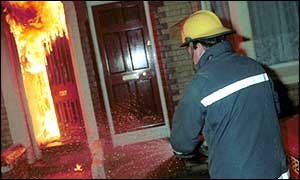
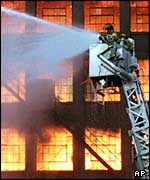
 Firefighting used to be about donning a hard hat and pointing a jet of water at the flames. And that's pretty much where public perceptions of the job remain.
But in recent years, the role of the average firefighter has changed almost beyond recognition. Today firefighters consider themselves "skilled professional workers". It seems these days there is an art, not to mention a science, to firefighting. When a fire crew is called to a "shout" - an incident - saving lives is always top of the priority list. Where they can, they will also hope to limit the damage to property. The problem is that no two fires are the same, says Paul Grimwood, a former London fireman and author on firefighting techniques. "Take each building as a box. Now place into that box a large number of compartments (rooms) of different sizes; variable-sized openings (doors and windows); some are open, some closed; a variable number of people depending on occupancy type," he says. "Now add in different construction methods, wall and ceiling linings, furniture and fuel load. There are unknown parameters because of the black smoke but the firefighter must 'risk assess' each situation to try and anticipate how the fire is likely to behave and develop."
It means all new firefighters must study chemistry as part of the initial three-month training. Other elements of the induction course include building construction - to know how a building collapses - team building, handling equipment and physical fitness. In terms of putting out a fire, the aim is to get inside the building for "offensive" firefighting, rather than remain outside, which is called "defensive".
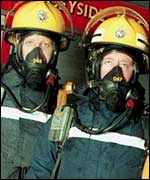
Breathing apparatus allows firefighters to get inside, but the danger in a burning house is that fuel vapours will get heat up to the point of exploding. Taming the flames The trick is to tame the fire, before extinguishing it, and there are a number of tactics for doing so. They include ventilating the house to drive out the lethal smoke, and spraying a room with bursts of water droplets. This works by cooling down inert dangerous gases that rise up in a fire.
"Over the past 10 years, the job of a firefighter has become more reliant on thought processes than individual strength," says Mr Grimwood. "Modern-day firefighters must process 'risk assessments' with great speed, under tremendous stress, based upon a widening knowledge of fire behaviour." The army's Green Goddess crews are unlikely to be able to match firefighters' expertise in this area, although some of them do have specialist breathing apparatus and cutting equipment. They could have their first tests if strikes scheduled for 29 October take place. | |
See also:  23 Oct 02 | Politics Internet links: The BBC is not responsible for the content of external internet sites Top UK stories now: Links to more UK stories are at the foot of the page. | ||||||||||||||||||||||||||||||||||||||||||||||||||||||||||||||||||||||||||||||||||||||||||||||||||||||||||||||||||||||||
| |
|  E-mail this story to a friend E-mail this story to a friend |
| |
| Links to more UK stories |
| | | ||
 | ||||
 | | Back to top
| ||
| ---------------------------------------------------------------------------------- To BBC Sport>> | To BBC Weather>> | To BBC World Service>> ---------------------------------------------------------------------------------- © MMIII | News Sources | Privacy |