|
 |
 | | | | | | |||||||||||||||||||||||||||||||||||||||||||||||||||||||||||||||||||||||||||||||||||||||||||||||||||||||||||||||||||||||
| | | You are in: UK | |||||||||||||||||||||||||||||||||||||||||||||||||||||||||||||||||||||||||||||||||||||||||||||||||||||||||||||||||||||||||
|
| | Sunday, 20 October, 2002, 06:33 GMT 07:33 UK Road risk for deprived children 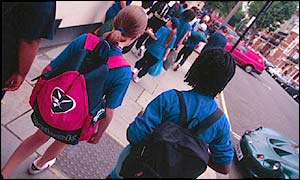 Campaigners want better provision for pedestrians Children living in deprived areas are three times more likely to get knocked down by a car than those from a wealthier background, according to research. Campaigners and researchers at Imperial College in London are calling for a wider use of traffic-calming measures and lower speed limits.
Britain has one of Europe's worst child safety records with more than 100 deaths and 3,000 serious injuries every year. The Imperial College researchers mapped the geographic spread of the accidents and found a major concentration in the most deprived areas of the UK. The casualty rate in poorer areas was more than three times higher than in wealthier areas - far higher than expected. Priorities Researchers and road safety campaigners say deprived children tend to travel on foot more and have less access to gardens to play in, which means they end up playing on busy streets. Tom Franklin, director of the campaign group, Living Streets, said a lot of these deaths could be prevented.
Mr Franklin said child pedestrian deaths had been cut by 75% after the city introduced 100 new 20mph zones. "If that was copied right the way across the country it would have a dramatic impact on the very high level of child pedestrian deaths we have in this country," he said. "It is about slowing down the traffic on the roads in these communities." Law change He said it was also about getting drivers to make sure they drove slowly and responsibly in residential areas. In 1999 the law was changed to allow councils to lower speed limits on roads they controlled if they wanted. It led to a number of 20mph limits being created in built-up areas and particularly outside schools. Nine people are killed and more than 100 seriously injured each day on British roads. Prime Minister Tony Blair has pledged to cut these statistics by 40% by 2010. Earlier this month the Department for Transport was forced to deny newspaper reports that ministers planned to reduce maximum limits in residential areas from 30mph to 20mph and on other roads, from 60mph to as low as 40mph. | |
See also:  16 Oct 02 | Politics 14 Aug 01 | UK 30 Sep 02 | England 18 Sep 02 | England Internet links: The BBC is not responsible for the content of external internet sites Top UK stories now: Links to more UK stories are at the foot of the page. | |||||||||||||||||||||||||||||||||||||||||||||||||||||||||||||||||||||||||||||||||||||||||||||||||||||||||||||||||||||||
| |
|  E-mail this story to a friend E-mail this story to a friend |
| |
| Links to more UK stories |
| | | ||
 | ||||
 | | Back to top
| ||
| ---------------------------------------------------------------------------------- To BBC Sport>> | To BBC Weather>> | To BBC World Service>> ---------------------------------------------------------------------------------- © MMIII | News Sources | Privacy |