|
 |
 | | | | | | ||||||||||||||||||||||||||||||||||||||||||||||||||||||||||||||||||||||||||||||||||||||||||||||||||
| | | You are in: UK | ||||||||||||||||||||||||||||||||||||||||||||||||||||||||||||||||||||||||||||||||||||||||||||||||||||
|
| | Saturday, 5 October, 2002, 05:38 GMT 06:38 UK Hidden tales of the black home front

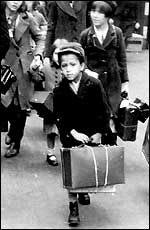
Dame Vera Lynn, Captain Mainwaring from Dad's Army and grubby-looking children being evacuated. But do we see the photograph on the right of a young black boy, name unknown, being evacuated from London on 5 July 1940? The story of this little boy is among those that remain untold as the history books largely describe wartime Britain as a place without ethnic minorities. London historian and writer Stephen Bourne has spent years researching these stories.
He has discovered many stories that have remained untold for years. Some are tales of simple survival. Others are accounts of community leadership by black Britons. Mr Bourne says the absence of ethnic minorities from domestic wartime history reinforces the idea that the first black faces in Britain belonged to those who disembarked from the Empire Windrush in 1948. Mr Bourne's own aunt, Esther Bruce, was among those British-born black people whose story have gone untold. "My aunt was born before the First World War in Fulham [west London]. During the Second World War she was a fire warden at Fulham hospital and played a full part in the community effort. "She lived through the air raids and told me all about it when I was young. I was very conscious that people like her lived in Britain but didn't exist in the history books." Community leaders Since then, Mr Bourne has unearthed many stories of black Britons and immigrants involved in that same war effort.
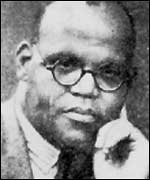
Dr Moody was born in Jamaica and emigrated to the UK in 1904. He became a respected and highly influential GP in Peckham and was heavily involved in organising the community during the Blitz. "Harold Moody did an enormous amount for London during the war," said Mr Bourne. "In 1944 there was a terrible bombing in south London and he was the first doctor on the scene. He played an important role in these events, saving many lives. Yet this wartime history is not known." Another such leader was Plymouth councillor William Miller. The grandson of a freed slave, Alderman Miller planned the city's evacuation and air-raid arrangements before playing a key role in the rebuilding after the war. Entertainers Names which may be more familiar appear among the list of wartime entertainers instrumental in bolstering wartime morale. In 1940, one of the hottest acts on the London swing scene was Ken "Snakehips" Johnson and the West Indian Orchestra.
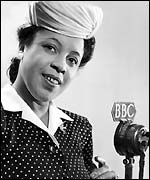
Tragically, he and 30 others were killed when a bomb hit the club during an air raid in March 1941. In the same year, New York-born singer Adelaide Hall became Britain's highest paid entertainer. Mrs Hall fell in love with the UK and decided to settle here after the war. When she died in 1993, her wartime role had largely been eclipsed in the public mind by Dame Vera Lynn and others. "Adelaide toured constantly during the war, playing everything from BBC radio to variety theatres. She entertained the troops and sang to the public in air raid shelters," said Mr Bourne. "Her effort in helping Britain get through the war was extraordinary. But she was never recognised for it. "I think that's heartbreaking." Stephen Bourne's illustrated talk, "We Also Served", takes place on Sunday 6 October at the Imperial War Museum, London, repeated on 17 October at Peckham Central Library, London. See links for more details and related books. | | Internet links:  The BBC is not responsible for the content of external internet sites Top UK stories now: Links to more UK stories are at the foot of the page. | ||||||||||||||||||||||||||||||||||||||||||||||||||||||||||||||||||||||||||||||||||||||||||||||||||
| |
|  E-mail this story to a friend E-mail this story to a friend |
| |
| Links to more UK stories |
| | | ||
 | ||||
 | | Back to top
| ||
| ---------------------------------------------------------------------------------- To BBC Sport>> | To BBC Weather>> | To BBC World Service>> ---------------------------------------------------------------------------------- © MMIII | News Sources | Privacy |