|
 |
 | | | | | | ||||||||||||||||||||||||||||||||||||||||||||||||||||||||||||||||||||||||||||||||||||||||||||||||||
| | | You are in: UK | ||||||||||||||||||||||||||||||||||||||||||||||||||||||||||||||||||||||||||||||||||||||||||||||||||||
|
| | Friday, 13 September, 2002, 15:50 GMT 16:50 UK What can Britain do in Iraq? 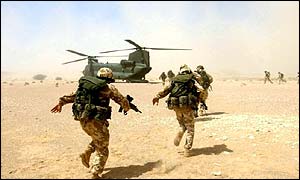 Operation Saif Sareea II provided many lessons

Critics say the problems highlighted in Operation Saif Sareea II mean Britain could provide little more than token support to US-led action against Saddam Hussein. The Ministry of Defence says that while no decision has been taken on military action in Iraq, it would make "appropriate modifications" to any equipment needed to operate in a desert environment. But Britain's experiences in the Gulf War, its role in Kosovo and Afghanistan, coupled with the introduction of new equipment and capabilities mean that it could offer substantial back-up to the US, other defence experts say.
He said the MoD was bringing into service a batch of roll-on, roll-off transport vessels that would enable quicker deployment of armoured brigades. The Royal Logistics Corps is currently preparing an operation to test the procedures involved in moving a substantial amount of men and equipment to the military's main port at Marchwood, in Hampshire. The MoD says this has nothing to do with a possible strike on Iraq. But in its review of Kosovo operations, the MoD identified the importance of Marchwood which "enabled vessels and loads to be prepared in step with political decision-making". Meanwhile, the MoD has denied reports that two British armoured brigades would be in Kuwait within two weeks. Experts said it might take at least six weeks for such forces to be in place - working from the moment a decision was taken to send them.
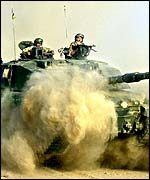
Of these, about 250 would be armoured vehicles and they would include the Warrior infantry fighting vehicle, the Challenger II tank and the AS 90 150mm self propelled gun. "The big question governing how soon they would actually be used is when the modifications to the Challenger II were done," said Mr Kemp. The tank would be expected to spearhead any assault by British ground forces, but a National Audit Office report on Oman said dust clogged up the tanks' air filters and they ground to a halt after four hours' service. "The terrain in southern Iraq is much the same, the desert a little more gritty, the temperature a shade lower - but to all intents and purposes the same problems would be encountered," said Mr Kemp. The logistical demands of deploying troops are not as great, and soldiers could be in the theatre of conflict within days. Concerns over "overstretch" related more to peace-time duties and at a time of war Britain could commit tens of thousands of troops, said Mr Kemp.
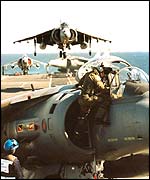
Royal Marine commandos have also had much experience serving alongside US counterparts, most recently in Afghanistan. Such forces could be deployed from the helicopter-carrier HMS Ocean. Harrier aircraft would also be used to provide air defence, and the Royal Navy's aircraft carrier-launched Harriers could take on ground attack missions in Iraq. Advanced missiles RAF Tornados have, of course been policing the no-fly zones over Iraq for years. A new anti-aircraft missile which is "almost impossible to evade" could also be deployed by RAF fighter squadrons, it has emerged. The UK-designed Asraam - Advanced Short Range Air-to-Air Missile - is being fitted to Tornado F3 aircraft after passing a series of vigorous tests, the Ministry of Defence said. Defence Procurement Minister Lord Bach added: "It can go further and faster than the weapon it replaces - the Sidewinder - and its advanced homing head and in-flight agility mean it will be almost impossible to evade." Meanwhile, planners at the Permanent Joint Headquarters at Northwood will be refining plans for a variety of military scenarios as the diplomatic crisis unfolds. | | See also:  13 Sep 02 | Politics 05 Sep 02 | UK 01 Aug 02 | UK 01 Aug 02 | UK 01 Aug 02 | UK Internet links: The BBC is not responsible for the content of external internet sites Top UK stories now: Links to more UK stories are at the foot of the page. | ||||||||||||||||||||||||||||||||||||||||||||||||||||||||||||||||||||||||||||||||||||||||||||||||||
| |
|  E-mail this story to a friend E-mail this story to a friend |
| |
| Links to more UK stories |
| | | ||
 | ||||
 | | Back to top
| ||
| ---------------------------------------------------------------------------------- To BBC Sport>> | To BBC Weather>> | To BBC World Service>> ---------------------------------------------------------------------------------- © MMIII | News Sources | Privacy |