
|
 |
 | | | | | | |||||||||||||||||||||||||||||||||||||||||||||||||||||||||||||||||||||||||||||||||||||||||||||||
| | | You are in: UK | |||||||||||||||||||||||||||||||||||||||||||||||||||||||||||||||||||||||||||||||||||||||||||||||||
|
| | Monday, 9 September, 2002, 16:24 GMT 17:24 UK Tackling the human traffickers 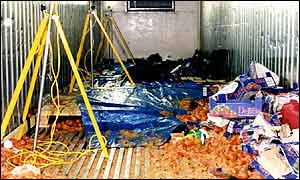 Chinese immigrants were found dead in this lorry
Opening a conference of international prosecutors in London, Lord Goldsmith said that in the decade from 1990 to 2000, the UK alone had experienced a rise of over 1,200% in the number of people caught trying to evade border controls. And graphic evidence was given from prosecutors on three continents about the pernicious impact of trafficking in human beings for profit. The UN has estimated that illegal immigration is worth between �15bn and �30bn a year. Sex trade In the majority of these cases, the immigrants are willing to risk arrest or even death - as in the case of the 56 Chinese found dead in a lorry at Dover. But evidence was given of the growing traffic in those who are kidnapped for sexual exploitation. Typical is the case of Olessia Khledod, a 19-year-old Russian philosophy student who was deceived by an offer of summer work in Belgium, kidnapped and raped by Albanian gangsters and forced to work as a prostitute in Britain. She was held prisoner in a flat from which she escaped after four months.
A 15-year-old girl from Eastern Europe was also forced into a brothel in North London and freed only after the brothel-keeper took pity on her. In some parts of the world, the focus of the problem is children trafficked across national borders as slave or bonded labour. A Thai prosecutor said that more than 200,000 such children had been smuggled into his country from neighbouring Burma, Laos and Cambodia since 1996. In Africa, children are kidnapped and forced to be soldiers. Gangs targeted Prosecutors are hoping that a 1999 UN Convention on Human Trafficking - signed by 141 states - will have a significant impact on the gangs behind the misery. But the tendency of many legal jurisdictions to deport those victims who are found to their country of origin is also a problem. As a representative of the US Department of Justice pointed out : "If you send them back immediately, your evidence - on which to bring a criminal case - is leaving the country with them." In Europe, a network of Baltic states is co-operating closely, with the aim, as a Swedish prosecutor put it, "to follow the trafficker all the way back from the destination of the cargo to the country of origin ". And, as with drugs crime, the emphasis is now switching to the seizure of assets to try to put the gangs out of business. | | See also:  09 Sep 02 | Politics 24 Apr 02 | Politics 21 May 01 | Europe 06 Jan 01 | From Our Own Correspondent 27 Feb 02 | Asia-Pacific Top UK stories now: Links to more UK stories are at the foot of the page. | |||||||||||||||||||||||||||||||||||||||||||||||||||||||||||||||||||||||||||||||||||||||||||||||
| |
|  E-mail this story to a friend E-mail this story to a friend |
| |
| Links to more UK stories |
| | | ||
 | ||||
 | | Back to top
| ||
| ---------------------------------------------------------------------------------- To BBC Sport>> | To BBC Weather>> | To BBC World Service>> ---------------------------------------------------------------------------------- © MMIII | News Sources | Privacy |






