
|
 |
 | | | | | | ||||||||||||||||||||||||||||||||||||||||||||||||||||||||||||||||||||||||||||||||||||||
| | | You are in: UK | ||||||||||||||||||||||||||||||||||||||||||||||||||||||||||||||||||||||||||||||||||||||||
|
| | Tuesday, 6 August, 2002, 12:50 GMT 13:50 UK Finding the missing 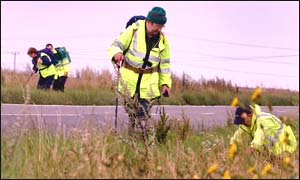 Police in Cambridgeshire comb for clues As the hunt for 10-year-olds Holly Wells and Jessica Chapman intensifies, BBC News Online talks to police search expert Det Sgt Mike Swindells about the difficulties of finding missing people. "What you've got with a search like this is a jigsaw puzzle, but you don't know what the picture is". Mike Swindells knows more than most about putting together the puzzle behind a missing persons case - as a consultant to the Forensic Search Advisory Group, he has lent his expertise to forces across the UK. "The first thing you have to do is find out as much as you can about the missing child, whether they regularly go missing, common sense things really. "Then you have to look at the time since they were last seen, how far they could have gone, did they have any money on them and if so, how far that would get them. Balancing act "You would also look at CCTV pictures from the area, and from nearby train stations and bus stops." The search would then concentrate on the area where the missing people were last seen, with police, often helped by the public, combing the area for clues. Mr Swindells said there was a balancing act involved when the public helped in searches. He said: "Sometimes I would say, if you had a murder in a house would you let the public wander through the house? In the same way, members of the public, who aren't trained, can end up trampling over evidence rather than finding it.
As with the missing girls in Cambridgeshire, a search can involve combing through e-mails and text messages as much as through the streets. Forensic engineers will search through messages the missing children may have sent in the hope of finding clues to where they may have gone. "More often than not with these cases, you find that what has happened is that the child has stayed over with a friend without telling someone, or they have decided to go to Blackpool for instance. Safe and well "It's often said that if the person you are looking for is not found within 48 hours then it is likely you are looking at an abduction or murder, but that is not always the case. "I have known cases where children have been missing for weeks, and then turned up safe and well." He said that the case in Cambridgeshire was one where he would probably be optimistic. "If I was the search manager I would be happy - obviously not happy about the fact the girls are missing - but happy about the fact that there are two of them. "Spontaneous abductions are very few and far between, and with two kids it would be very difficult to do." | | See also:  06 Aug 02 | England Internet links: The BBC is not responsible for the content of external internet sites Top UK stories now: Links to more UK stories are at the foot of the page. | ||||||||||||||||||||||||||||||||||||||||||||||||||||||||||||||||||||||||||||||||||||||
| |
|  E-mail this story to a friend E-mail this story to a friend |
| |
| Links to more UK stories |
| | | ||
 | ||||
 | | Back to top
| ||
| ---------------------------------------------------------------------------------- To BBC Sport>> | To BBC Weather>> | To BBC World Service>> ---------------------------------------------------------------------------------- © MMIII | News Sources | Privacy |





