|
 |
 | | | | | | ||||||||||||||||||||||||||||||||||||||||||||||||||||||||||||||||||||||||||||||||||||||||||||||||||
| | | You are in: UK | ||||||||||||||||||||||||||||||||||||||||||||||||||||||||||||||||||||||||||||||||||||||||||||||||||||
|
| | Thursday, 25 July, 2002, 15:32 GMT 16:32 UK Lord, give me sanctuary 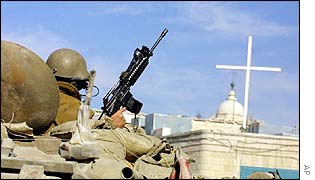 Palestinians sought refuge in the Church of the Nativity
Sanctuary: 1. A place of refuge, especially for political refugees 2. immunity from arrest With the army of a victorious Henry VII bearing down on him, a terrified Francis Lovell made for the only place he knew he would be safe - a church. It was 1485 and his master Richard III had just been killed on the battlefield at Bosworth and Francis had every reason to believe his head would be next. But he made it in time to St John's Abbey in Colchester where he invoked the ancient law of religious sanctuary. It made him untouchable. Sanctuary-knocker The idea of escaping from persecution in a church in Britain is a medieval one, dating back to King Ethelbert's rule in 600AD. If you were fleeing the law in those days, all you had to do was make for the nearest church, grab the sanctuary-knocker or sit yourself on the frith-stool and you were home and dry.
There was the small matter of taking an oath of abjuration before heading for the nearest port and lands beyond the realm, but in those bloodthirsty days, at least you could avoid the sword. Claiming sanctuary in a church to avoid being punished for a crime was abolished in 1623 but the idea persists to this day. That a holy place should be a source of refuge is a widely-held belief. 'Unspeakably distressing' Earlier this year, a group of Palestinians held out for five weeks in the Church of the Nativity in Bethlehem. Israeli troops surrounded the sacred site, but they did not enter while the standoff continued. But religious reserve did not stop riot police in the West Midlands breaking down the door of a mosque to get to two refugees holed up inside. Their actions have challenged an assumption that places of worship are in some way untouchable.
"I think if that happened in one of our churches, it would be unspeakably distressing," said Morag Ross, vice convenor of the Church of Scotland's Church in Nation committee. "There is a sense that churches are special places which should be accorded special respect and there are some people who would see that sort of abuse of a building as a desecration." In 1997, the issue of churches wanting to offer sanctuary to refugees in Scotland was so great, the Church issued guidelines on how to go about it. It warned that the right to sanctuary does not exist in Scots Law - or English for that matter - and that ultimately the law must be obeyed. 'Moral right' But recognising that congregations might want to help people in distress, it says offering sanctuary can "provide a breathing space" to publicise the case, allow time to secure legal help or find an alternative to deportation. Last year, the congregation of the church of St John and St Stephen in Cleethorpes, Lincolnshire, rallied behind the Smakaj family, who were refugees from Kosovo.
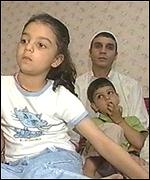
They had made friends in the community who had helped them settle in. Their children spoke perfect English and both parents had jobs. When their bid for asylum was rejected, the congregation, believing the family would be in real danger if they were sent back to their homeland, moved them into their church in a bid to protect them. Canon John Ellis said there was a feeling they would be safe there. "I'm horrified about what happened at the mosque - it's as if a barrier has been broken," he said. "I wouldn't want to go back to the Middle Ages - there was all sorts of skulduggery then and the church was too powerful. "But we have a moral right to protect people who can't speak for themselves."
The Muslim community in Britain is also reeling from the police's actions. "It is traditional for people all over the world to seek sanctuary in holy places," said Inayat Bunglawala, spokesman for the Muslim Council of Britain. "We would not want mosques to be used to subvert the law but this behaviour was unnecessarily violent. "Mosques have always been somewhere independent, somewhere people can speak freely even under the harshest of regimes. "The main mosque in Mecca, the al-Haram, actually means infallible place or sanctuary." They are now in Albania and Canon Ellis and some of the congregation are going to visit them in August. Meanwhile Mr Smakaj's employers in Scunthorpe, Premier Foods, are keeping his job open for him. | | See also:  20 Jul 01 | UK 25 Jul 02 | England 25 Jun 02 | England 10 May 02 | Middle East 28 Feb 02 | UK Internet links: The BBC is not responsible for the content of external internet sites Top UK stories now: Links to more UK stories are at the foot of the page. | ||||||||||||||||||||||||||||||||||||||||||||||||||||||||||||||||||||||||||||||||||||||||||||||||||
| |
|  E-mail this story to a friend E-mail this story to a friend |
| |
| Links to more UK stories |
| | | ||
 | ||||
 | | Back to top
| ||
| ---------------------------------------------------------------------------------- To BBC Sport>> | To BBC Weather>> | To BBC World Service>> ---------------------------------------------------------------------------------- © MMIII | News Sources | Privacy |