|
 |
 | | | | | | ||||||||||||||||||||||||||||||||||||||||||||||||||||||||||||||||||||||||||||||||||||||||||||||||||
| | | You are in: UK | ||||||||||||||||||||||||||||||||||||||||||||||||||||||||||||||||||||||||||||||||||||||||||||||||||||
|
| | Saturday, 20 July, 2002, 23:22 GMT 00:22 UK The night of a thousand wheels
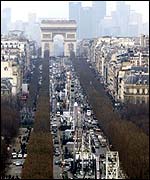
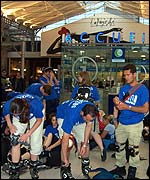
Every week in major cities across Europe, tens of thousands of skaters take to the streets for mass outings that stop the traffic and bemuse tourists. There are signs that the craze is rolling its way through the Chunnel with burgeoning events in London and around the UK. BBC News Online joined London's Friday Night Skaters on a trip to Paris, home of the Pari-Roller - one of Europe's biggest group skate events. As we leave Montparnasse there's immediately a tricky cobbled section that has the novices wobbling and stalling.
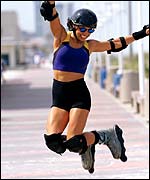
The warning of impending doom comes just in time as the road suddenly drops downhill and thousands of skaters begin accelerating away into the Parisian night. The city's long, wide roads are perfect for skating and ideal for the sheer volume of people that take part. The middle of the road is also a slightly surreal place from which to take a three-hour tour of central Paris. Police motorcycle outriders stop the traffic for the group to pass, and motorists accept the delay with benign indifference - quite charitable when you consider it takes 20 minutes for the entire skate to go by on a busy night. Most of the skaters are on in-line skates (Rollerblades being a brand name), but some are on long boards or roller disco style 'quads'. Most wear at least some protection on their joints, as spilling over at 20mph can cause serious injury - never mind the skaters streaming behind you. It doesn't compare with mountaineering, but a handful of people a week usually end up injuring themselves, and skaters have died in the 10 years or so since the Pari-Roller's inception. 'A social phenomenon' The kind of outings that see up to 20,000 people out on the streets of Paris - or thousands out in Berlin or Amsterdam - are major events run in with their own staff, merchandising, and dedicated websites. In Paris you can now buy insurance with your official T-shirt.
They encouraged the organisers to set up an official association to run the skate which they say has now become "a philosophy, a social phenomenon". Like snowboarding or surfing - skating it is one of those "freedom sports" that has marketing agencies and advertisers drooling. And there are real signs that skate fever is spreading across the Channel - and through the Chunnel - to the UK. Estimates put the number of skaters in Britain at about 70,000 - although only about 30% of these are thought to take their skates out of the wardrobe regularly. Roller-cops One barometer of the growth in skating's popularity is the London Friday Night Skate (FNS), which has been growing in size since its inception almost two years ago. The group now regularly draws crowds of more than 500 people for a two-hour, 10-mile carnival around central London.
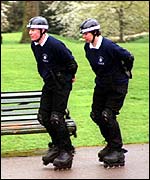
In May 2001 the FNS comprised just 60 skaters. Last month 760 people turned out to skate on a fine summers' evening. In winter, the numbers dwindle to between 50-100. Skaters are marshalled by volunteers who stop traffic at road junctions to allow the entourage to travel through. No law prevents safe skating on the roads although holding on to cars or busses to gain speed is prohibited. Even police themselves have got in on the act. In Brighton officers have started using rollerblades to patrol up and down the sea front. They say it makes them more mobile, and gives them a more trendy image. Officers from the Royal Parks Constabulary who also have a skate patrol in London, would no doubt agree. Narrow roads The UK Inline Skating Association is one of a clutch of organisations that represent different areas of the skating world; from in-liners and roller skaters to skateboarders and roller-hockey players. Sport England - the group that helps develop sports in England, and distributes lottery funds - says it recognises in-line skating as an activity and has funded projects like skate parks.
It's a frustrating situation for people like Andreas Kolattek, co-director of the UKISA, who believe there is a chance that in-line skating could develop events in the UK to rival those on the continent. "It's certainly possible," said Mr Kolattek, "but the geography in London - predominantly narrow roads - and the attitude of 'If it's fun, then we'll ban it' are limiting factors." | | Internet links:  The BBC is not responsible for the content of external internet sites Top UK stories now: Links to more UK stories are at the foot of the page. | ||||||||||||||||||||||||||||||||||||||||||||||||||||||||||||||||||||||||||||||||||||||||||||||||||
| |
|  E-mail this story to a friend E-mail this story to a friend |
| |
| Links to more UK stories |
| | | ||
 | ||||
 | | Back to top
| ||
| ---------------------------------------------------------------------------------- To BBC Sport>> | To BBC Weather>> | To BBC World Service>> ---------------------------------------------------------------------------------- © MMIII | News Sources | Privacy |