|
 |
 | | | | | | ||||||||||||||||||||||||||||||||||||||||||||||||||||||||||||||||||||||||||||||||||||||||||||||||||||||||||||||||||||||||||||||||||||||||||||||||||||||||
| | | You are in: UK | ||||||||||||||||||||||||||||||||||||||||||||||||||||||||||||||||||||||||||||||||||||||||||||||||||||||||||||||||||||||||||||||||||||||||||||||||||||||||||
|
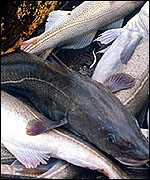
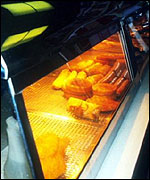
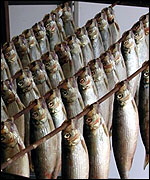
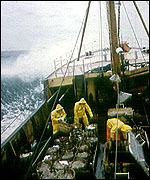
| | Friday, 24 May, 2002, 11:50 GMT 12:50 UK End of the line for fishing? All tied up and nowhere to go British deep sea fishing is in crisis. It's not a labour or territorial dispute; it's the simple lack of fish. The chances are that the last fish supper you ate was with a fish that had been flown into the country. Why? Fish have been landed, sorted and sold around Britain's coastal towns for generations. But now, trawlers, nets and fishermen are increasingly lying idle.
The Common Fisheries Policy has always stuck in their gullets. The industry is in decline with collapsing fish stocks. It has been a mess for years. But the EU is seeking to change the policy soon. Can the EU get it right this time? Negotiations on the common fisheries rules take place every 10 years. Reforms, this time round, are due to be announced very soon, after years of rowing have forced delays. None the less, the former king of the fish supper - the cod - is now an endangered species. The fishing industry is not blameless. Trawlermen have shot themselves in the foot over many years too. They have extensively used small mesh nets that catch young fish, leaving poor breeding stock. Combined with nature striking an added blow, with sea temperatures being unsuitable for breeding, the end result has seen the steep demise of the cod.
Politicians fail fishermen After the lapse in fishing during the World War II, fish stocks became plentiful. The UK fishing industry enjoyed prosperity. But in the early 70's, Ted Heath's government took British fishing into stormy waters with membership of the Common Market. At the last minute, the existing six EEC members established their new Common Fisheries Policy, which, in essence, allowed open fishing around all coastal waters. Britain's fishing industry has always been an emotive subject - one of the top British negotiating officials commented: "The fishing issue is economic peanuts, but political dynamite." James Prior, the chief negotiator, lit the touch-paper in the hope of retaining a 12-mile exclusion zone, but Edward Heath curbed his actions, accepting a six-mile zone instead.
A Cod War Worse was to follow. Iceland decided to establish a 200-mile exclusion zone to protect its fish stocks. A vicious stand off with Britain became a repeat of the previous two "Cod Wars". British Trawlers were forced to fish even closer to home. Faced with dwindling stocks and increased trawler numbers from EEC members, there was a collective blaming of the Soviet "factory ships" for dwindling numbers of fish. But this proved to be a "Red Herring". The EEC's fishing policy was flawed. It portrayed fishing in the same way as making steel or growing potatoes - the higher the production or total catch, the better.
Politicians were lobbied by fishing communities to keep quotas high and everyone seemed blind to the fact of impending doom for the fishing industry. Ironically, when catch quotas and net mesh restrictions were eventually imposed, trawler-men reacted with contempt. It was common practice when trawlers had landed their quota, further catches would be made and sold through a fish "black market". This illegal practice was almost impossible to police. One of the last nails in the fishing boat coffin was Britain's blinkered eating habit. Chips would not be quite right with any other fish other than cod. The stocks have rapidly plunged even further. So what now? The European Union has a thorny problem to resolve. Do they keep the fishing industry infrastructure in tact, with nothing to fish or, do they take draconian action to save fish for the future? As the saying goes: "You can't please all of the people all of the time." part of the Why Did We Do That? series, on BBC Radio 4 | |
See also:  23 May 02 | Europe 01 May 02 | Science/Nature 22 Mar 02 | Europe Internet links: The BBC is not responsible for the content of external internet sites Top UK stories now: Links to more UK stories are at the foot of the page. | ||||||||||||||||||||||||||||||||||||||||||||||||||||||||||||||||||||||||||||||||||||||||||||||||||||||||||||||||||||||||||||||||||||||||||||||||||||||||
| |
|  E-mail this story to a friend E-mail this story to a friend |
| |
| Links to more UK stories |
| | | ||
 | ||||
 | | Back to top
| ||
| ---------------------------------------------------------------------------------- To BBC Sport>> | To BBC Weather>> | To BBC World Service>> ---------------------------------------------------------------------------------- © MMIII | News Sources | Privacy |