|
 |
 | | | | | | |||||||||||||||||||||||||||||||||||||||||||||||||||||||||||||||||||||||||||||||||||||||||||||||||||||||||||||||||||||||||||||||||||||||
| | | You are in: Technology | |||||||||||||||||||||||||||||||||||||||||||||||||||||||||||||||||||||||||||||||||||||||||||||||||||||||||||||||||||||||||||||||||||||||||
|
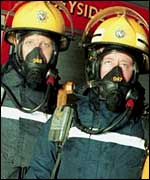
| | Wednesday, 5 February, 2003, 10:28 GMT Tech comes to rescue of firefighters  100 US firefighters die each year on the job Firefighters of the future could have heads-up displays in their helmets, providing them with crucial information about the threats they face. This is one of the ways researchers at the University of California in Berkeley are looking at using technology to make firefighting safer. The aim is to create a system that will allow firefighters to move more safely through the smoke and fire of a burning building. Every year 4,400 Americans are killed and more than 25,000 injured in fires, with property damage estimated at $8.6bn, according to official figures. Tunnel vision Fighting fire is a dangerous business. Firefighters routinely have to go into burning buildings, with thick smoke all around and no idea of the quickest route out.
One study in its early stages is looking at using small wireless computers to allow firefighters to keep track of each other. Initial results have shown that this "buddy system" has its shortcomings. "People have tunnel vision," explained Leila Takayama, a Berkeley undergraduate involved in the project. "They can be standing right in front of their friend and not see them," she told the BBC programme Go Digital. The team also realised that firefighters need to have their hands free so they are moving away from using small computers and looking instead at heads-up displays. These would work by projecting information such as a building's floor plan onto a firefighter's mask, so that they would know where they are at all times. Sensing danger Another idea the researchers are exploring is using technology to allow a fire chief to keep tabs on the team.
"We're envisioning that at his desk he will have a large touchscreen or tablet PC, so that things are easy to manipulate and see." The firefighters would have sensors on them that would collect information about heat and humidity in a fire, as well vital signs such as heart rate and body temperature. "If the body temperature gets too high and it is unsafe for them to be in the building, you need to know so that you can pull them out," said Ms Takayama. The challenge facing the researchers is giving firefighters the vital information they need, in a way that is easy to understand. Too much detail at the wrong time could prove distracting and mean the different between life and death. "We're trying to understand current work practices so that we can give firefighters the right information at the right time, instead of distracting them from the situation," said Ms Takayama. | | See also:  23 Oct 02 | UK 27 Oct 02 | UK 31 Oct 02 | UK 13 Nov 02 | UK Internet links: The BBC is not responsible for the content of external internet sites Top Technology stories now: Links to more Technology stories are at the foot of the page. | |||||||||||||||||||||||||||||||||||||||||||||||||||||||||||||||||||||||||||||||||||||||||||||||||||||||||||||||||||||||||||||||||||||||
 | |
|  E-mail this story to a friend E-mail this story to a friend |
| |
| Links to more Technology stories |
| | | ||
 | ||||
 | | Back to top
| ||
| ---------------------------------------------------------------------------------- To BBC Sport>> | To BBC Weather>> | To BBC World Service>> ---------------------------------------------------------------------------------- © MMIII | News Sources | Privacy |





 We're trying to understand work practices so that we can give firefighters the right information at the right time