
|
 |
 | | | | | | ||||||||||||||||||||||||||||||||||||||||||||||||||||||||||||||||||||||||||||||||||||||||||||||||||||||||||||||||||||||||||||||||||||||||
| | | You are in: Technology | ||||||||||||||||||||||||||||||||||||||||||||||||||||||||||||||||||||||||||||||||||||||||||||||||||||||||||||||||||||||||||||||||||||||||||
|
| | Wednesday, 27 November, 2002, 09:45 GMT Hi-tech workplace no better than factories 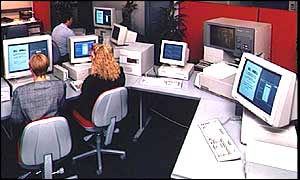 What is the future for the hi-tech workplace? Staff in technology jobs work in the white collar equivalent of a 19th century factory. suffering from isolation, job insecurity and long hours, research has found. Much needs to be done to ease the intense pressure, inequality and exclusion in technology jobs, said the study by Sean O'Riain, Professor of Sociology at the University of California. He looked at the characteristics of hi-tech workplaces, which are seen as a potential model for the future of work. He found that the individualistic, macho culture of tech jobs was putting women off applying for jobs, despite an often critical shortage of skills. Lonely and insecure In his study, Professor O'Riain found a fiercely competitive world, which one software engineer described as a white collar factory. "Although hi-tech workers are relatively free from supervision, peer pressure and deadlines drive them to extreme labour," said he said.
The reality is somewhat more nightmarish, Professor O'Riain found. "They face the lonely insecurity of the individual entrepreneur in a marketplace and culture that stresses, with macho imagery from war and sports, that they are ultimately alone," he said. "For many this may be the shape of work in the 21st century." The dot.com downturn has added job insecurity to the list of stresses for the workers in the technology industry. "When the economic crisis hit, they found themselves with few collective guarantees, they were cast to their individual fates," said Professor O'Riain. Corporate dominance The image of the socially excluded geek working long and frustrating hours seems to be a hard one to shake off, despite efforts to change perceptions of the technology sector.
They are under constant pressure to update skills. And social relationships among the technical communities are defined by common technical interests rather than a common employer. "If security of income and long-term learning were strengthened, technical communities could emerge as an important alternative model of economic organisation to increasing corporate dominance of the workplace," concluded Professor O'Riain. The research is published in the American Sociological Associations' Contexts magazine. | |
See also:  02 Jul 02 | Business 07 Jun 02 | Business 19 Mar 02 | England 25 Oct 01 | England 26 Jul 02 | Technology 27 Jul 01 | UK Internet links: The BBC is not responsible for the content of external internet sites Top Technology stories now: Links to more Technology stories are at the foot of the page. | ||||||||||||||||||||||||||||||||||||||||||||||||||||||||||||||||||||||||||||||||||||||||||||||||||||||||||||||||||||||||||||||||||||||||
| |
|  E-mail this story to a friend E-mail this story to a friend |
| |
| Links to more Technology stories |
| | | ||
 | ||||
 | | Back to top
| ||
| ---------------------------------------------------------------------------------- To BBC Sport>> | To BBC Weather>> | To BBC World Service>> ---------------------------------------------------------------------------------- © MMIII | News Sources | Privacy |






 TALKING POINT
 Job misery