|
 |
 | | | | | | |||||||||||||||||||||||||||||||||||||||||||||||||||||||||||||||||||||||||||||||||||||||||||||||||||||||||||||||||||||||||||||||||||||
| | | You are in: Technology | |||||||||||||||||||||||||||||||||||||||||||||||||||||||||||||||||||||||||||||||||||||||||||||||||||||||||||||||||||||||||||||||||||||||
|
| | Friday, 8 November, 2002, 11:10 GMT Hi-tech signatures to fight fraud 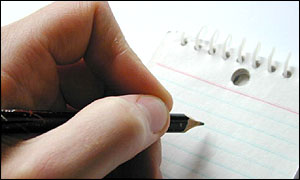 The humble signature goes hi-tech The UK's biggest building society, the Nationwide, is to introduce electronic signatures to try to prevent fraud. It is believed to be the first time so-called biometric technology has been rolled out on the High Street in the UK. Customers will prove their identity by the way they physically sign their name. The system measures the precise speed and direction of the hand as it writes. Signature capture may not be as well-known as iris or fingerprint recognition, but Nationwide is hopeful it will save it millions of pounds and make a giant step towards a paperless office. Signature profile
The image will be embedded into an electronic document along with information on the characteristics of the signatures such as pressure and speed of the writing. This will then become a legal signature. The system will ask users to offer between three to six signatures before it is happy it has a full profile of their writing style. According to handwriting experts, the actual style of the signature is less important than how the pen is held and the pressure used when writing. Nationwide has been researching the use of biometrics for identify customers for two years and is convinced that the system will be extremely robust. "We have 70 processes that need a signature and that generates a huge amount of paper. We anticipate significant cost savings," said a spokesman for Nationwide. Come of age "We believe that this will be the first example of biometrics being rolled out across the UK in a customer-facing application," said Mark Lockie, editor of Biometric Technology Today. "It shows that the biometric industry has come of age," he added. Biometric technology is already being used by many organisations and governments around the world. One of the latest uses of the technology is on the Afghan-Pakistan border where the UN uses biometrics to identify refugees. About 2000 refugees a day are being identified using iris recognition. It is hoped the system will cut down on refugees fraudulently claiming more than one aid package. Biometric technology is increasingly being used by the aviation industry. New projects include fingerprint recognition of over 1,600 staff at London City Airport and a system to identify customers for some United Airline flights from Heathrow to the US. | | See also:  31 May 02 | Science/Nature 21 Feb 02 | Science/Nature 08 Feb 02 | UK 09 Aug 01 | Science/Nature Internet links: The BBC is not responsible for the content of external internet sites Top Technology stories now: Links to more Technology stories are at the foot of the page. | |||||||||||||||||||||||||||||||||||||||||||||||||||||||||||||||||||||||||||||||||||||||||||||||||||||||||||||||||||||||||||||||||||||
| |
|  E-mail this story to a friend E-mail this story to a friend |
| |
| Links to more Technology stories |
| | | ||
 | ||||
 | | Back to top
| ||
| ---------------------------------------------------------------------------------- To BBC Sport>> | To BBC Weather>> | To BBC World Service>> ---------------------------------------------------------------------------------- © MMIII | News Sources | Privacy |