|
 |
 | | | | | | ||||||||||||||||||||||||||||||||||||||||||||||||||||||||||||||||||||||||||||||||||||||||||||||||||||||||||||||||||||||||||||||||||||||||||||||||
| | | You are in: Technology | ||||||||||||||||||||||||||||||||||||||||||||||||||||||||||||||||||||||||||||||||||||||||||||||||||||||||||||||||||||||||||||||||||||||||||||||||||
|
| | Tuesday, 5 November, 2002, 08:43 GMT 3D images offer new perspective 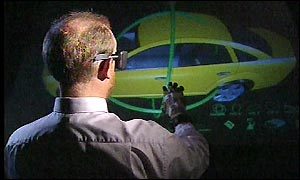 The image appears in front of the viewer
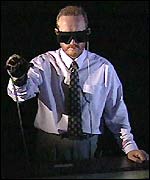
They have come up with a new tool which they say will be of use to car designers, trainee doctors and could even be used to teach maths. Developed at the Glasgow School of Art, the new software dispenses with the need to use a mouse or keyboard. Instead, the user dons a small pair of glasses which project the image in 3D and using a pair of what look like wired gardening gloves, manipulate the image. The image appears as a projection in front of the viewer, they can walk around it, bend and stretch it and even get inside it. Car design "You can be standing outside a three-dimensional model, grab that model and pull it inside your head," said Professor Paul Anderson of the Digital Design Studio at the Glasgow School of Art. "It allows you to visualise impossible scenarios, impossible spaces," he told the BBC programme, Go Digital.
For example they can get inside the car engine to see the pistons moving from the inside. Its this ability to visualise impossible scenarios which the developers believe is the system's unique selling point. "What we're trying to do for the first time is replicate reality, we call it replacement reality not virtual reality, that's a misnomer now, we're on the verge of something truly challenging," he said. Learning in 3D Prof Anderson would also like to see it used as a training tool for surgeons. They could, for example, look inside the veins or organs of the human body and even perform virtual operations.
In the next five years, the researchers expect the system to become as common as home computers as it could be used online for playing interactive games. But Prof Anderson said the technology's greatest use would be in education. He is particularly keen to see it used to teach maths. He said complex two-dimensional equations could be represented by 3D images. Teaching would be done through interacting with the images produced by this mathematical data and children would learn through manipulating images and data for themselves. "I'm sure that people take in a lot more visual information. If its 3D and its high resolution, and they physically interact with the data, what better way to learn," he said. | | See also:  27 Dec 01 | Health 23 Oct 01 | Science/Nature 30 Jan 02 | Science/Nature 03 Sep 02 | Technology 08 Dec 00 | Scotland Internet links: The BBC is not responsible for the content of external internet sites Top Technology stories now: Links to more Technology stories are at the foot of the page. | ||||||||||||||||||||||||||||||||||||||||||||||||||||||||||||||||||||||||||||||||||||||||||||||||||||||||||||||||||||||||||||||||||||||||||||||||
| |
|  E-mail this story to a friend E-mail this story to a friend |
| |
| Links to more Technology stories |
| | | ||
 | ||||
 | | Back to top
| ||
| ---------------------------------------------------------------------------------- To BBC Sport>> | To BBC Weather>> | To BBC World Service>> ---------------------------------------------------------------------------------- © MMIII | News Sources | Privacy |