
|
 |
 | | | | | | ||||||||||||||||||||||||||||||||||||||||||||||||||||||||||||||||||||||||||||||||||||||||||||||||||||||||||||||||||||||||||||||||||||||||||||
| | | You are in: Technology | ||||||||||||||||||||||||||||||||||||||||||||||||||||||||||||||||||||||||||||||||||||||||||||||||||||||||||||||||||||||||||||||||||||||||||||||
|
| | Thursday, 19 September, 2002, 09:39 GMT 10:39 UK Wireless hitchhikers branded as thieves 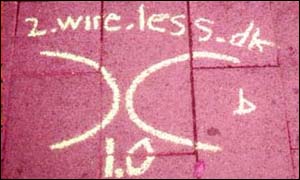 Take advantage of this and you could be stealing Phone maker Nokia has come down strongly against warchalking. It has condemned as theft the placing of chalk symbols on walls and pavements at places where people can use wireless net access. An advisory issued by the handset maker said anyone using bandwidth without the permission of the person paying for it was simply stealing. The criticism follows a warning by the FBI about the potential dangers of warchalking. Stolen pipes The idea for warchalking first started circulating on the internet in July it has become something of a geek hobby.
Some security experts have raised questions about warchalking saying that it could encourage hacking. Now Nokia has joined the chorus of criticism by saying that anyone who sits outside an office and uses a company's wireless network to do their own web surfing is stealing. "This is theft, plain and simple," wrote Nokia in its advisory. The company said that anyone using a company's bandwidth without permission is reducing the amount of a valuable resource available to the workers in that organisation. The advisory was brought to light by technology news magazine Computing. Nokia warned that if too many warchalkers log on together, the whole network inside a company could slow down. It also said that unscrupulous spammers could use a network as a proxy to despatch millions of unwanted e-mail messages with no danger of being traced. Is Nokia right to brand warchalkers as thieves? Or is it the responsibility of companies to secure their wireless networks? Warchalking is not, in itself theft. How can it be. It's just marking symbols on a pavement! But if companies are using unsecured wireless networks, it's their own fault if people come along and make use of their lack of security. While the unauthorised access to the insecure networks is definitely wrong and should not be tolerated, any company or organisation that does not put in sufficient security measures on its network should realise that their customers will blame them for any resulting problems.
PW, UK It is theft (and potentially a security threat) but the equipment suppliers should provide the tools to stop it so the network owner can prevent it if they wish to. If I leave a �10 note lying on the pavement I would be surprised if someone didn't pick it up, and even more surprised if I got it back. If the owners of wireless networks leave them lying around insecure in public places they should not be surprised if someone "picks them up" either. To launch an attack on those doing the "picking up" is to point the finger in the wrong direction. If you run a wireless network you should make it secure. Nokia may be right but I warchalk and find that if companies are going to spend all this money on new systems then they should pay for the protection. If you leave your door wide open and someone robs you then it's your fault for giving them the opportunity.
Note that this is an offence regardless of whether the motives for access were well-meaning or malicious. The Act defines that a person found guilty of this offence shall be liable on conviction to a maximum prison sentence of six months or a maximum fine of �2000 or both. Companies should safeguard their networks like any other property. If the staff responsible for network security do not take reasonable steps to prevent unauthorised access, they should be held accountable to their superiors for any loss to the company. This in no way makes the actions of the warchalkers legitimate, any more than leaving a warehouse door unlocked would legitimise the theft of stock by an opportunist thief. Anyone found hacking into a wireless network should receive appropriate punishment. Perhaps they should be banned from having a personal internet account, or maybe something more inventive, such as systematic spamming of their personal e-mail account or removal of security from their e-mail on the server. Let's see how they like it when they are stripped of security and their secrets made available to all the other hackers out there.
Nerve Jam, UK Hackers always find ways round things, legal or not. If warchalking were outlawed then websites would simply be used to spread the word. Network security should always be the responsibility of either the network provider or the company. Would any company leave the keys in the ignition of their company cars? I think not. Theft, in English law at least, is defined as the action of permanently depriving someone of a possession, What is being stolen, in warchalking? Technically, it is bandwidth theft. On the other hand, by pointing the insecurities out, the warchalkers are helping the companies sort out proper security on their networks, before someone with malicious intent starts abusing the problem. No, they should not be branded as thieves. Warchalkers perform a service to the organisation that utilises wireless networks, informing them of a potential security problem. Instead of condemning such actions, Nokia should encourage such activities to ensure that organisations that rely on such technologies are not taken advantage of. | | See also:  01 Jul 02 | dot life 23 Jul 02 | Technology 16 Aug 02 | Technology 26 Aug 02 | dot life 06 Aug 02 | Technology Internet links: The BBC is not responsible for the content of external internet sites Top Technology stories now: Links to more Technology stories are at the foot of the page. | ||||||||||||||||||||||||||||||||||||||||||||||||||||||||||||||||||||||||||||||||||||||||||||||||||||||||||||||||||||||||||||||||||||||||||||
| |
|  E-mail this story to a friend E-mail this story to a friend |
| |
| Links to more Technology stories |
| | | ||
 | ||||
 | | Back to top
| ||
| ---------------------------------------------------------------------------------- To BBC Sport>> | To BBC Weather>> | To BBC World Service>> ---------------------------------------------------------------------------------- © MMIII | News Sources | Privacy |





